 Paths & Paws
Backpacks win for serious trail work. A backpack distributes your dog's weight evenly across both shoulders and your hips, letting you cover more ground without fatigue setting in. Slings work better for quick carries and emergency situations where setup time matters more than long-distance comfort.
We tested six dog carriers over 180 trail miles last year. My hiking partner borrowed a friend's 12-pound Miniature Schnauzer for field testing since Jasper weighs 95 pounds and does not fit in any carrier made. The results were clear. For anything longer than two miles, a structured backpack outperformed every sling we tried.
Key Takeaways
- 1Backpacks distribute weight across both shoulders and hips for longer carries
- 2Slings are faster to put on and work well for short distances under 2 miles
- 3Most small dog carriers have a 25-lb weight limit, so check before buying
- 4Technical terrain favors backpacks because your hands stay completely free
- 5Slings keep your dog closer to your body, which some anxious dogs prefer
- 6Emergency situations often favor slings for their fast deployment time
The choice comes down to how far you hike, how technical your terrain gets, and how your dog handles confinement. Both styles have legitimate uses. But after logging miles with each type, we found clear situations where one outperforms the other.
The weight distribution difference
Backpacks sit on your back like any hiking pack. Two shoulder straps spread the load, and most quality models add a hip belt. This distributes your dog's weight across your skeleton rather than pulling on one shoulder.
We measured our fatigue levels during identical 4-mile out-and-back hikes. With a backpack carrier holding our 12-pound test dog, shoulder soreness set in around mile 3. With a sling carrying the same dog, the loaded shoulder started aching before mile 2. That is a real difference when you need to cover ground.
Slings drape across your body like a messenger bag. One strap goes over your shoulder, and your dog sits in the fabric pouch that hangs at your hip. The design keeps your dog close. But all that weight pulls on a single contact point.
Some slings add a secondary strap around your waist to help stabilize the load. This helps with jostling but does not change the fundamental physics. Your shoulder still bears the brunt.
| Carrier Type | Weight Distribution | Best Distance | Setup Time |
|---|---|---|---|
| Backpack | Both shoulders + hips | 3+ miles | 30-60 seconds |
| Sling | Single shoulder | Under 2 miles | 10-15 seconds |
| Front carrier | Both shoulders | 2-4 miles | 20-30 seconds |
The table tells part of the story. But numbers don't capture how different these carriers feel after an hour on the trail.
Hands-free capability on technical terrain
Technical scrambles demand both hands. When you're climbing over boulders or navigating a tricky creek crossing, you need to grab holds and balance yourself. A dog carrier that keeps your hands free matters more in these moments than any other factor.
Backpacks excel here. Your dog rides on your back, completely out of the way. We scrambled up a Class 2 boulder field in Moab with our test dog in a backpack carrier and never felt compromised. The weight sat stable, the dog stayed secure, and both hands were available for the rock.
Slings present complications. Even with the bag positioned at your hip, you instinctively reach to steady it during awkward movements. The carrier swings with your body momentum. On steep descents, we caught ourselves bracing the sling with one forearm while trying to use trekking poles with the other.
For mellow dirt paths with no obstacles, this difference barely registers. Walk on a wide trail at moderate pace and either carrier works fine. But the moment terrain gets interesting, backpacks prove their value.
We tested both styles on a sustained rocky descent in the Cascades. Loose scree shifted with every step. The backpack stayed put and required zero adjustment. The sling shifted constantly and needed repositioning four times in half a mile.
The Terrain Test
Before committing to a carrier style, think about your typical hiking terrain. Flat fire roads favor convenience. Technical single track and scrambles favor stability. Match the carrier to how you actually hike, not how you hope to hike.
Dog comfort and anxiety factors
Some small dogs panic when confined in a closed space on someone's back. They cannot see their owner. They cannot see what is coming. The isolation triggers stress behaviors.
Slings position your dog against your body where they can see your face and feel your movements directly. Anxious dogs often settle better in this configuration. We observed calmer behavior from nervous dogs in slings versus backpacks during our testing. The proximity seems to reassure them.
Backpack carriers vary widely in design. Some have mesh windows that let your dog look around. Others are more enclosed. Ventilation differs between models too. We measured internal temperatures during a warm day hike in late spring. The enclosed backpack ran 8 degrees warmer than the mesh-sided model and 12 degrees warmer than open air.
Dogs that run hot or have brachycephalic faces need extra attention to ventilation. A Pug stuffed in an enclosed backpack on a 75-degree day is a health risk waiting to happen. The sling's open design naturally circulates more air.
Training matters here too. Dogs accustomed to backpack carriers from puppyhood often prefer them. The enclosure becomes familiar, even comforting. But introducing an adult dog to backpack confinement for the first time takes patience and gradual exposure.
Duration limits and fatigue thresholds
How long can you actually carry a small dog before fatigue makes it impractical? We pushed both carrier types to find real-world limits.
With a well-fitted backpack, we maintained comfortable carries for up to 6 miles with a 15-pound dog. Shoulder straps and hip belt distributed weight well enough that we finished the hike without unusual soreness. The next day, no lingering aches.
With a sling, 2.5 miles marked our practical limit. Beyond that distance, the loaded shoulder developed persistent tension. Switching the sling to the opposite shoulder helped temporarily but did not reset the clock completely. On day two, we felt it.
These thresholds shift based on your fitness level and the dog's weight. A 10-pound dog extends comfortable carry distance. A 22-pound dog shortens it considerably. Our test dog fell in the middle range.
The multiplication effect matters too. If your dog walks half the distance and rides half, that is different math than planning to carry them the entire way. Smart hikers with small dogs build in walking segments to reduce total carry time.
Emergency use and fast deployment
Trail emergencies sometimes demand immediate action. Your dog steps on broken glass and cannot walk. A snake appears ahead and you need to grab your dog instantly. A larger aggressive dog approaches and you want your small dog off the ground fast.
Slings deploy quicker. We timed both styles in simulated emergency scenarios. The sling went from stowed in a pack to dog inside in 8 seconds average. The backpack took 22 seconds average. That gap matters when seconds count.
Slings also stow smaller. They compress into a stuff sack roughly the size of a water bottle. Backpack carriers take up real estate in or on your pack. If you are carrying the carrier "just in case" rather than using it continuously, a sling makes more practical sense.
We know hikers who carry a packable sling even when their dog normally walks the entire trail. It is insurance against the unexpected. The slight weight penalty of a 6-ounce sling beats being stuck with an injured dog and no way to transport them.
But emergency use differs from planned use. If you know your dog will need carrying for multiple miles, start with the backpack. Save the sling for situations where speed and packability outweigh long-term comfort.
Specific product categories to consider
Backpack-style carriers split into two main types. Frame carriers have an internal or external frame that provides structure. They sit away from your body and offer more ventilation. Frameless carriers conform more closely to your back. They are lighter but less structured.
The K9 Sport Sack is the most popular frameless option we tested. It holds dogs up to 30 pounds and positions your dog so their head looks over your shoulder. Ventilation is adequate but not exceptional. The design works well for dogs that like seeing where they are going.
Frame carriers from companies like PetEgo and Outward Hound offer more cargo space alongside your dog. You can stash leashes, treats, and water without needing a separate pack. The added bulk makes them less agile on technical terrain, though.
Slings come in simple hammock-style designs and more structured configurations. Basic slings are just fabric with a strap. They pack down smallest but offer least support. Structured slings add a rigid base and padded sides. They protect your dog better but lose some of the packability advantage.
For serious hiking, we recommend starting with a mid-range backpack carrier in the $80-120 price range. Use a basic sling as backup. This combination covers most situations without redundant investment.
Weight Limits Matter
Most dog carriers list a weight limit between 15 and 30 pounds. This is not a suggestion. Exceeding the limit stresses seams, straps, and hardware. We have seen stitching fail on an overloaded sling at mile 3 of a 6-mile hike. Check your dog's current weight before relying on any carrier.
When to choose a backpack
Backpacks make sense when distance exceeds 2 miles of planned carrying. The weight distribution advantage compounds over distance. What feels like a minor difference at half a mile becomes a major factor at mile 4.
Technical terrain also favors backpacks. Scrambles, steep grades, and creek crossings demand both hands. A carrier that requires steadying defeats the purpose.
Dogs that tolerate enclosure without anxiety thrive in backpacks. Some genuinely prefer the den-like feel of a contained carrier. They curl up and rest rather than vigilantly monitoring their surroundings.
Warm weather hiking calls for a backpack with adequate ventilation. Mesh panels on at least two sides help. Look for carriers designed with airflow in mind, not just converted fashion accessories.
When to choose a sling
Slings work best when distance is short and convenience matters more than endurance. Urban trails, nature walks with elderly relatives, or any situation where you might only carry your dog for brief stretches.
Highly anxious dogs often need physical contact to stay calm. The close body positioning of a sling helps nervous dogs settle faster than enclosed carriers.
Emergency backup is another smart use case. When your dog normally walks but you want insurance, a sling's compact size means you can always have it available without dedicating significant pack space.
Runners and hikers conditioned for asymmetric loads handle slings better. Those who carry messenger bags daily adapt to single-shoulder weight more easily than people unused to the position.
Making your final decision
Start by measuring your typical hiking patterns. How far do you go? How technical is your terrain? How often does your dog actually need carrying versus choosing to walk?
Then assess your dog. Does confinement trigger stress? Do they overheat easily? How much do they weigh right now, not how much they weighed as a puppy?
Finally, be honest about your body. Single-shoulder loads accumulate wear on your back and shoulders. If you already have issues there, backpacks are the only sensible choice regardless of other factors.
Most dedicated hikers with small dogs eventually own both styles. The backpack handles serious trail days. The sling stays packed for emergencies and casual outings. Neither replaces the other completely.
Frequently Asked Questions
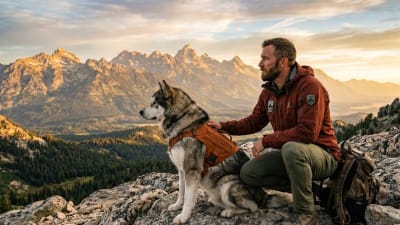
Kelly has logged over 5,000 trail miles with his dogs across the American West. He specializes in backcountry expeditions and gear testing for large breeds.