 Paths & Paws
Commercial dog first aid kits exist, but they're often filled with items you don't need while missing essentials. Building your own kit ensures everything has purpose and you know how to use it all.
This list is organized by priority. The essentials section covers the basics every dog should have on trail. The extended section adds capability for remote backcountry trips.
Kit Philosophy
- 1Every item must have a clear use you understand
- 2Light weight matters for backpacking; prioritize multi-use items
- 3Practice using items before you need them
- 4Customize for your dog's specific risks and conditions
Essential Kit (Day Hikes & Overnights)
These items cover the most common injuries and emergencies. Total weight: approximately 6-8 oz.
Wound Care
Sterile gauze pads in the 4x4 size form the foundation of wound care. Pack 4-6 pads for cleaning wounds, applying pressure to stop bleeding, and covering injuries until you reach help. You'll also want one roll of 2-inch rolled gauze, which holds pads in place, creates pressure bandages, and can secure improvised splints.
Self-adhesive wrap like Vetrap sticks to itself rather than your dog's fur, making it perfect for wrapping over gauze pads, protecting wounds from dirt, and providing light support for sprains. One roll handles most situations. Pair this with a small bottle of antiseptic solution, either chlorhexidine 2% or betadine. These clean wounds far better than water alone when diluted as directed.
Round out your wound care supplies with antibiotic ointment in single-use packets or a small tube. Apply to minor wounds after cleaning to prevent infection.
Medications
Diphenhydramine (Benadryl) handles allergic reactions, bee stings, and mild anxiety on the trail. The standard dose is 1mg per pound of body weight, but confirm this with your vet before you need it. Also pack hydrogen peroxide 3% to induce vomiting if your dog ingests something toxic. This is a last-resort measure at 1 teaspoon per 10 pounds body weight, and you should only use it when directed by a vet or poison control.
Styptic powder or a styptic pencil stops bleeding from torn nails, which are among the most common trail injuries. Pack a small amount in a mini container.
Tools
Blunt-tipped scissors cut bandage material, trim fur around wounds to keep the area clean, and cut away debris tangled in coat. Fine-point tweezers remove splinters, thorns, ticks, and debris from wounds with precision. However, a dedicated tick removal tool like the Tick Key works better than tweezers for removing ticks intact without leaving mouthparts behind.
A digital thermometer lets you check your dog's core temperature when something seems wrong. Normal range is 101-102.5 degrees Fahrenheit. Elevated temperature can indicate infection or heat stroke, while low temperature suggests hypothermia.
Protective Gear
Even the gentlest dog may bite when in severe pain, so carry a fabric muzzle or material to improvise one. This protects you while you treat injuries. A few pairs of disposable gloves keep wounds clean and protect you from contact with blood or other fluids.
Vet Info Card
Include a card with your vet's phone number, nearest emergency vet to common hiking areas, and your dog's critical info: weight, medications, known allergies, and any medical conditions.
Extended Kit (Multi-Day Backcountry)
Add these items for remote trips where help is far away. Additional weight: approximately 4-6 oz.
Enhanced Wound Care
A SAM Splint or other moldable splint stabilizes suspected fractures during evacuation. These lightweight devices have multiple uses beyond splinting, including forming cervical collars or padding splints. An irrigation syringe of 12cc or larger lets you flush debris from deep wounds with more pressure and precision than simply pouring water.
Wound closure strips like Steri-Strips can close clean cuts without sutures, though they're not appropriate for deep or contaminated wounds. Non-stick pads such as Telfa work better than standard gauze for burns or weeping injuries since they won't adhere to the wound bed and cause more damage when removed.
Additional Medications
Eye wash solution flushes debris or irritants from eyes and doubles as a wound cleaner in a pinch. Hydrocortisone cream reduces the itching and inflammation from insect bites or contact with irritating plants. Electrolyte powder mixed with water helps dogs showing dehydration signs and aids recovery from vomiting or diarrhea. Pepto-Bismol tablets can calm mild GI upset, but confirm the dosing with your vet before the trip since it varies by weight.
Specialized Items
Paw protection supplies include wax for prevention and dog boots or bootie socks for injured pads. An emergency space blanket reflects body heat back to hypothermic dogs and can serve as an improvised stretcher for carrying an injured dog. Wrap a small amount of duct tape around a pencil to save space; it repairs gear, creates temporary paw protection, and helps secure splints. Leukotape or moleskin prevents and treats hot spots and abrasions on dogs just as well as on humans.
Packing and Organization
Container Options
An ultralight stuff sack weighs almost nothing, provides easy access, and compresses when partially empty. A small hard case protects contents from crushing but adds weight, making it a good choice for fragile items. Roll-style organizers let you see all items at once and grab specific things quickly.
Organization Method
Group items by use:
- Wound care supplies together
- Medications in separate labeled bags
- Tools accessible without unpacking everything
Keep the most commonly used items, like the tick tool and wound supplies, most accessible.
Medication Labeling
For every medication:
- Name
- Dose per pound of body weight
- What it treats
- Expiration date
Don't rely on memory in an emergency. Pre-calculated doses based on your dog's weight speed treatment.
Check Expiration Dates
Medications expire. Hydrogen peroxide loses effectiveness. Adhesives dry out. Review your kit at the start of each season and replace expired items.
What to Skip
Commercial kits often include items that waste space. Instant cold packs are heavy for their single use when a wet bandana dipped in a stream works nearly as well. Extensive splinting materials rarely justify their weight since a SAM splint and some tape handle most situations. Multiple sizes of everything add unnecessary bulk when one roll of 2-inch gauze covers most scenarios.
Leave out any products you don't understand how to use. If you don't know when and how to apply something, it doesn't belong in your kit. The same goes for human medications without veterinary guidance. Many human meds are dangerous for dogs, so only include what your vet has confirmed as safe and provided dosing instructions for.
Using Your Kit
Before the Trip
Practice common procedures:
- Applying a wound dressing
- Wrapping a paw with Vetrap
- Taking your dog's temperature
- Creating a muzzle from bandage material
On Trail
Assess before treating:
- Is the scene safe?
- What's the injury?
- Can it be treated in the field, or does it require evacuation?
Treat what you can. Stabilize what you can't treat. Evacuate when necessary.
Documentation
If something happens, note:
- Time of injury
- What you observed
- What treatment you provided
- How your dog responded
This information helps veterinary professionals continue care.
Customization for Your Dog
Specific Conditions
If your dog has known issues, add appropriate supplies:
- Epilepsy: emergency seizure meds prescribed by your vet
- Allergies: EpiPen if prescribed, extra Benadryl
- Joint issues: supplements they take regularly
Regional Risks
Adjust for where you hike:
- Snake country: suction device (controversial effectiveness) or just rapid evacuation plan
- Heavy tick areas: extra tick tools
- Remote areas: enhanced supplies since help is far
Size-Based Adjustments
Muzzle size, bandage amounts, and medication doses all depend on dog size. Configure your kit for your specific dog.
Complete Checklist
Essentials (Day Hikes)
- Sterile gauze pads (4-6)
- Rolled gauze (2-inch, 1 roll)
- Self-adhesive wrap (1 roll)
- Antiseptic solution (1-2 oz)
- Antibiotic ointment
- Diphenhydramine (calculated dose x3)
- Hydrogen peroxide 3% (2 oz)
- Styptic powder
- Blunt scissors
- Fine-point tweezers
- Tick removal tool
- Digital thermometer
- Muzzle or muzzle material
- Disposable gloves (2 pairs)
- Vet info card
Extended (Backcountry)
- SAM Splint
- Irrigation syringe
- Wound closure strips
- Non-stick pads
- Eye wash solution
- Hydrocortisone cream
- Electrolyte powder
- Pepto-Bismol tablets
- Paw wax
- Emergency blanket
- Duct tape (small amount)
- Leukotape
Frequently Asked Questions
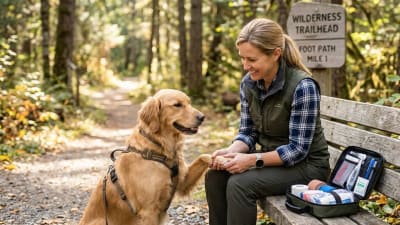
Dr. Jennifer Coates, DVM, brings 25+ years of clinical experience to Paths & Paws. Based in Fort Collins, Colorado, she specializes in preventive medicine and evidence-based nutrition for active dogs.