 Paths & Paws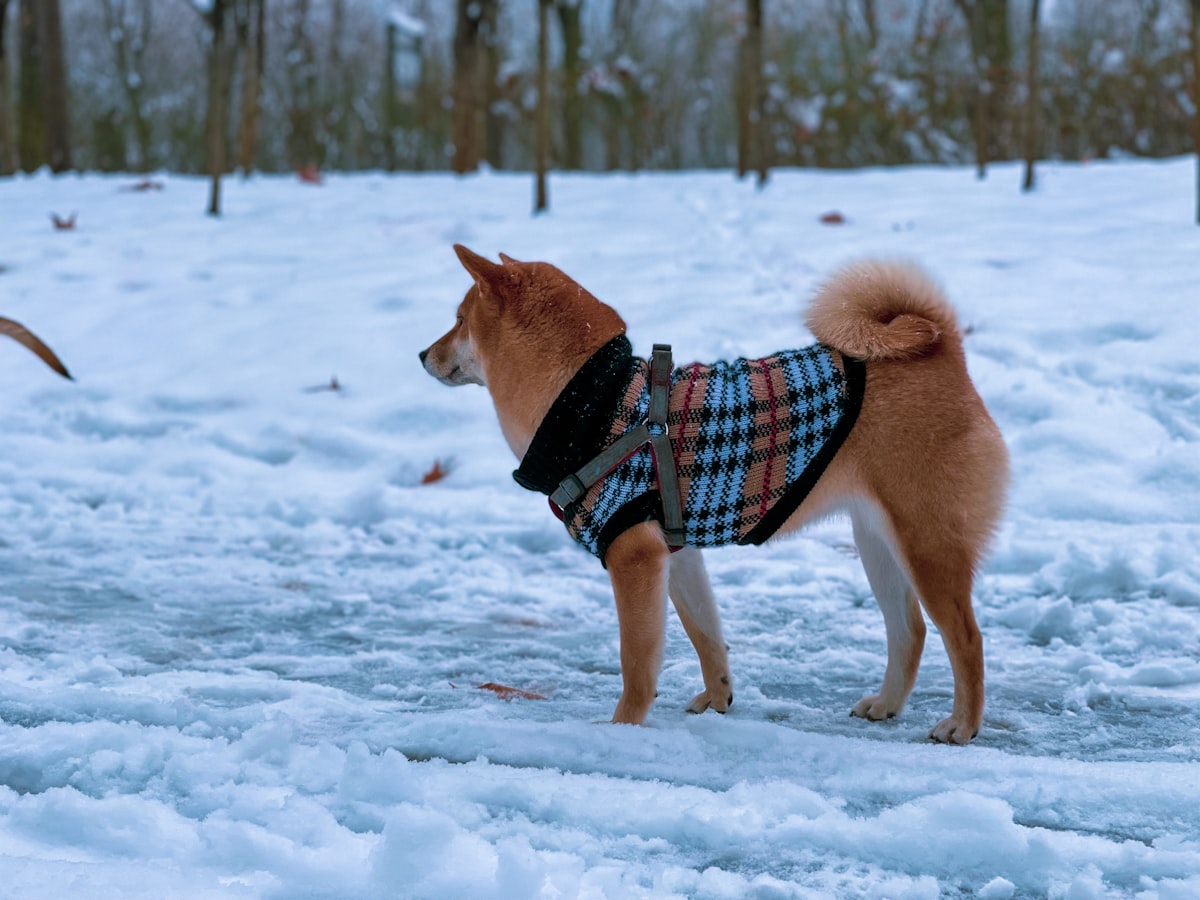
Walk through any winter trailhead and you'll see dogs in puffy jackets next to dogs with nothing but their natural coat. Both can be perfectly fine. Or both can be wrong.
The question isn't whether dogs need coats in winter. It's whether your specific dog needs a coat in your specific conditions.
Key Takeaways
- 1Coat type matters more than breed for cold tolerance
- 2Activity level generates significant body heat
- 3Thin-coated, small, or senior dogs benefit most from jackets
- 4Double-coated breeds rarely need additional insulation
How Dogs Stay Warm
Understanding dog thermoregulation helps you make better decisions.
Dogs regulate temperature through their coat, skin, circulation, and behavior. A dog's coat works like insulation in a house: it traps warm air near the body and prevents cold air from reaching the skin. The denser and thicker the coat, the better the insulation.
Double-coated breeds have two layers: a dense, fluffy undercoat for insulation and a longer outer coat that repels water and wind. This system evolved for cold climates.
Single-coated breeds have one layer of hair without the insulating undercoat. They lose heat faster because less warm air gets trapped near the skin.
Beyond coat, dogs generate heat through metabolism and movement. An active dog produces quite a bit more heat than a resting one. This is why the same dog who shivers during a break can run through snow happily while moving.
Dogs Who Usually Need Coats
Single-Coated Breeds
Dogs with thin, single-layer coats lack the insulation double-coated breeds have naturally.
This includes Greyhounds, Whippets, Italian Greyhounds, Boxers, Dobermans, Great Danes, Pit Bulls, most Terrier types, Chihuahuas, and Dachshunds.
These dogs feel cold quickly once they stop moving. Even during activity, extreme cold penetrates their thin coats.
Small Dogs
Body size affects heat retention. Small dogs have more surface area relative to their body mass than large dogs. They lose heat faster simply because of geometry.
A 10-pound dog cools much faster than a 70-pound dog in the same conditions, even with identical coat types.
Senior Dogs
Older dogs often have thinner coats, less muscle mass, and less efficient circulation. All of these reduce cold tolerance. A dog who handled cold easily at age three may struggle at age ten.
Dogs With Low Body Fat
Very lean dogs, whether naturally or from athletic conditioning, have less insulation under the skin. Dogs in performance shape often need more protection than dogs carrying a few extra pounds.
Dogs With Health Conditions
Certain conditions reduce cold tolerance: hypothyroidism, diabetes, heart disease, arthritis (cold worsens joint pain), and kidney disease. Dogs with these conditions often benefit from coats even if their breed suggests otherwise.
Watch Your Dog, Not the Breed
Individual variation matters. Some Boxers are cold-tolerant despite the breed standard. Some Huskies hate winter. Know your specific dog's responses rather than assuming breed dictates everything.
Dogs Who Rarely Need Coats
Double-Coated Breeds
Dogs bred for cold climates have built-in insulation that often outperforms any jacket you could buy.
Think Siberian Huskies, Alaskan Malamutes, Samoyeds, Bernese Mountain Dogs, Newfoundlands, Great Pyrenees, Saint Bernards, Akitas, and Norwegian Elkhounds.
These dogs often overheat in coats because the added layer prevents their natural system from working correctly. A coat on a Husky in moderate cold can cause more problems than it solves.
Large, Active Dogs
Big dogs generate significant heat during activity. A 90-pound Lab running through snow produces enough metabolic heat to stay warm in conditions that would chill a smaller dog.
Working Dogs on the Job
Dogs actively working (running, playing, hiking steadily) generate their own warmth. Many dogs need protection during rest breaks but not during movement. Consider removable layers rather than permanent covering.
Signs Your Dog is Cold
Your dog can't tell you they're cold, but their body language shows it.
Clear cold signals:
- Shivering or trembling
- Hunched posture with tail tucked
- Lifting paws off the ground
- Reluctance to walk
- Seeking warmth (pressing against you, hiding behind objects)
- Whining or anxious behavior
Severe cold warning signs:
- Lethargy or moving very slowly
- Stiff movements
- Ice on the coat or whiskers
- Pale or blue gums (emergency)
If you see any severe signs, end the hike immediately. Those indicate dangerous cold exposure.
Don't Wait for Shivering
Shivering means your dog is already uncomfortably cold. By the time they're shaking, they've been losing heat for a while. Learn to recognize the earlier, subtler signs.
Signs Your Dog is Too Warm
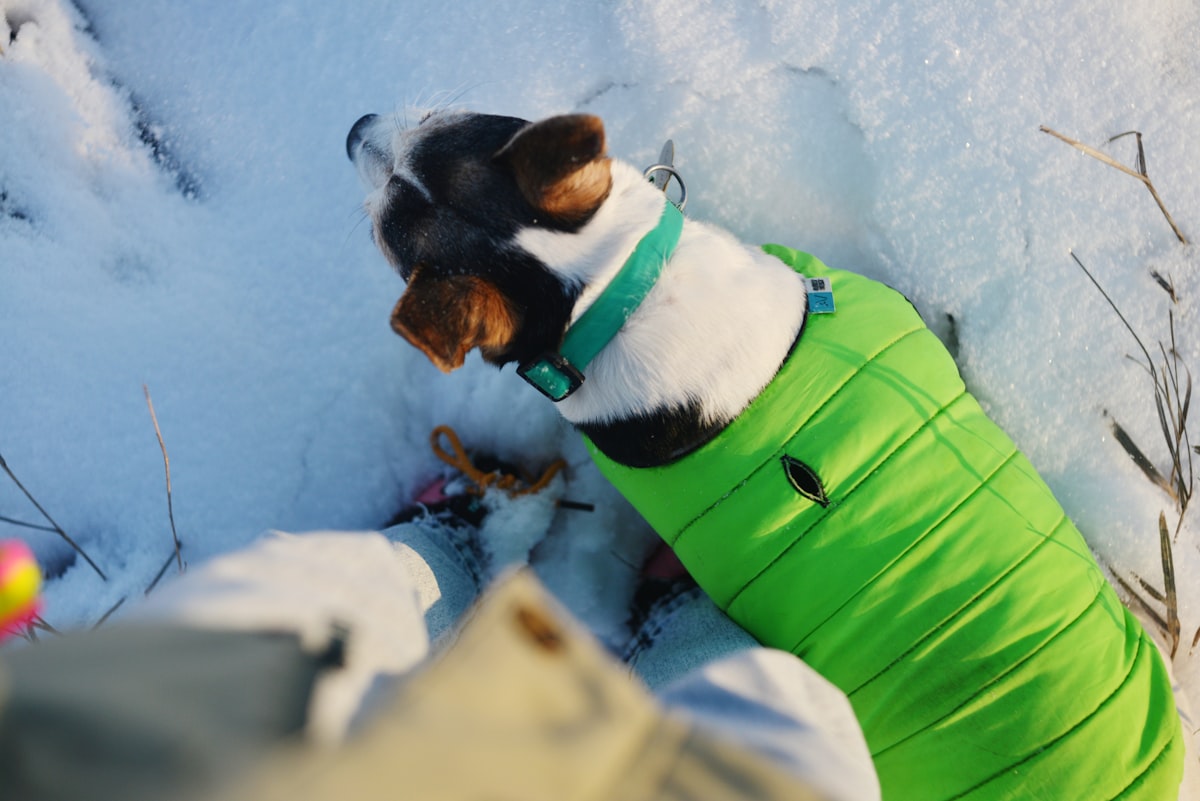
Yes, dogs can overheat in winter, especially in coats.
Overheating signals:
- Excessive panting (more than exertion explains)
- Drooling
- Seeking snow or cold surfaces
- Slowing pace noticeably
- Lying down in snow to cool off
If you see these signs in a dog wearing a coat, remove the coat immediately. They're overheating despite the cold ambient temperature.
Choosing the Right Coat
If your dog needs a coat, choose one appropriate for hiking conditions.
Fleece Jackets
These work well in mild cold, low wind, and for active dogs who just need a bit of help.
Fleece provides moderate insulation and breathability. It allows moisture to escape, which matters for active dogs. Fleece alone doesn't block wind well.
Insulated Jackets
These work well in genuine cold, moderate activity, and for dogs who need real warmth.
Down or synthetic insulation provides serious warmth. Look for jackets with a water-resistant shell to prevent snow from soaking through.
Hardshell Jackets
These work well in wet conditions, heavy snow, and when you need wind protection.
Shell jackets block wind and water without necessarily providing insulation. Some dogs need wind protection more than warmth; others need both. Layering systems exist for dogs just like for humans.
Fit Matters
A poorly fitting jacket shifts during movement, rubs, and may restrict natural motion. The jacket should:
- Cover the back and chest without restricting leg movement
- Stay in place during running without riding up or rotating
- Allow full range of neck motion
- Not compress the coat so much that insulation value is lost
Hiking-Specific Considerations
Activity Level Changes Everything
Your dog generates significant heat while moving. They lose that heat quickly when stopped. Consider:
- Going without a coat during active hiking
- Putting on a coat for breaks and rest stops
- Having an easily donned/doffed jacket ready
Layering for Variable Conditions
Long hikes may cross terrain with different exposures. Ridgelines are windier than valleys. Sunny south-facing slopes feel warmer than shaded north-facing ones. A removable layer lets you adapt.
Wet Conditions Complicate Everything
Wet fur loses insulation value dramatically. If your dog's coat gets soaked, they'll chill much faster than if dry. Waterproof outer layers become more important in wet snow or rain.
Post-Hike Transition
The car ride home matters. Your dog cools rapidly after activity stops. If they were fine during the hike, they may shiver in the car. Have a warm layer or blanket available for transport.
The Bottom Line
Get a coat if:
- Your dog has a thin, single coat
- Your dog is small, senior, or lean
- Your dog shows cold signals during winter activities
- You'll be out for extended periods with rest breaks
Skip the coat if:
- Your dog has a thick, double coat designed for cold
- Your dog is large and active
- Your dog shows signs of overheating in coats
- You're doing high-activity outings where they'll generate their own heat
When in doubt, bring the coat and watch your dog's signals. You can always remove a jacket; you can't add insulation you left at home.
Frequently Asked Questions
Kelly has logged over 5,000 trail miles with his dogs across the American West. He specializes in backcountry expeditions and gear testing for large breeds.