 Paths & Paws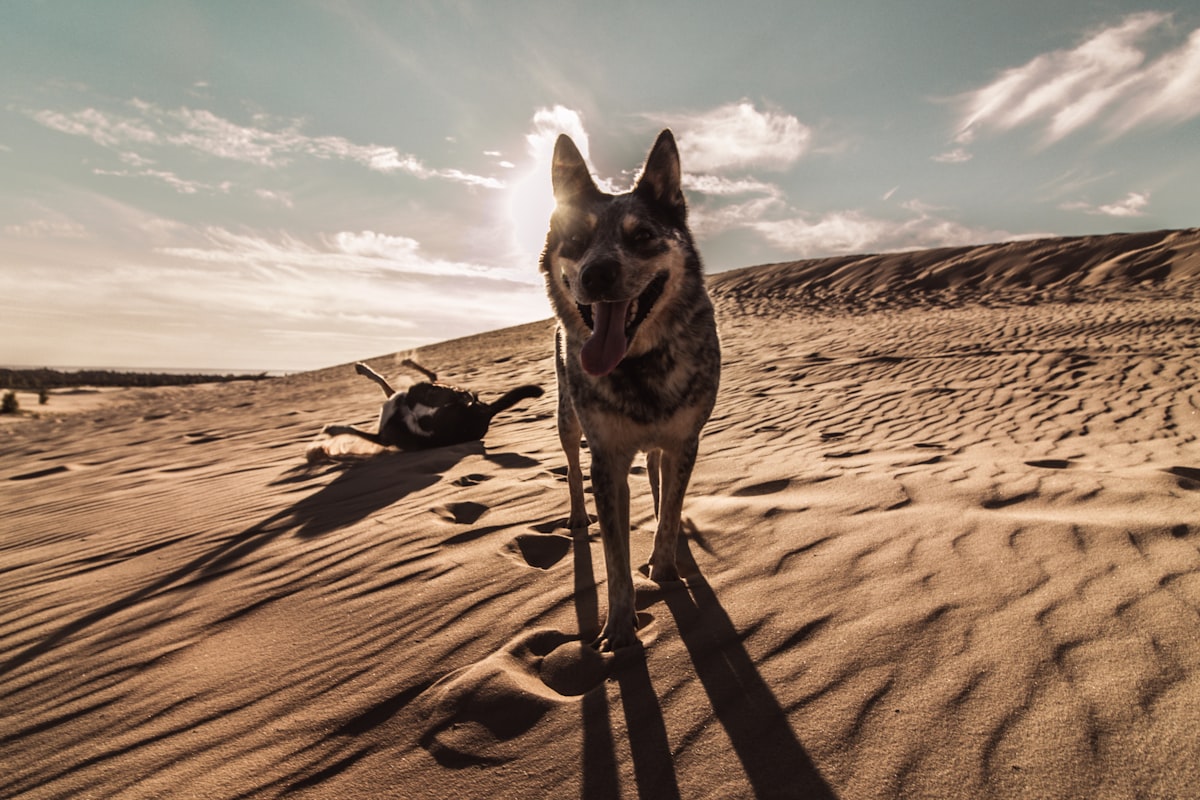
Desert trails test both dogs and humans in ways forested paths never do. Scout and I have hiked through the Sonoran, Mojave, and Chihuahuan deserts, learning that desert hiking requires entirely different protocols. The heat rises earlier, lasts longer, and punishes mistakes severely. What works in the mountains may kill in the desert.
Key Takeaways
- 1Desert hiking requires starting before dawn and finishing before temperatures peak
- 2Ground temperatures can be 40-60 degrees hotter than air temperature
- 3Carry far more water than you think you need - minimum 1 oz per pound of dog per hour
- 4Heat exhaustion can become heat stroke within minutes without intervention
- 5Know when conditions are simply too dangerous for any dog to be outside
The desert is different
Desert rules apply because the environment punishes assumptions. Unlike forests, shade is sparse and often inadequate. Sand and rock radiate heat upward as well as down, cooking your dog from both directions. Natural water sources are rare, often nonexistent, so you carry everything you need or go without.
The conditions deceive you too. Low humidity makes heat feel less dangerous than it is, and many hikers underestimate the danger until symptoms appear. Heat illness progresses faster in desert environments than anywhere else. Desert beauty comes with desert danger. Respect both.
Warning
When ground temperatures exceed 120°F (49°C), even short exposure causes paw burns. If you can't hold the back of your hand to the ground for 7 seconds, it's too hot for paws.
Timing is everything
When to hike matters more than how. Start at dawn because first light often means temperatures in the 70s even in summer. Plan to finish early, off trail by 9 or 10 AM in peak season. Watch the calendar since spring and fall provide safer windows for desert adventures.
Monitor forecasts so you know what you're walking into before you start. Have cutoff temperatures and determine your personal limits, recognizing that most dogs struggle above 85°F ambient. The best desert hike is the one that ends before the heat arrives.
Water requirements
Desert hydration demands attention to quantity and frequency. Plan for 1 ounce of water per pound of dog body weight per hour of hiking in heat. Offer water every 15 minutes, not just when your dog seems thirsty. By the time they act thirsty, dehydration has already begun.
Think carefully about carrying capacity. A 60-pound dog needs at least 60 ounces per hour. Do the math for your hike length. Carry backup supply in case you're delayed or need emergency cooling. Start the hike well-hydrated by offering water before leaving the trailhead. Running out of water in the desert is a life-threatening emergency.
Ground temperature awareness
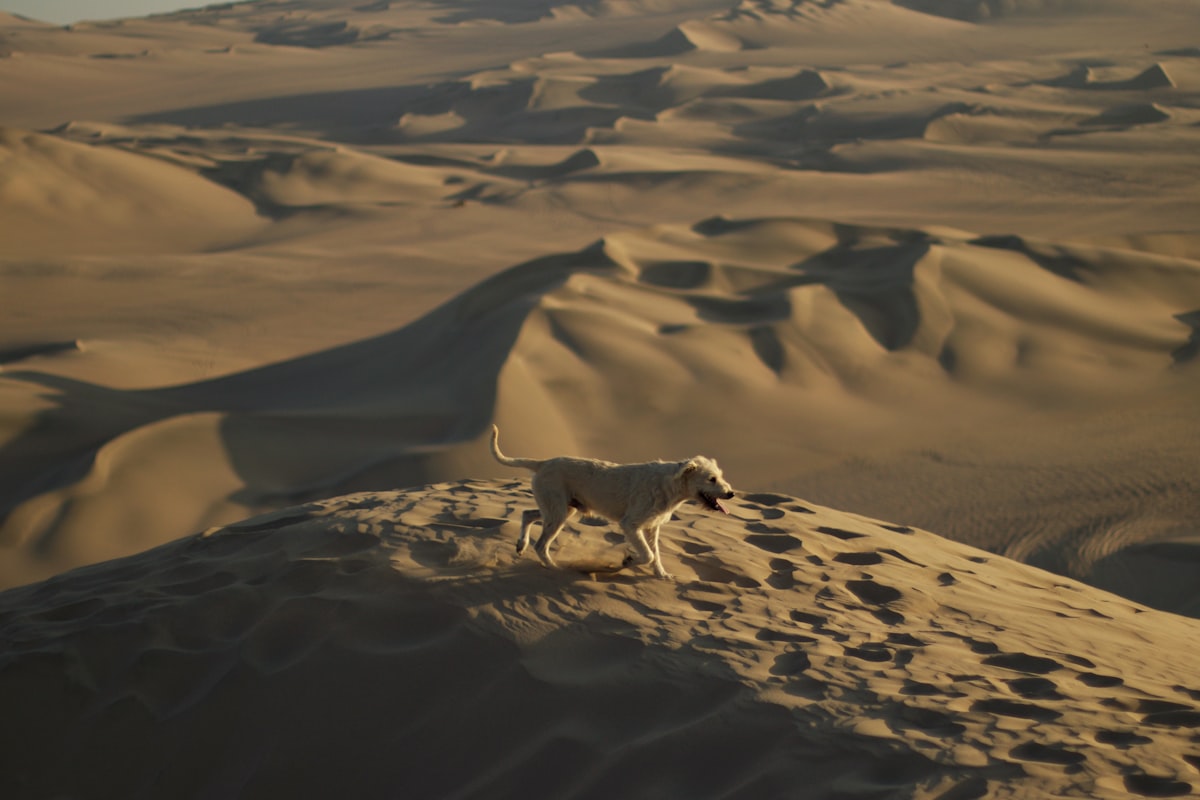
The surface burns in ways air temperature doesn't reveal. Blacktop parking lots can exceed 160°F at midday. Sand runs lighter but still dangerous, often 120-140°F. Dark rock absorbs and radiates intense heat throughout the day and into evening.
Test surface temperature using an infrared thermometer or the 7-second hand test. Dog boots protect paws but add heat stress, so balance that tradeoff carefully. Seek lighter-colored rock and shaded ground when available. Surfaces matter more than most hikers realize.
Recognizing heat stress
Know the signs before you need them. Early warning signs include excessive panting, seeking shade, slowing pace, and excessive drooling. These signals mean your dog is working to stay cool but managing.
Heat exhaustion presents as bright red gums and tongue, rapid shallow breathing, weakness or stumbling, and vomiting. This requires immediate intervention.
Heat stroke is a medical emergency. Gums turn pale or blue. Your dog may collapse, seizure, or lose consciousness. Temperature rises over 104°F. Without cooling, death follows quickly.
Note
Heat stroke kills dogs within 15 minutes. If you see late-stage symptoms, you're in a medical emergency. Begin cooling immediately while getting to a vet.
Emergency cooling
When heat illness strikes, stop immediately. No more exertion. Find shade, even your own body's shadow if nothing else exists. Wet your dog, focusing on paw pads, belly, and inner thighs. Avoid ice-cold water initially because it can constrict blood vessels and trap heat inside.
Fan your dog to enhance evaporative cooling. Offer small amounts of water if conscious, but never force. Get to a vet because heat stroke requires medical treatment even if your dog seems to recover. Cooling starts the moment you recognize a problem.
Breed considerations
Some dogs face higher risk in desert heat. Brachycephalic breeds like Bulldogs, Pugs, and Boxers struggle to cool through panting because their shortened airways limit airflow. Heavy coats trap heat, though shaving doesn't help and may hurt. Avoid extreme conditions with dense-coated dogs instead.
Dark colors absorb more radiant heat than light coats. Older dogs have reduced thermoregulation and face more cardiovascular stress. Overweight dogs carry extra insulation and work harder cardiovascularly. Puppies have immature temperature regulation systems that haven't fully developed. Know your dog's vulnerabilities and adjust accordingly.
Gear for desert hiking
Equip appropriately for desert conditions. Water containers should include collapsible bowls and reservoir systems with dog-accessible valves. Cooling vests use evaporative cooling to lower body temperature several degrees. Booties protect paws from hot surfaces, though they add some heat stress.
Pack an emergency shade structure like a mylar blanket or tarp. Bring a digital rectal thermometer for checking core temperature. Your first aid kit should include electrolyte supplements and cooling supplies. Preparation separates a challenging hike from a deadly one.
When to stay home
Some days are simply too dangerous for desert hiking with dogs. Extreme heat warnings exist for good reasons. Pay attention to overnight lows because if nights don't cool below 75°F, the environment never recovers. Skip the trail when 6 AM is already 90°F with no early morning window.
Watch for humidity combined with heat since humidity reduces panting effectiveness. Consider your dog's history too. If they've struggled with heat before, their tolerance hasn't improved. Desert hiking isn't worth a dead dog. Skip it and try another day.
Pro Tip
Check ground temperature before leaving the car. Many desert trailhead parking lots are asphalt, which can burn paws before you even reach the trail.
Planning desert routes
Choose your routes wisely. Elevation matters because higher trails are cooler. Seek 4000+ feet in summer. Look for canyon hikes with morning shade to reduce exposure. Plan routes near creeks or tanks for emergency cooling access.
Know your bailout options and where you can exit if conditions deteriorate. Shorter distances are safer in extreme heat. Consider that loop trails mean the return hike will be hotter than the outbound leg. Out-and-back trails require walking through the hottest part of the day to return.
Acclimatization
Prepare for desert conditions before you go. Don't jump from sea-level winters to desert summers. Gradual exposure builds tolerance. Start with shorter initial hikes and build over multiple trips.
Fitness helps because a well-conditioned dog handles heat better than an unfit one. Practice in local warm conditions before desert travel. Train your dog for heat just as you'd train for altitude. Desert readiness comes through preparation, not wishful thinking.
Frequently Asked Questions

Sara founded Paths & Paws to share field-tested advice with fellow dog hikers. She believes every dog deserves time on the trail.