 Paths & Paws
Dog food smells just as appealing to bears as your freeze-dried meals do. Store it in a bear canister or hang it with your other food at least 200 feet from camp. I learned this the hard way when a black bear visited our camp in Colorado's Weminuche Wilderness, drawn by the kibble smell from Jasper's bowl. Now I treat dog food with the same respect as bacon.
Key Takeaways
- 1Store dog food in bear canisters alongside human food
- 2Feed your dog at least 200 feet from your sleeping area
- 3Clean bowls immediately and store them with food supplies
- 4Consider low-odor food options for backcountry trips
- 5Never leave food rewards in harness pockets overnight
Why dog food attracts bears
Commercial dog food contains animal fats, proteins, and flavor enhancers specifically designed to smell appealing. To a bear's nose, which is seven times more sensitive than a bloodhound's, your dog's dinner broadcasts across the forest.
Kibble releases odor particles constantly. Even a sealed bag inside your pack emits scent through the fabric. Wet food amplifies this problem tenfold. High-protein, high-fat formulas that fuel your dog's hiking performance also create the strongest scent profiles.
Warning
Bears don't distinguish between human and dog food. A fed bear becomes a problem bear, often leading to the animal being relocated or destroyed. Proper food storage protects wildlife as much as it protects you.
Bear canister storage basics
Your dog's food belongs inside the bear canister with everything else that has an odor. This includes:
- Kibble or dehydrated dog food
- Training treats and trail snacks
- Food bowls after use
- Any clothing that contacted food
- Poop bags if using scented varieties
Most popular bear canisters like the BearVault BV500 or Counter Assault Bear Keg hold enough for a weekend trip's worth of dog food plus human provisions. For longer trips, you may need a second canister or need to ship resupplies.
Pack dog food in odor-proof bags before placing it in the canister. Loksak or Opsak bags add an extra barrier. Double-bagging prevents small kibble pieces from escaping into canister crevices where they're hard to clean.
Hanging food in bear country
Where bear canisters aren't required, the PCT method (also called the counterbalance method) works for dog food storage. You need:
- 50 feet of paracord or bear line
- Two stuff sacks of roughly equal weight
- A throwing rock or weight
Find a branch at least 20 feet high and 10 feet from the trunk. The branch should be sturdy enough to hold weight but thin enough that a bear can't climb it. Hang your food bags so they rest at least 12 feet off the ground and 6 feet from the trunk.
Feeding protocols that reduce risk
Where and when you feed your dog matters as much as how you store the food.
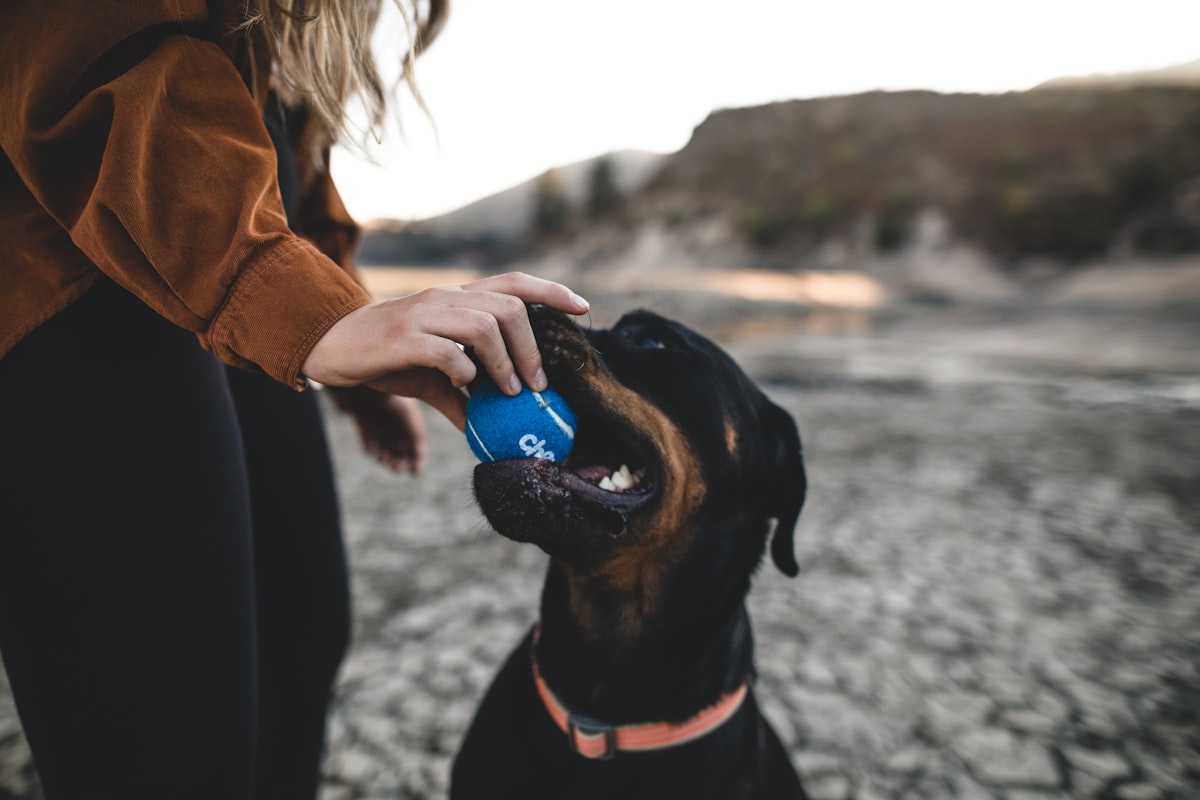
Establish a cooking and eating zone at least 200 feet from your sleeping area and feed your dog in this same zone. Spilled kibble and drool stay far from your tent, reducing the chance that food smells draw bears to where you sleep.
Give your dog their meal immediately after you eat your own dinner. This concentrates all food odors in one location during one time window rather than spreading scent throughout the evening.
Don't let bowls sit out after meals. Wipe them with a bandana, then store both the bowl and bandana in your bear canister. Some hikers carry collapsible silicone bowls specifically because they're easy to clean and pack flat.
Watch your dog eat and retrieve any kibble they drop or stash. Some dogs bury food or carry pieces away to eat later, and those hidden caches create exactly the kind of scattered attractant you're trying to avoid.
Low-odor food options
Not all dog foods smell equally strong. For bear country trips, consider switching to lower-odor options.
Dehydrated or freeze-dried foods from brands like The Honest Kitchen or Stella & Chewy's pack lighter and release fewer odors when sealed. You rehydrate them at mealtimes, which limits the window when food scent is at its strongest.
For treats, single-ingredient options work better than highly processed alternatives. Freeze-dried liver or lung treats have less added fat and fewer aromatic compounds than commercial training treats loaded with flavor enhancers.
Before your trip, repackage food into daily portions. This limits how often you open the main supply during the trip and reduces the canister space needed for packaging.
Pro Tip
Avoid fish-based foods in bear country. Salmon and other fish proteins create particularly strong odors that carry farther than poultry or beef-based options.
Gear considerations
Your dog's gear accumulates food scent over time. Manage it carefully.
If you carry treats in harness pockets during the day, empty them completely at night. Store treats in the bear canister, and consider storing the harness there too if space allows. Even empty pockets retain scent from the oils in treats.
Treat pouches present a similar problem. The fabric absorbs oils and scent over time. Either seal your pouch in an odor-proof bag overnight or hang it with your food.
Pack collapsible bowls that fold flat and fit inside canisters. Hard bowls waste valuable canister space and don't store any more securely.
If your dog sleeps on a pad or in a sleeping bag, don't let them eat on it. Food crumbs and drool on bedding bring scents directly into your sleeping zone, which is exactly what proper bear protocol tries to prevent.
What to do if a bear approaches
Despite precautions, bear encounters happen. If a bear approaches your camp:
- Leash your dog immediately and keep them close
- Make noise and appear large
- Don't run, and don't let your dog chase the bear
- If the bear gets your food, let it have the food
- Report the encounter to rangers when possible
A loose dog can provoke a bear attack by chasing and then retreating back to you with an angry bear following. This is how most dog-related bear incidents occur.
Warning
Never try to retrieve food from a bear. No amount of dog food is worth a mauling. Pack extra food for emergencies so losing a day's supply doesn't end your trip.
Regional considerations
Bear protocols vary by region.
In grizzly country across the Northern Rockies and Alaska, carry bear spray and know how to use it before you need it. Some areas require hard-sided canisters, and grizzlies behave more aggressively than black bears when they encounter food.
The Sierra Nevada requires bear canisters in most wilderness areas. Black bears here have learned to recognize backpacks and will investigate anything that looks like hiker gear.
Appalachian Trail shelters typically provide bear cables or boxes for food storage. These areas see heavy traffic, and the resident bears have learned exactly where hikers keep food.
Pacific Northwest regulations vary by park and forest. Check current requirements before each trip because rules change as bear activity patterns shift.
A final thought on responsibility
Backcountry camping with dogs in bear country demands extra vigilance. Every piece of kibble left on the ground teaches bears that human camps mean food. Every improperly stored bag makes the next camper's encounter more likely to go wrong.
Jasper and I have logged hundreds of miles in grizzly and black bear territory. We've had close encounters, heard bears at night, and found fresh tracks by our tent. The reason these encounters stayed uneventful is consistent food management. Treat dog food like the attractant it is, and you'll reduce your risk to near zero.
Frequently Asked Questions
Kelly has logged over 5,000 trail miles with his dogs across the American West. He specializes in backcountry expeditions and gear testing for large breeds.