 Paths & Paws
Scout usually hikes solo with me, but group hikes with friends and their dogs create different challenges. Three dogs moving down a narrow trail require coordination that one dog doesn't. Passing other hikers becomes an event. Water breaks turn into management exercises. The skills that work for single-dog hiking need modification when numbers increase.
Key Takeaways
- 1Multi-dog groups require pre-hike introductions and compatibility assessment
- 2Trail width determines maximum practical group size for comfortable passage
- 3Yield situations with multiple dogs need coordinated management from all handlers
- 4Clear communication between handlers prevents confusion and conflicts
- 5Each handler must maintain control of their own dog regardless of group dynamics
Before the hike: compatibility
Not all dogs hike well together, and figuring this out before trail day saves everyone grief. Dogs should meet in neutral territory before committing to a group outing. Play style compatibility matters because dogs that play too rough or refuse to engage at all may create tension during breaks and transitions.
Resource guarding around water, treats, and space can trigger conflicts on trail where resources are limited and stress is elevated. Energy level matching prevents frustration since a young lab and a senior beagle will have very different ideas about pace. Some dogs simply dislike close proximity to other dogs regardless of how friendly they seem at the dog park. And human relationships affect dog relationships in ways we don't always predict. Invest in pre-trail introductions before committing to a group hike.
Note
Just because dogs get along in a yard doesn't mean they'll get along on trail. The confined space, exciting environment, and new stimuli of hiking can change dynamics.
Group size limits
Practical constraints determine how many dogs work together on a single trail. Trail width limits comfortable passage, with single-track being the most restrictive. Handler-to-dog ratio should generally be one handler per dog maximum. Beyond that, control capacity drops because you can only manage so much simultaneously.
Yield logistics become exponentially harder as dogs multiply. Getting two dogs off the trail takes a moment. Getting four dogs off takes real coordination. Some areas have permit limits that restrict group size including dogs, so check regulations before planning a large outing. Three to four dogs is often the practical maximum for single-track trails.
Trail formation
How you arrange the group affects everything from pace to safety. Single file is the default on narrow trails, so establish a consistent order early. The strongest handler should lead because they set pace and spot approaching hikers first. Dogs with issues do best in the middle where handlers can intervene from both directions.
Consistent positions help dogs settle because they know their place in the line and what to expect. Spacing should be close enough to maintain control but far enough to prevent leash tangling. Getting formation right reduces chaos and improves flow for everyone.
Yielding to other trail users
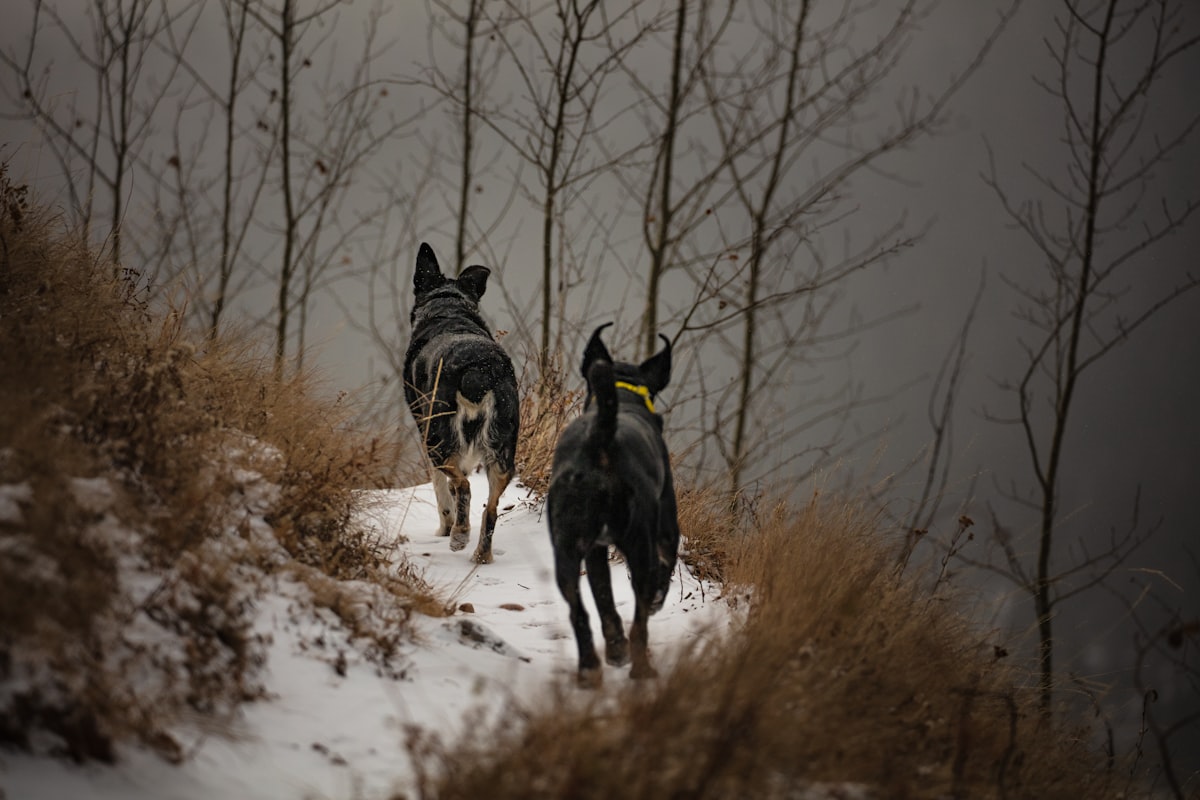
Multi-dog yields require coordination that starts with early recognition. The lead handler calls out approaching traffic so everyone has time to prepare. A verbal signal like "Dogs right!" tells everyone where to position, and staggered positioning puts each handler in their own space off-trail with their dog.
Have dogs under control before other parties reach you rather than scrambling at the last moment. Stay put until the passing is complete since releasing too early invites problems. A quick thank you to the passing party acknowledges their patience and keeps the trail community friendly.
Pro Tip
Develop a consistent vocabulary for trail communication. When everyone knows that "step off" means move right and control your dog, yields go smoothly.
Preventing tangles
Leash management with multiple dogs requires attention and consistency. Appropriate leash length means short enough to prevent wrapping around each other but long enough for reasonable comfort. Each handler should keep their dog on the same side throughout the hike.
Retractable leashes plus multiple dogs equals guaranteed tangles, so leave them at home. When someone needs to reposition, a quick "switching sides" announces the change and prevents collision. If tangles happen anyway, stop completely to fix them rather than trying to untangle while walking. One tangle can quickly involve every leash in the group.
Water and rest breaks
Logistics multiply with more dogs drinking, resting, and needing space. Staggered watering prevents resource guarding issues since even friendly dogs can get possessive at a shared water source. Let one dog drink at a time while others wait at distance.
Individual bowls avoid conflict entirely. Shared bowls invite tension even among friends. Dogs need personal space during rest breaks even if they're hiking companions. Treats should be delivered carefully because high-value food can trigger guarding behavior in group settings. Multiple dogs may try to mark over each other during potty breaks, so keep the group moving to reduce this. Plan for these logistics rather than improvising solutions on the fly.
Handling conflict
When dogs argue on trail, each handler manages their own dog immediately. Separate the dogs first and assess later. Yelling and jerking escalates tension rather than resolving it, so stay as calm as possible while creating physical distance to reduce arousal.
Assess honestly what triggered the conflict. Was it resource guarding? Mounting? A perceived slight? Adjust going forward by changing formation, increasing spacing, or cutting the hike short if needed. Some dogs simply don't hike well together despite getting along in other contexts. Know when to split up and accept that limitation.
Prevention beats management every time. Remove conflict triggers before they escalate.
Warning
Dog fights on trail can injure dogs, handlers, and bystanders. If your group includes dogs with any history of aggression, reconsider whether group hiking is appropriate.
Individual handler responsibility
Each person in the group manages their own dog regardless of what others are doing. You control yours rather than assuming someone else will manage your dog's behavior. Don't correct other people's dogs directly. Focus on your own dog, and if you have suggestions for another handler, share them verbally rather than physically intervening with their dog.
Know your dog's limits honestly. Be ready to leave if your dog can't cope rather than ruining everyone's hike by pushing through problems. Carry your own supplies including bags, water, and treats for your dog. Group hiking works when everyone handles their own responsibilities.
Communication between handlers
Clear communication prevents most problems before they develop. A pre-hike briefing establishes signals, positions, and procedures before anyone starts walking. Ongoing updates keep everyone informed with calls like "Dog approaching," "narrow section ahead," or "let's water here."
Report problems as they develop. "My dog is getting tired" or "Spot is getting reactive" helps the group adjust. Decide in advance how the group will handle decisions about when to stop, turn around, or change plans. Debrief afterward to discuss what worked and what should change next time. Treat group hiking like a team activity because that's exactly what it is.
Trail selection for groups
Choose appropriate terrain for the number of dogs you're managing. Wider trails like double-track and fire roads accommodate groups better than narrow single-track. Lower traffic means fewer yield situations and less coordination required.
Good sight lines give you the ability to see approaching traffic early, which helps everyone prepare. Match terrain difficulty to the least capable dog in the group rather than the most athletic. Loops with bail-out points give options if things go wrong. And always verify that your destination allows your group size under local regulations.
When group hiking isn't working
Recognize failure conditions and respond honestly. Constant conflict between dogs means they shouldn't hike together regardless of how well they get along elsewhere. If you spend more energy managing problems than enjoying the hike, something basic is wrong.
Any situation that risks injury needs to end immediately. If one dog is clearly stressed and miserable, the group isn't working for them even if everyone else is fine. Handler disagreement about management styles creates its own problems that affect the dogs.
Not every dog belongs in every group. Accept limitations and adjust plans accordingly.
Frequently Asked Questions
Sara founded Paths & Paws to share field-tested advice with fellow dog hikers. She believes every dog deserves time on the trail.