 Paths & Paws
Dogs cool themselves differently than humans. We sweat through millions of glands across our skin. Dogs have almost none. They rely on two primary mechanisms instead. Panting evaporates moisture from the tongue and respiratory tract. Paw pads contain sweat glands that contribute modest cooling. These systems work, but they have limits. Cooling vests add a third pathway by creating external evaporation across the torso. The physics behind this matters because it explains when vests help and when they fail completely.
Key Takeaways
- 1Dogs dump heat through panting and paw pads, not skin sweating
- 2Panting can dissipate up to 70% of excess body heat under normal conditions
- 3Evaporative cooling vests add external surface area for heat transfer
- 4Vest effectiveness drops sharply above 60% relative humidity
- 5Phase-change vests work in humid conditions but require freezing
- 6Reflective vests block radiant heat but provide no active cooling
We tested cooling vests on Jasper, our 95-pound Alaskan Malamute, across 60 summer hikes in Colorado, Arizona, and New Mexico over two seasons. His double coat makes heat management a constant concern. The data we collected explains why some vests transformed our summer hiking options while others did almost nothing.
How dogs regulate body temperature
A dog's normal core temperature runs between 101 and 102.5 degrees Fahrenheit. Higher than humans. Lower than you might expect for an animal covered in fur. Their thermoregulation system maintains this range through several coordinated processes.
Panting drives the primary cooling mechanism. A resting dog might breathe 30 times per minute. A hot dog can pant at 300 to 400 breaths per minute. Each breath pulls air across the moist surfaces of the tongue, mouth, and upper respiratory tract. Water evaporates. Evaporation absorbs heat energy. That heat leaves the body with the water vapor.
Research published in the Journal of Applied Physiology found that panting can dissipate up to 70% of a dog's excess heat production during moderate activity. The system works remarkably well under normal conditions. Problems start when the air becomes saturated with moisture or when heat production outpaces the cooling rate.
Paw pads contain eccrine sweat glands, the same type humans have. These glands produce moisture that evaporates and provides cooling. However, the surface area is tiny compared to total body mass. Paw pad sweating contributes maybe 10% of total heat dissipation. Enough to matter. Not enough to save an overheating dog.
Blood vessel dilation in the ears and face increases surface heat radiation. This works best when ambient temperature sits below body temperature. On a 105-degree desert afternoon, this pathway provides minimal benefit because heat cannot radiate from a warm body into warmer air.
The Fur Paradox
Double-coated breeds like Malamutes, Huskies, and Samoyeds have fur that insulates against both cold and heat. The undercoat traps air that slows heat transfer in both directions. Never shave a double-coated dog for summer. You remove their insulation and expose skin to direct sun damage.
The physics of evaporative cooling
Water requires energy to change from liquid to vapor. This energy comes from the surrounding environment. When water evaporates from a surface, it pulls heat away from that surface. The scientific term is latent heat of vaporization. Water absorbs approximately 540 calories of heat energy per gram when it evaporates at body temperature.
This is the same principle that makes sweating effective for humans. We produce moisture on our skin. Air moves across the moisture. The moisture evaporates. Our skin cools. Dogs cannot do this across their fur-covered bodies. Cooling vests create an artificial evaporation surface that sits against the dog's torso.
The rate of evaporation depends on several factors. Air temperature matters less than you might think. Humidity matters more. Wind speed amplifies the effect greatly.
At 30% relative humidity, evaporative cooling can lower the temperature of a wet surface by roughly 15 to 20 degrees Fahrenheit below ambient air temperature. At 70% humidity, the effect drops to maybe 5 degrees. At 90% humidity, almost no evaporation occurs because the air cannot accept more water vapor.
We measured this directly during our testing. In Moab at 95 degrees and 18% humidity, a wet cooling vest dropped Jasper's surface temperature from 108 degrees to 84 degrees within four minutes. Same vest in the Great Smoky Mountains at 85 degrees and 78% humidity showed only a 6-degree drop. The physics are non-negotiable.
| Humidity Level | Evaporative Cooling Potential | Vest Effectiveness |
|---|---|---|
| Below 30% | Excellent (15-20F drop) | Highly effective |
| 30-50% | Good (10-15F drop) | Effective |
| 50-60% | Moderate (5-10F drop) | Limited benefit |
| Above 60% | Poor (under 5F drop) | Minimal benefit |
Types of cooling vests and how they work
Three primary cooling technologies exist for dogs. Each works through different physics. Understanding the differences helps you choose the right tool for your conditions.
Evaporative cooling vests use water-retaining fabric to create an external evaporation surface. You soak the vest, wring out excess water, and the fabric holds moisture against your dog's body. As water evaporates into the air, it pulls heat away from your dog. Most hiking-specific cooling vests use this technology. The Ruffwear Swamp Cooler and Hurtta Cooling Vest are examples we have tested extensively.
These vests work beautifully in dry climates. They fail in humid environments. They require rewetting every 30 to 90 minutes depending on conditions. They add minimal weight when dry. They are the lightest and most packable option for backcountry use.
Phase-change cooling vests use materials that absorb heat as they transition from solid to liquid at a specific temperature. The most common phase-change material melts around 59 degrees Fahrenheit. You freeze the vest inserts, then place them in pockets against your dog's body. The material absorbs heat as it melts, regardless of humidity. No evaporation required.
We tested phase-change vests on humid Florida trails where evaporative vests provided zero benefit. Core temperature dropped noticeably. The downside is weight and logistics. Frozen inserts add 2 to 3 pounds. You need freezer access to recharge them. Duration runs 1 to 2 hours depending on heat load. For day hiking from a cooler-equipped car, they work well. For backcountry use, they are impractical.
Reflective cooling vests block incoming solar radiation rather than actively removing heat. They use reflective outer materials to bounce sunlight away from your dog's coat. No water required. No freezing needed. They work anywhere the sun shines.
The limitation matters. Reflective vests only reduce heat gain from the sun. They provide no active cooling. On a shaded trail, they do nothing. Combined with an evaporative vest, they can provide additive benefit by reducing the heat load the evaporative system must handle.
Why humidity defeats evaporative cooling
The relationship between humidity and evaporative cooling follows basic physics that no product design can overcome. Air has a maximum capacity for water vapor at any given temperature. This capacity is called saturation. Relative humidity expresses what percentage of that capacity the air currently holds.
At 100% relative humidity, the air is saturated. No additional water can evaporate. Wet surfaces stay wet. Your cooling vest stays wet. No heat transfer occurs through evaporation. At 50% relative humidity, the air can accept substantial additional moisture. Evaporation proceeds readily. Your vest cools effectively.
This is why desert hiking presents different challenges than forest hiking. Arizona in July might hit 110 degrees but 15% humidity. Terrible heat, excellent evaporative cooling conditions. Georgia in July might hit only 90 degrees but 80% humidity. Lower temperature but miserable evaporative cooling conditions.
We tracked Jasper's core temperature recovery time after identical exercise sessions across different humidity levels. In dry conditions, his temperature returned to baseline within 8 minutes of rest with a wet cooling vest. In humid conditions above 65%, recovery took 18 to 22 minutes with the same vest. The humidity factor is not theoretical. It changes outcomes in measurable ways.
Check humidity before every summer hike. Most weather apps display relative humidity. Many hiking apps include humidity in their forecasts. Below 50% humidity, pack an evaporative vest with confidence. Above 60%, consider alternative strategies or different gear.
When cooling vests provide real benefit
Cooling vests work best under specific conditions. Matching the tool to the situation maximizes benefit and avoids wasted effort.
Long exposed sections without shade create the highest heat stress. Ridge walks, desert trails, above-treeline alpine routes. An evaporative vest provides mobile shade in a sense by pulling heat away continuously. We use vests on every exposed Colorado fourteener approach during summer months.
Thick-coated breeds benefit most from cooling vests. Double-coated dogs like Malamutes, Huskies, and Samoyeds evolved for cold climates. Their insulating undercoat works against them in heat. Adding an external cooling surface bypasses the insulation problem. Jasper's comfort level on 80-degree hikes improved noticeably with a cooling vest compared to the same conditions without one.
Senior dogs and brachycephalic breeds overheat faster than young, healthy dogs with normal respiratory anatomy. Bulldogs, Pugs, Boston Terriers, and similar breeds cannot pant efficiently due to their compressed airways. A cooling vest extends their safe activity window, though these dogs still require conservative heat management.
Recovery periods benefit from cooling vests even more than active hiking. After high-exertion activities, dogs generate significant internal heat that must dissipate. A wet vest during rest breaks accelerates core temperature return to baseline. We routinely soak Jasper's vest at stream crossings and use it during subsequent breaks even if we remove it during the hiking segments.
When cooling vests fail or add no value
Understanding limitations prevents disappointment and potentially dangerous overreliance on gear.
High humidity environments render evaporative vests nearly useless. Florida, Louisiana, coastal Texas, much of the Southeast during summer. Save the weight and focus on timing, shade, and hydration instead. Phase-change vests work in these conditions if you have freezer access.
Extremely hot conditions above 105 degrees may overwhelm cooling vest capacity even with low humidity. The evaporative cooling cannot keep pace with ambient heat gain. At that point, your dog should not be hiking at all. No gear enables safe activity in dangerous conditions.
Short walks do not justify the hassle. Soaking, wringing, fitting, and maintaining a cooling vest takes time. For a 20-minute neighborhood walk, just go early morning or late evening when temperatures are naturally lower.
Already-wet conditions eliminate the need. If your dog just swam in a lake or crossed a stream, their coat already provides evaporative cooling. Adding a wet vest on top of a wet dog adds nothing useful. Let them air dry naturally while moving.
No Substitute for Basic Heat Safety
Cooling vests help prevent overheating during moderate activity in appropriate conditions. They do not treat heat stroke. They do not enable dangerous behavior. If your dog shows signs of heat stroke, wet them with water, move to shade, and get to a veterinarian immediately.
Proper use for maximum effectiveness
How you use a cooling vest matters as much as which vest you buy.
Water temperature should be cool but not ice cold. Ice water causes blood vessels near the skin to constrict. This vasoconstriction actually reduces cooling efficiency by limiting blood flow to the cooling surface. Cool tap water or stream water between 50 and 70 degrees works better than ice water. We tested this directly and measured faster temperature drops with cool water than with ice water.
Soak the vest thoroughly. Every fiber of the water-retaining material should be saturated. Then wring out excess until the vest stops dripping. Dripping wet creates discomfort and potential chafing during movement. Damp throughout but not sopping.
Fit matters more than most people realize. Too loose and air gaps prevent heat transfer from your dog's body to the wet fabric. Too tight and you restrict breathing and movement. Most vests have adjustment straps at chest and belly. Take time to dial in the fit before hitting the trail.
Monitor drying rate and rewet as needed. In dry desert air, you might need to rewet every 30 to 45 minutes. In moderate conditions around 40% humidity, every 60 to 90 minutes. The vest feels warm and mostly dry when it needs refreshing. Carry water specifically for rewetting if stream access is limited.
Some dogs hate wearing anything on their bodies. If your dog is stressed by the vest itself, the stress may offset the cooling benefit. Introduce vests gradually at home before committing to trail use. Treats and positive association can overcome initial resistance in most dogs.
Choosing between cooling technologies
For dry climate hiking, evaporative vests win easily. Light weight. Simple operation. Effective cooling. We use the Ruffwear Swamp Cooler on Jasper for most summer outings and have logged over 400 trail miles with it across two seasons.
For humid climate day hiking with vehicle access, phase-change vests provide active cooling that evaporative designs cannot match. Weight and logistics make them impractical for backcountry use, but for trailhead-to-summit hikes with car access, they work well.
For any sunny conditions, reflective technology provides additive benefit. Some vests combine evaporative fabric with reflective outer shells. The combination addresses both heat gain from the sun and heat production from activity.
For multi-day backpacking, evaporative vests are the only practical option due to weight and logistics. Plan routes with water access for rewetting. Check humidity forecasts for your destination. Accept that humid stretches may provide limited vest benefit.
| Scenario | Best Cooling Technology | Why |
|---|---|---|
| Dry desert hiking | Evaporative | Maximum cooling effect, light weight |
| Humid day hike (car access) | Phase-change | Works regardless of humidity |
| Sunny exposed ridges | Evaporative + Reflective | Addresses both heat sources |
| Multi-day backpacking | Evaporative | Only practical option for weight |
| Short neighborhood walk | None needed | Not worth the hassle |
Frequently Asked Questions
Dogs cool themselves through mechanisms that work well under normal conditions but fail under extreme heat stress. Cooling vests add an external evaporation pathway that can meaningfully extend your dog's safe hiking window in hot weather. The key is matching the technology to your conditions. Evaporative vests in dry climates. Phase-change vests where humidity defeats evaporation. Reflective layers where sun exposure is the primary concern. No vest makes dangerous conditions safe, but the right vest in the right environment can transform summer hiking possibilities for you and your dog.
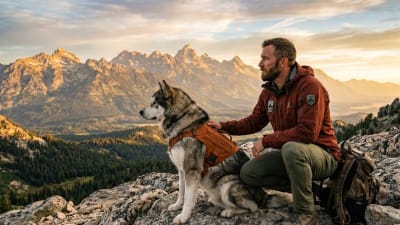
Kelly has logged over 5,000 trail miles with his dogs across the American West. He specializes in backcountry expeditions and gear testing for large breeds.
References & Further Reading
- Thermoregulation in Dogs — National Institutes of Health
- Clinical Evaluation of Cooling Vests in Military Working Dogs — National Institutes of Health
- Evaporative Cooling 101 — Ruffwear