 Paths & Paws
Multi-use trails bring together hikers with dogs and mountain bikers, two groups who sometimes surprise each other. Bikes come around blind corners faster than expected. Dogs dart into the trail unexpectedly. The result can be a collision that injures your dog, crashes the rider, or both. Scout and I hike dozens of multi-use trails each year. Awareness and consistent leash control have kept every bike encounter incident-free.
Key Takeaways
- 1Mountain bikers can approach quickly and quietly - stay alert on shared trails
- 2Keep your dog on the same side of the trail as you, never stretched across the path
- 3Move to a single file when bikes approach from either direction
- 4Standard etiquette says bikes yield to hikers, though you should make it easy for them
- 5Some trails have directional or one-way sections - know the rules before you go
The challenge of shared trails
Multi-use trails create potential conflicts that stem from how differently hikers and bikers move through space. Hikers travel at 2-3 mph while mountain bikers often reach 10-15 mph or faster, leaving less reaction time for everyone. Modern bikes with quality components make surprisingly little noise, so a rider can be upon you before you hear them coming.
The sightlines differ too. Bikers focus intensely on the trail immediately ahead while hikers tend to look around more. Neither may spot the other until they're close. Add an unpredictable dog crossing the trail path and you've created a real hazard for fast-moving bikes. Some hikers resent bike traffic, some bikers resent leash requirements, and that underlying tension doesn't help anyone stay safe.
Note
Most trail conflicts come from surprise, not malice. Both hikers and bikers are trying to enjoy the same space. Awareness prevents most problems.
Know the trail etiquette hierarchy
Standard trail right-of-way rules place horses at the top. Everyone gives way to equestrians, no exceptions. Hikers yield to horses, and mountain bikers yield to both horses and hikers. When same-type users meet, the person going uphill typically has right of way.
But practical reality often differs. Bikes moving fast are harder to stop than hikers moving slowly. Many experienced hikers simply step aside for bikes because it's easier and safer, even though bikes technically should yield. Be the bigger person. Don't stand on principle if stepping aside prevents an accident. Pride doesn't protect against injuries.
Keeping your dog safe from bikes
Your primary job is protecting your dog. Keep them on a short leash beside you, never with slack stretching across the trail. Pick a side and consistently walk your dog there. This prevents last-second lane changes when bikes approach.
When bikes come, move yourself and your dog to the side of the trail. Don't let your dog remain in the travel zone. For high-speed bike approaches, grab your dog's collar or harness handle in addition to holding the leash. And skip the retractable leashes entirely. Those thin cords are invisible to bikers and create dangerous clothesline hazards.
Responding to approaching bikes
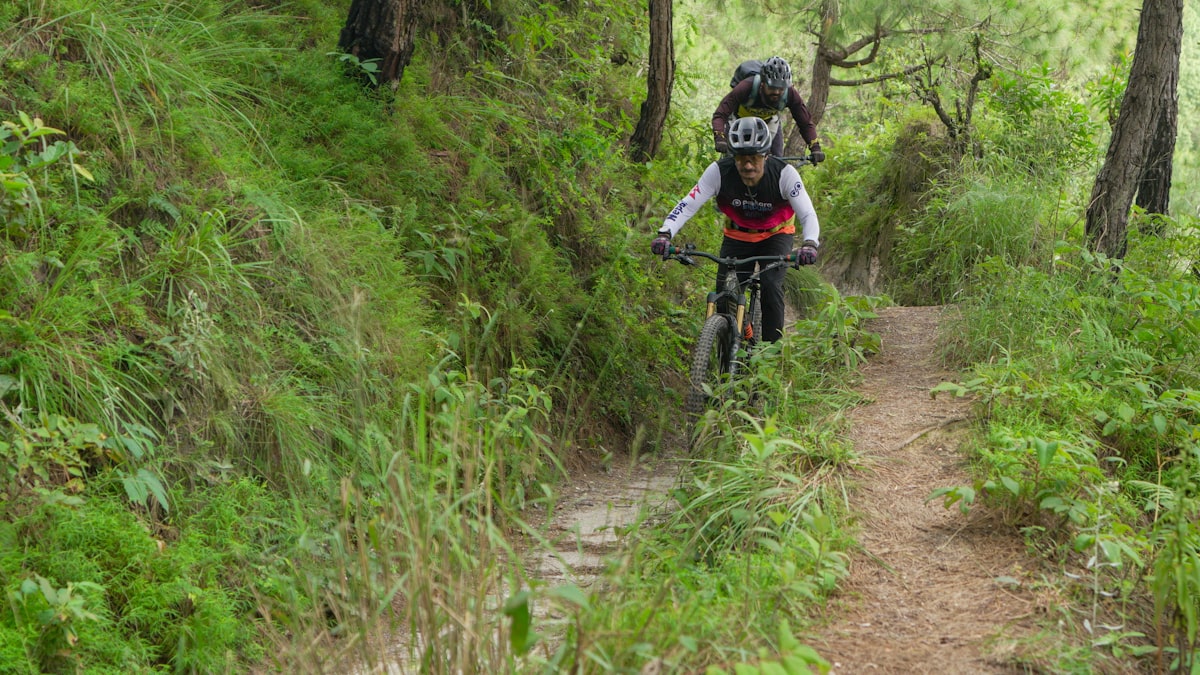
When you hear or see a bike coming from ahead, move to the side of the trail, keep your dog close, and make eye contact with the rider so they know you see them. For bikes approaching from behind, step off trail on a consistent side rather than randomly moving around trying to guess which side they'll pass on.
Multiple bikes require patience. Wait for the entire group to pass before stepping back onto the trail. Bikers often ride together, and stepping back too soon catches a trailing rider off guard. When a bike approaches quickly, verbal communication helps. A clear "I've got my dog" tells the rider they can focus on navigating the trail.
Pro Tip
Look behind you periodically on multi-use trails. Checking over your shoulder every minute or so prevents bike surprises from behind.
Trail awareness strategies
Staying alert on busy trails means keeping your headphones out. Earbuds prevent hearing approaching bikes, so save the music for hiker-only trails. Watch corners carefully since blind curves are high-risk zones. Slow down and stay alert through them.
Listen for sounds that signal approaching bikes. Braking, shifting, tire noise, and occasionally bells all give you warning. Fresh tire tracks indicate recent bike traffic and suggest staying alert. Some trails are busier with bikes in the morning or evening, so checking traffic patterns helps you time your hikes accordingly.
Teaching your dog to ignore bikes
Dogs who react to bikes create dangerous situations. Many dogs have a chase instinct that makes them want to pursue fast-moving objects. This is especially dangerous with bikes. Other dogs lunge or bark out of fear, which startles riders.
The training approach starts with stationary bikes. Reward calm behavior, then practice with slow-moving bikes at distance. Gradually increase proximity and speed over multiple sessions. Until your dog is reliable around bikes, avoid high-traffic multi-use trails or go during quiet hours when encounters are rare.
When things go wrong
Accidents happen despite best efforts. Your dog's safety comes first, so assess for any injuries before anything else. If there's an injury or property damage, exchange contact information like you would for a car accident.
Stay calm throughout. Getting angry doesn't help. Most bike-dog incidents aren't anyone's fault; they're the result of shared-trail challenges that sometimes go sideways. After any close call or incident, think about what you could do differently next time.
Warning
A collision between a bike and a dog can seriously injure both the dog and the rider. Prevention through awareness and control is far better than dealing with aftermath.
Trail selection matters
Choose trails that match your comfort level. If bike encounters stress you or your dog, seek out trails designated for foot traffic only. Some multi-use trails see minimal bike traffic anyway. Ask at local shops or ranger stations about quieter options.
Timing matters too. Bike traffic often peaks on weekends and after work hours, so weekday mornings may be quieter. Some trail systems have one-way sections for bikes, which are actually safer because bike direction becomes predictable. Highly technical terrain slows bikes down, reducing speed differentials between you and riders.
Being a good trail citizen
Positive interactions build community. A few small habits go a long way.
- Acknowledge bikers who yield or slow down with a wave or thanks
- Step aside proactively rather than making bikers stop completely
- Keep your dog under control so bikers feel comfortable
- Don't lecture bikers about right-of-way; model good behavior instead
- Report actual unsafe behavior to land managers, not just annoyances
Working toward better trails
Long-term solutions benefit everyone. Advocate for trail improvements like wider paths, better sightlines at corners, and passing zones that make shared use safer. Support trail etiquette education since many land managers post guidelines that deserve wider attention.
Some areas benefit from bike-specific and hike-specific trail networks. Join trail work days to help maintain the resource. You'll meet both hikers and bikers who care about keeping trails accessible for everyone.
Frequently Asked Questions
Sara founded Paths & Paws to share field-tested advice with fellow dog hikers. She believes every dog deserves time on the trail.