 Paths & Paws
Every dog gets tired after a good hike. That's normal. But there's a line between healthy fatigue and dangerous over-exertion, and that line is thinner than most hikers realize. We've watched Cedar, our 12-year-old Golden Retriever, push through exhaustion more times than we'd like to admit. She doesn't complain. She just slows down. Trusts us to notice.
The difference between tired and over-exerted often comes down to recovery. A tired dog bounces back after a rest break and some water. An over-exerted dog doesn't recover quickly. They show unusual symptoms. Some need veterinary attention. Knowing the difference could save your dog's life on the trail.
What You'll Learn
- 1How to distinguish normal fatigue from dangerous over-exertion
- 2Physical symptoms that signal your dog has pushed too far
- 3Behavioral changes that indicate exhaustion beyond normal tiredness
- 4Recovery timelines and when to seek veterinary care
Normal tiredness looks like this
Healthy trail fatigue has predictable patterns. Your dog pants during exertion. They slow their pace on uphills. Shade becomes a priority during breaks. Normal stuff. A dog managing their energy well still shows interest in their surroundings, even when moving slower.
We measure normal recovery in minutes, not hours. After a 10-minute rest in shade with water available, a normally tired dog's breathing should settle closer to baseline. Their tongue returns to normal color. They stand up willingly when you start moving again, even if they're not bounding with excitement.
Normal fatigue happens gradually over the course of a hike. Your dog's energy decreases as miles accumulate. That's just physics. But they remain responsive, engaged, and coordinated throughout.
Healthy tiredness looks like this on the trail.
- Panting that slows down during rest breaks
- Seeking shade but remaining alert
- Taking treats when offered
- Walking behind you instead of pulling ahead
- Lying down during breaks but getting up without hesitation
If your dog shows these patterns, you're probably managing their exertion well. Keep monitoring. Stay hydrated. Match your pace to their comfort level.
Physical signs of over-exertion
The body doesn't lie when a dog pushes too far. Symptoms move past normal tiredness into something more alarming, and they tend to stack up fast.
Excessive panting that doesn't improve with rest is the first red flag. We're talking about rapid, shallow breathing that continues for 15 to 20 minutes even in shade. The tongue may hang far out of the mouth, sometimes looking swollen or darker than usual. In severe cases, breathing becomes labored and noisy.
Gum color tells you a lot. Healthy gums are pink and moist. Press a fingertip against the gum, release, and watch how fast the pink color returns. In a healthy dog, that happens within two seconds. Slow capillary refill time, or gums that look pale, gray, or brick red, signals circulation problems from overheating or exhaustion.
Muscle tremors and weakness often follow heavy exertion. You might notice shaking in the legs, difficulty standing, or a wobbly gait. Some dogs develop a stiff, wooden walk because their muscles have cramped.
| Warning Sign | What It Looks Like | Severity |
|---|---|---|
| Excessive panting | Rapid, shallow, doesn't slow with rest | Moderate |
| Pale or gray gums | Loss of normal pink color | Serious |
| Slow capillary refill | Color takes 3+ seconds to return | Serious |
| Muscle tremors | Visible shaking in legs or body | Moderate |
| Wobbly gait | Uncoordinated, staggering movement | Serious |
| Refusing to walk | Lies down and won't move | Serious |
Paw pad injuries often accompany over-exertion because a struggling dog keeps pushing when they should stop. Check the pads for raw spots, cracks, or bleeding. A dog limping or licking their paws obsessively may have pushed through pain signals they should have heeded.
Immediate Action Required
If your dog shows pale gums, won't stand, or seems disoriented, stop hiking immediately. Move them to shade. Offer water. Begin cooling measures. These symptoms require veterinary evaluation, even if they improve with rest.
Behavioral red flags
Behavioral changes sometimes appear before physical symptoms become obvious. Your dog can't tell you they're in trouble, but their actions will.
Sudden loss of interest is the most reliable early sign we've seen. Your dog who normally sniffs every tree and investigates every sound goes quiet. They stop looking around. The tail droops or tucks. That flat expression means they've hit empty and they're saving what's left for basic functions.
Your dog turning down treats says more than any thermometer. Most dogs eat regardless of circumstances. Even when exhausted. When a dog refuses their favorite snack, something has shifted internally. Their body is conserving resources for what matters most. Pay attention.
Some dogs get irritable when they've pushed too far. They snap at you, at other dogs, at nothing in particular. Stress behavior. A normally good-natured dog who starts snapping on the trail is telling you something has gone sideways.
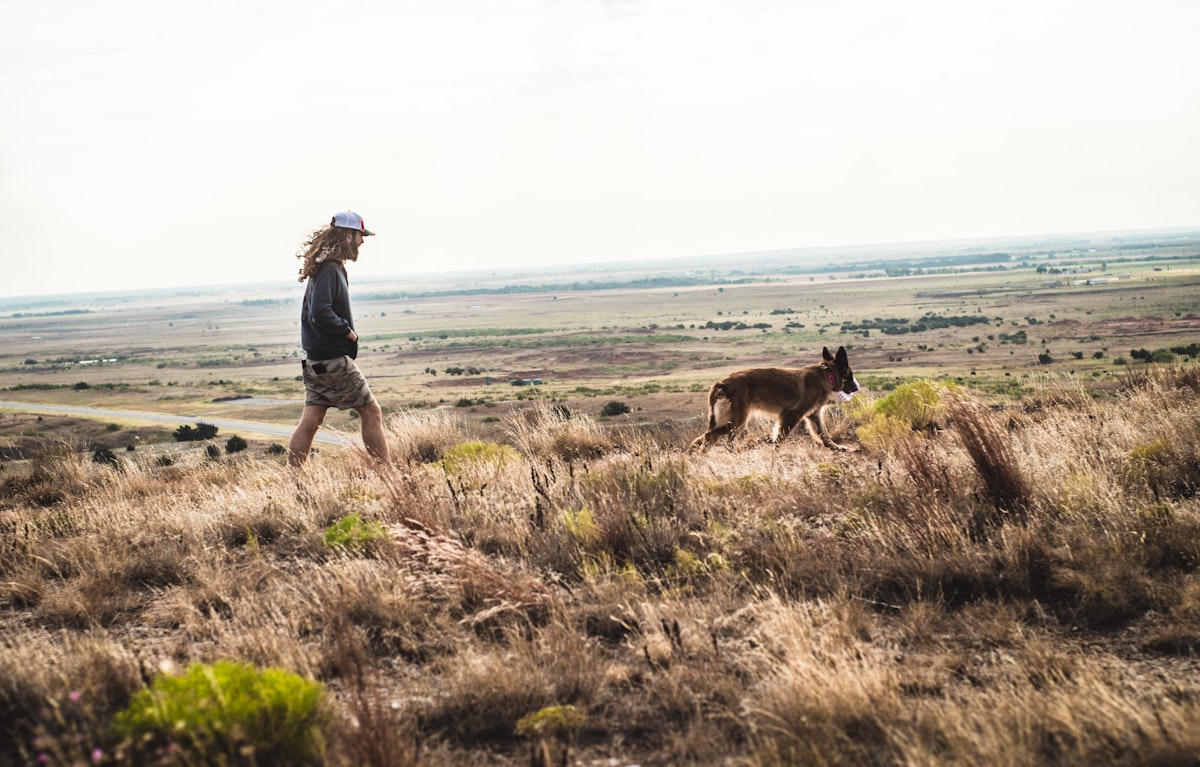
We've noticed Cedar exhibits a specific pattern when she's approaching her limit. She stops checking in with us. Normally she glances back every few minutes to confirm we're following. When those check-ins stop, she's running on empty.
A few more patterns we've learned to watch.
- Falling behind consistently, even on flat sections
- Seeking any available shade and refusing to leave it
- Disorientation or confusion about direction
- Excessive clinginess or staying right at your heels
- Lying down suddenly in the middle of the trail
How recovery time reveals the truth
Recovery speed tells you more than any single symptom. Normal fatigue fades on schedule. Over-exertion hangs around like it owns the place.
Give a healthy tired dog 30 minutes with shade and water and watch what happens. Breathing slows. Energy trickles back. They'll sniff at something, maybe investigate a squirrel. By the time you get home, they're closer to normal.
Over-exertion doesn't work that way. Hours pass. Your dog still looks flat. Sometimes the lethargy bleeds into the next day. They skip meals. Refuse to get up for bathroom breaks. Muscles stay sore for 48 hours or longer.
| Recovery Pattern | Normal Fatigue | Over-Exertion |
|---|---|---|
| Breathing normalizes | Within 10-15 minutes | 30+ minutes or doesn't fully normalize |
| Interest in surroundings | Returns quickly with rest | Stays flat and disengaged |
| Appetite | Normal at next meal | May skip meals |
| Movement willingness | Ready to move after break | Reluctant, may refuse |
| Next-day energy | Normal or near normal | Lethargic, may skip activities |
We track Cedar's recovery informally after every hike. A normal hike leaves her napping for a few hours before she's ready for her evening walk around the neighborhood. An over-exertion episode means she doesn't want that evening walk. She might not want her morning walk either.
When to end the hike immediately
Some situations demand instant action. No discussion. No rest breaks. Continuing the hike risks serious harm or death.
End the hike if any of these appear.
- Collapse or inability to stand
- Vomiting or diarrhea on trail
- Gums turning pale, gray, or bluish
- Disorientation or not recognizing you
- Seizure activity of any kind
- Extreme muscle stiffness or weakness
These symptoms indicate your dog has moved beyond over-exertion into a medical emergency. Heat stroke presents this way. So does exercise-induced collapse. Severe dehydration too. Do not wait to see if they improve.
Move your dog to shade immediately. Wet them down with cool water on the belly, paw pads, and inner thighs where blood vessels run close to the surface. Offer small amounts of water but don't force them to drink. Fan the wet fur to increase evaporative cooling.
Exercise-Induced Collapse
Some breeds, especially Labrador Retrievers, carry a genetic condition causing exercise-induced collapse. Affected dogs collapse after 5 to 20 minutes of intense activity and typically recover within 30 minutes. If your dog experiences repeated collapse episodes, genetic testing through your veterinarian can identify the condition.
Then get to a veterinarian. Even if your dog seems to recover with cooling, internal damage may have occurred. Organ damage from heat stroke or severe dehydration isn't always visible externally.
Prevention on every hike
Prevention beats intervention. Every time. We've adjusted our approach with Cedar over the years, especially as she's aged into her senior years.
Start with realistic expectations. Your dog's limit isn't the same as your limit. A fit human can push through discomfort that would damage a dog. Watch your dog, not your mileage goal.
Build fitness gradually. A dog that spends weekdays on the couch isn't ready for a 10-mile mountain hike on Saturday. We recommend increasing distance by no more than 10 to 15 percent per week. Condition muscles first. Then work on paw pads. Cardiovascular fitness follows with consistent mileage.
Schedule rest breaks proactively. We stop every 30 minutes in warm weather, regardless of how Cedar looks. These mandatory breaks prevent the cumulative stress that leads to over-exertion. A five-minute rest costs you little and buys significant recovery time.
Watch environmental conditions. High humidity makes cooling through panting much less effective. Hot pavement burns paw pads and radiates heat onto your dog. Altitude reduces oxygen availability. Adjust your plans based on current conditions. What worked last month might not work today.
Keep your dog's specific risk factors in mind.
- Brachycephalic breeds overheat faster due to airway anatomy
- Thick double-coated breeds hold more body heat
- Senior dogs have reduced temperature regulation capacity
- Overweight dogs generate more heat per unit of movement
- Dogs with heart or respiratory conditions have less reserve
For more on recognizing dangerous conditions, see our guide on signs of heat exhaustion in dogs while hiking.
Building your dog's hiking stamina safely
Building your dog up for longer trails takes time. Rush it and you create the exact problem you're trying to prevent.
Start with what your dog can handle comfortably today. If that's a 2-mile walk on flat ground, that's your baseline. Next week, try 2.2 or 2.3 miles. The week after, add a small hill. This progressive loading builds fitness without overwhelming your dog's recovery capacity.
Monitor recovery after each session. If your dog bounces back within an hour or two, you can maintain or slightly increase the next outing. If recovery takes longer, you've found your current limit. Back off and hold at that level for another week or two.
Pay attention to paw pad conditioning separately. Soft pads on rough terrain will give out before muscles do. Walk your dog on varied surfaces during training. We incorporate gravel paths and rocky trails into shorter walks to toughen Cedar's pads.
For a structured approach to building endurance, check out our 4-week plan for improving your dog's hiking stamina.
Frequently asked questions
Frequently Asked Questions
Dr. Jennifer Coates, DVM, brings 25+ years of clinical experience to Paths & Paws. Based in Fort Collins, Colorado, she specializes in preventive medicine and evidence-based nutrition for active dogs.
References & Further Reading
- Signs Your Dog Is Getting Too Much Exercise — PetMD
- Exercise-Induced Collapse in Dogs — PetMD
- Exercise Intolerance in Dogs — Wag Walking