 Paths & Paws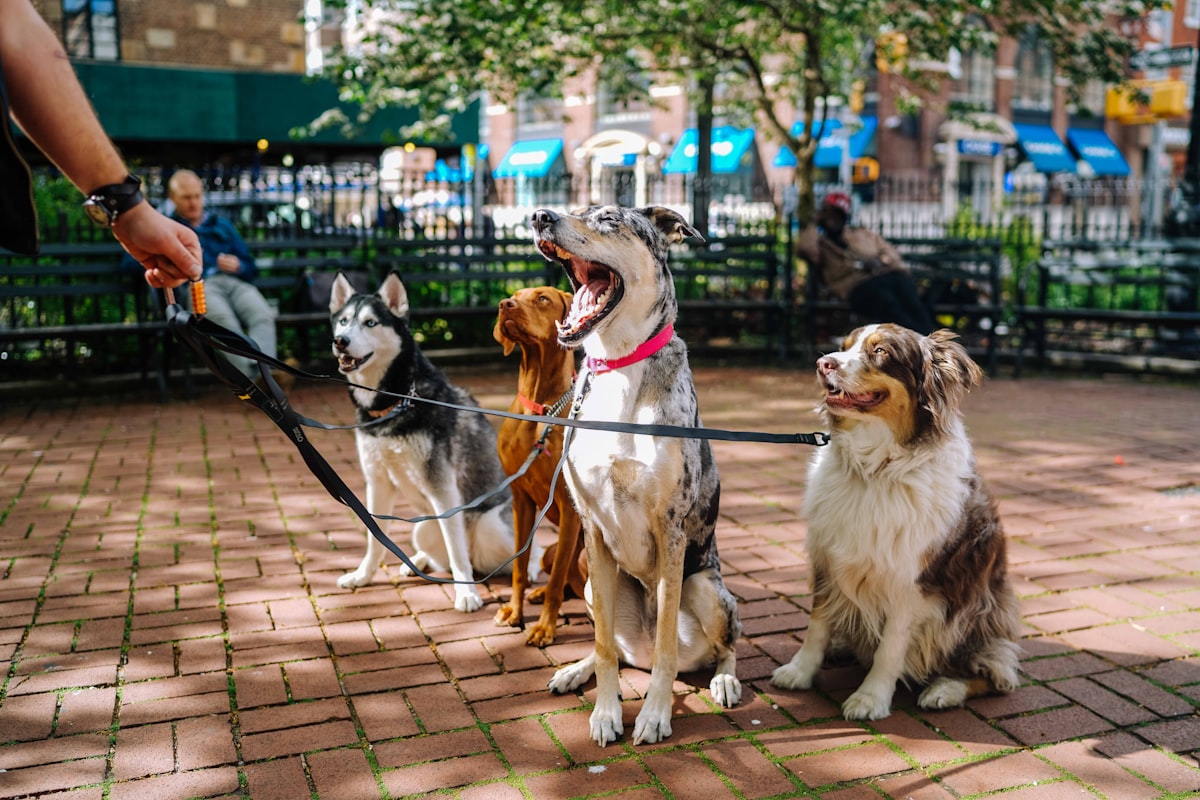
The short answer is neither leash type is universally safer. A standard 6-foot leash wins in high-traffic areas and near cliffs. A long line wins in open meadows and during recall training. Jasper and I have tested both setups across 200+ trail miles in conditions ranging from crowded Front Range paths to empty alpine basins in Rocky Mountain National Park. The real question is not which one to own. It is knowing when to use each.
Key Takeaways
- 1Standard 6-foot leashes provide maximum control near hazards and other trail users
- 2Long lines (15-30 feet) allow sniffing and exploration while maintaining connection
- 3Tangling and tripping are the primary long line hazards on narrow or technical trails
- 4Always attach long lines to a harness, never a collar
- 510-15 feet is the sweet spot for most trail hiking scenarios
- 6Many areas legally require 6-foot leashes regardless of preference
We have watched dogs wrap long lines around trees and nearly tumble down embankments. We have also seen dogs on short leashes lunge so hard at squirrels that they choked themselves against their collars. Both setups have failure modes. The safest option depends on terrain, dog training level, and what hazards you expect to encounter.
The case for a standard 6-foot leash
A 6-foot leash is the baseline for a reason. It keeps your dog close enough to grab quickly and far enough to walk comfortably. Most leash laws specify this length or shorter. When we hike busy trails on summer weekends, the standard leash is non-negotiable.
Control matters most when things go wrong fast. A mountain biker comes around a blind corner. A rattlesnake appears on the trail edge. In these moments, having your dog within arm's reach can prevent injury or worse.
We tested reaction time on a moderate loop trail in the Cascades. With Jasper on his 6-foot leash, we could pull him to our side in under 2 seconds when other hikers approached. On a 20-foot long line, gathering slack took 4-6 seconds. That difference matters when an off-leash dog charges at you.
The shorter leash also prevents your dog from investigating hazards you cannot see. Jasper once tried to investigate a hole that turned out to be a ground bee nest. On a 6-foot leash, we redirected him before he got his nose in there. A long line would have given him enough slack to get stung first.
Technical terrain demands short leashes. Rocky scrambles, creek crossings on logs, narrow ledges with exposure, and boulder fields all require close handling. We use the 6-foot leash on anything we would classify as Class 2 or harder. The physics just work better when you can steady your dog without managing 15 feet of line.
The case for a long line
Long lines let dogs be dogs. Sniffing is how dogs process their environment. A 6-foot leash forces your dog to match your pace exactly. A 15-foot line lets them zigzag and investigate scents at their natural rhythm. This mental enrichment is why many trainers call long-line walks "decompression walks."
We noticed a clear difference in Jasper's post-hike behavior. After long line hikes in open meadows, he settles faster at home. After short leash hikes on crowded trails, he often paces for an hour before relaxing. The freedom to explore seems to satisfy something the restricted walk does not.
Recall training depends on long lines. You cannot proof a recall at distance if your dog is always 6 feet away. We use a 30-foot line in enclosed fields to practice recall while maintaining safety. The dog learns to respond from 20 feet away because they have actually been 20 feet away under controlled conditions.
Some dogs genuinely struggle on short leashes. Reactive dogs often do worse when forced into close proximity with triggers. A long line creates buffer space. The dog can choose to move away from an approaching hiker instead of being trapped at your hip. That extra distance can prevent reactions entirely.
Hazards specific to long lines
Long lines create problems that standard leashes do not. We have experienced most of these firsthand.
Tangling is the biggest issue. Trees and rocks become potential anchor points for a dragging line. On a steep descent in the White Mountains, Jasper looped his 20-foot line around a boulder and nearly pulled himself off balance when he hit the end. We caught him, but a less attentive handler might not have.
Tripping is second. If your dog circles behind you and comes up on the other side, you now have a line across your legs. On level ground this is embarrassing. On a slope with loose scree, it is dangerous. We stepped on the line once during a quick direction change and went down hard on our hands.
Other trail users do not expect long lines. Runners coming up behind you may not see the line stretched across the trail. Mountain bikers have no time to stop. We have gotten dirty looks from both when our line temporarily blocked the path. Fair criticism, honestly.
Burns and rope injuries happen if you grab a moving line with bare hands. A dog sprinting toward something interesting generates enough force to cause friction burns when you try to stop them. We wear light gloves on long line hikes now and pinch the line between thumb and forefinger rather than wrapping it around our hand.
Strong dogs can pull you off balance from distance. A 6-foot leash transmits force through your whole arm. A 20-foot line acts like a longer lever arm. We have seen handlers get dragged when their dog hit the end of a long line at full speed.
Matching leash length to terrain
We have developed a simple framework after testing both setups across varied conditions.
| Terrain Type | Recommended Length | Why |
|---|---|---|
| Crowded trailhead areas | 6 feet | Maximum control around other dogs and people |
| Narrow singletrack | 6 feet | Prevents line tangling on brush and trees |
| Technical scrambles | 6 feet | Need instant control near drop-offs |
| Wide fire roads | 10-15 feet | Good compromise of freedom and control |
| Open meadows | 15-20 feet | Dog can explore with minimal hazards |
| Enclosed training fields | 20-30 feet | Recall practice requires distance |
The terrain dictates the tool. We carry both on most hikes now. The 6-foot leash clips to our pack when we are in open areas. The long line coils and clips when we hit technical sections. Switching takes 30 seconds.
Trail width matters more than most people realize. A 20-foot line on a 3-foot-wide singletrack means your dog can be 20 feet into the brush on either side. You have no idea what they are getting into. That same line on a 10-foot-wide fire road keeps them mostly on the path.
Line handling skills you need
Using a long line safely requires technique. We learned several lessons through trial and error.
Never wrap the line around your hand or wrist. If your dog bolts, a wrapped line can cause serious injury. Instead, hold the line between your thumb and forefinger. You can release instantly if needed. Gather excess line in loose loops in your non-dominant hand.
Keep slack off the ground. A dragging line catches on everything and creates trip hazards for you and other trail users. Practice gathering line as your dog moves toward you and feeding it out as they move away. This takes active attention.
Use a harness attachment, not a collar. The force generated when a dog hits the end of a 20-foot line at speed is substantial. That force going through a collar can damage the trachea. A back-clip harness distributes pressure across the chest and shoulders.
Start in low-distraction environments. An enclosed field or empty park is the place to build handling skills. Busy trails with wildlife and other dogs are not the place to learn line management. Practice until gathering and releasing line feels automatic.
Watch your own feet constantly. We step over the line every few seconds as Jasper moves around us. This prevents the leg-tangle problem. It becomes habit after enough repetitions but requires conscious effort at first.
Legal requirements you cannot ignore
Many jurisdictions mandate 6-foot leashes regardless of your preference. National Parks typically require dogs on 6-foot leashes on the limited trails where dogs are allowed at all. Many state parks and local trails have similar rules.
These laws exist because land managers cannot trust everyone to handle long lines responsibly. One dog wrapping a line around a toddler ruins it for everyone. We follow posted regulations even when we think a long line would work fine.
Check rules before you go. The Forest Service often has more relaxed requirements than National Parks. Some BLM land has no leash requirements at all in certain areas. Some city and county parks specify exact lengths. A quick search before your hike prevents problems.
Violating leash laws can result in fines. More importantly, it can result in dogs being banned from trails entirely. We have seen popular trails close to dogs after too many incidents with poorly controlled long lines and off-leash dogs. Compliance protects access for everyone.
Our recommendation for most hikers
Start with a quality 6-foot leash and master control skills there. Add a long line once your dog has solid recall fundamentals. Use the long line in appropriate environments only.
The 10-15 foot range works best for general trail hiking. Long enough for some exploration, short enough to maintain control. We use a 15-foot biothane line for most hikes where terrain allows. It does not absorb water and cleans easily.
Biothane and similar materials beat rope for trail use. Rope absorbs water, picks up dirt, takes forever to dry, and can cause worse friction burns. Biothane stays clean and dries instantly after creek crossings.
Jasper hikes on his 6-foot leash about 60% of the time. The long line comes out when we reach wide fire roads or open alpine basins above treeline. We switch back to short leash for descents and crowded sections.
The safest leash is the one you know how to use in the conditions you are hiking. Practice both. Know your dog's triggers and training level. Match your equipment to the terrain. That framework works better than any single recommendation.
Frequently Asked Questions
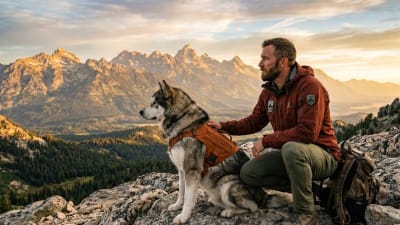
Kelly has logged over 5,000 trail miles with his dogs across the American West. He specializes in backcountry expeditions and gear testing for large breeds.
References & Further Reading
- Leash Laws and Regulations — National Park Service
- Dog Training Best Practices — American Kennel Club
- Trail Safety Guidelines — U.S. Forest Service