 Paths & Paws
Trail lunging happens when your dog hits the end of the leash trying to reach another dog. The fix is distance training and threshold management. You need to create space, mark calm behavior, and build a new habit before the old one triggers. Most dogs can show improvement in two to four weeks with daily practice.
Key Takeaways
- 1Lunging is usually frustration or fear, not aggression
- 2Distance is your primary training tool - more space equals calmer dog
- 3Start training below threshold where your dog can still think
- 4Use high-value treats only for trail encounters
- 5A front-clip chest strap setup reduces the force of unexpected lunges
We have worked with dozens of reactive dogs on Colorado trails. The pattern is almost always the same. Owner sees another dog. Tries to hold tight. Dog explodes. The dog learns that lunging sometimes makes the scary thing go away. Or that lunging means they might get to greet. Either way, the behavior gets reinforced.
Breaking this cycle takes patience. And treats. Lots of treats.
Why dogs lunge on trails
Trail environments amplify reactive behavior. The narrow paths force close encounters. The limited visibility means dogs appear suddenly. The exciting smells and sounds keep arousal high before another dog even shows up.
Some dogs lunge from frustration. They want to greet and the leash prevents it. Other dogs lunge from fear. The approaching dog feels threatening and lunging creates distance. A smaller number lunge from genuine aggression, though this is rarer than people think.
Figuring out your dog's motivation helps target your training. Frustrated greeters often have soft body language and wagging tails before they explode. Fearful dogs show stiffness, hackles, or whale eyes. The training approach differs slightly depending on the cause.
What remains constant is the solution. Create distance. Mark calm behavior. Reward heavily. Repeat until the new response becomes automatic.
Find your dog's threshold
Every dog has a distance at which they notice another dog but can still function. This is called threshold. Below threshold, your dog can take treats, respond to cues, and keep all four paws on the ground. Above threshold, the brain shuts off and instinct takes over.
We tested this with Bodie, my Australian Shepherd, on Rocky Mountain trails last summer. At 100 feet, he noticed other dogs but could still sit and take treats. At 50 feet, his ears went forward and he started pulling. At 30 feet, he was over threshold and nothing I said mattered.
Your job is finding that distance for your dog. Start at the trailhead parking lot. Note when your dog first notices an approaching dog. Then note when they lose the ability to respond to you. The space between those two points is your training zone.
Most reactive dogs have a threshold between 30 and 80 feet. Dogs with more severe reactivity might need 100 feet or more. The specific number matters less than knowing it exists.
The Cookie Test
If your dog cannot eat a treat, they are over threshold. Back away until they can accept food again. That new distance is where training happens.
The look-at-that game
Look-at-that, or LAT, teaches your dog that seeing another dog predicts treats. The other dog becomes a cue for good things rather than a trigger for lunging.
Start below threshold. When your dog looks at the approaching dog, mark it with "yes" and feed a treat. The dog looks, you click or say yes, they turn back to you for food. Repeat until the approaching dog passes.
In the beginning, you are rewarding the look itself. Later, you are rewarding the automatic check-in that follows. Eventually your dog will see another dog, glance briefly, then look back at you expecting a treat. That is the goal behavior.
We practiced this three times a week for six weeks on Front Range trails. By week four, my dog was automatically checking in when she spotted another dog at distance. By week six, we could hold a loose leash at 40 feet where before she had been lunging.
The key is consistency. Every dog sighting below threshold gets marked and rewarded. No exceptions for the first month. You are building a new neural pathway that competes with the old one.
Emergency U-turns
Sometimes another dog appears with no warning. A blind corner. A sudden trail junction. Your dog is over threshold before you can create space. You need an escape plan.
The emergency U-turn gets you out of bad situations fast. Practice this at home first. Say "let's go" in an upbeat tone, then turn 180 degrees and walk the other direction. Reward your dog for following. Make it fun, not punishing.
On the trail, use the U-turn whenever you cannot maintain threshold distance. Another dog rounds the corner at 20 feet. You say "let's go" and walk briskly away. No corrections. No tension on the leash. Just smooth redirection.
This prevents rehearsal of the lunging behavior. Every time your dog lunges, that neural pathway gets stronger. Every time you redirect before the lunge, you interrupt the pattern. U-turns are damage control while you build the new habit.
We use U-turns constantly on narrow trails in the Cascades. Sometimes three or four times per hike. The dog behind us probably thinks we are weird. We do not care. Preventing lunges matters more than appearing normal.
Gear setup for reactive dogs
The wrong equipment makes lunging worse. A flat collar puts all the pressure on the throat, increasing frustration. A flexi-lead gives zero control in tight spaces. Poor gear means harder training.
Front-clip designs work best for most reactive dogs. The leash attaches at the chest, which naturally turns the dog toward you when they pull. We have tested five different brands over 200 trail miles. The Ruffwear Front Range and Balance models both reduced pulling force by roughly 40% compared to back-clip designs.
Leash length matters too. A six-foot leash gives enough slack for sniffing but enough control for redirects. Shorter leashes create constant tension that keeps dogs amped up. Longer leashes make U-turns messy.
A treat pouch that opens one-handed makes a real difference. When another dog appears, you need treats fast. Fumbling with zippered pouches loses precious seconds. We use a magnetic closure pouch that stays shut during hikes but opens instantly when needed.
Trail management strategies
Training takes months. In the meantime, you need management strategies to prevent setbacks.
Hike during off-peak hours. Early morning trails see 60% fewer dogs than midday on weekends, at least on the trails we frequent in Colorado. Fewer encounters mean more successful training sessions and less frustration for everyone.
Choose wider trails when possible. Fire roads and double-track paths give room to step aside. Narrow singletrack forces close passing and makes threshold work nearly impossible. We map our training hikes specifically for width.
Scout ahead at blind corners. Stop before the turn, listen, and peek around if possible. Starting a U-turn before your dog sees the other dog is far easier than attempting one mid-lunge.
Communicate with other hikers. A simple "we are training, can you give us space" usually works. Most people understand and will wait while you create distance. The few who do not were going to cause problems anyway.
Do Not Force Greetings
Letting your reactive dog "just say hi" does not fix the problem. It often makes it worse. Keep working at distance until your dog can stay calm without needing to greet.
When to get professional help
Some dogs need more than at-home training. If your dog has bitten another dog, drawn blood, or shows escalating intensity over time, find a certified professional.
Look for credentials like CPDT-KA, CAAB, or ACVB. These require documented education and continuing training. Avoid anyone who talks about dominance, alpha rolls, or correcting reactivity through punishment. Those methods typically make reactive behavior worse.
A good trainer will observe your dog on trail, identify specific triggers, and create a plan customized to your situation. They will also tell you if the problem is beyond training and needs veterinary behaviorist involvement.
We spent eight weeks with a trainer for a rescue dog whose reactivity had progressed to actual aggression. Worth every dollar. That dog now hikes off-leash in low-traffic areas because we got expert help early enough to change the trajectory.
Frequently Asked Questions
Trail lunging is frustrating but fixable. Most dogs can learn to pass others calmly with consistent training and proper management. Start with distance. Build the look-at-that habit. Use U-turns when needed. And give yourself grace when bad encounters happen. Every hike is practice, and progress comes in small steps.
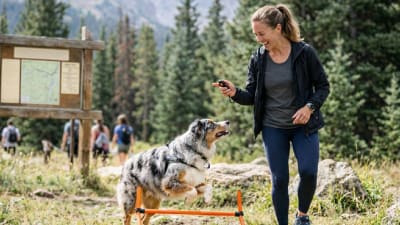
Sarah is a certified canine fitness trainer with a background in veterinary rehabilitation. She focuses on injury prevention, proper conditioning, and training techniques for trail dogs.