 Paths & Paws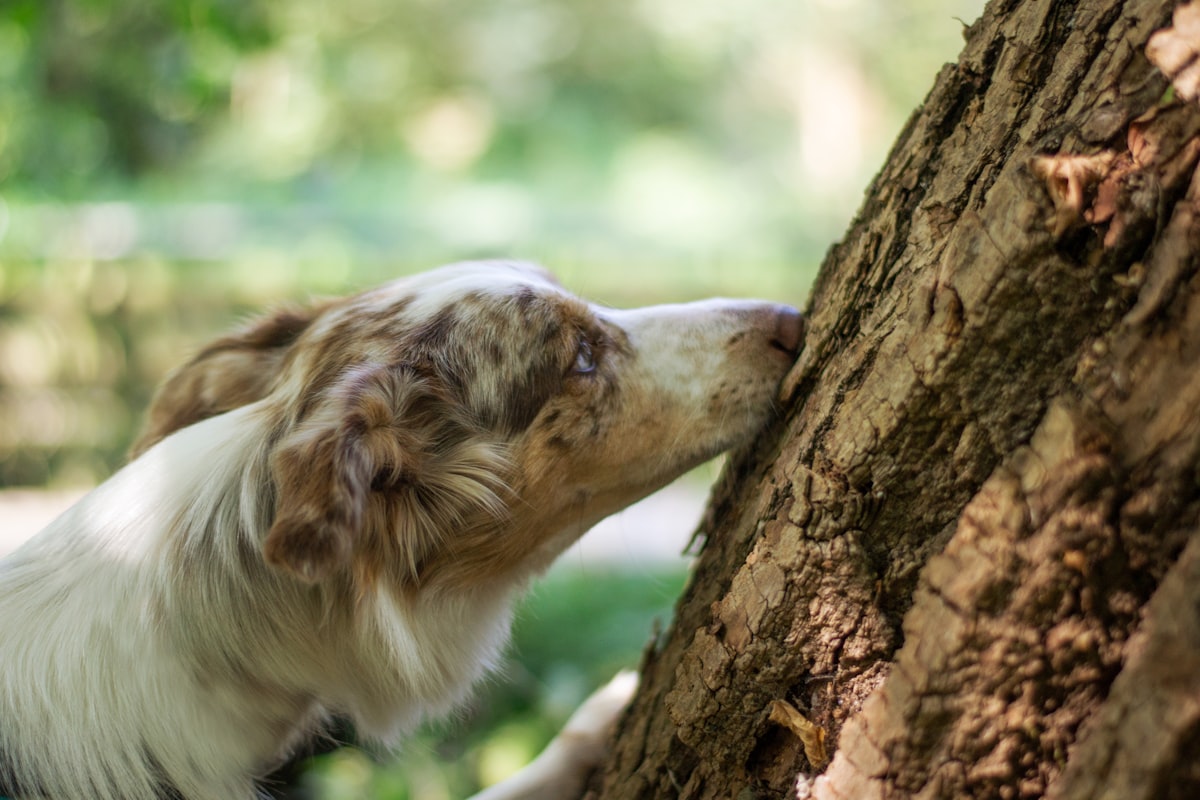
Key Takeaways
- 1Sniffing is mentally enriching and reduces stress for dogs
- 2Designated sniff breaks are more effective than constant correction
- 3A 'let's go' cue teaches dogs when sniff time ends
- 4Front-clip harnesses reduce pulling toward scents
- 5Frustrated sniffers become stubborn - allow some scent exploration
Bodie, my 9-year-old Australian Shepherd, has a nose that won't quit. Every rock and grass clump demands his investigation. Tree bases get special attention. I've watched him spend four minutes examining a single bush on the Cascade Creek trail while our hiking partners disappeared around the bend.
Sniffing is natural and healthy. But when you have miles to cover before dark, constant stops become a real problem. After years of hiking with Bodie, I've developed techniques that let him get his scent fix without derailing our pace completely.
Why Dogs Sniff So Much
Understanding sniffing helps you manage it without frustration. Dogs experience the world primarily through scent. A single bush might tell Bodie which animals passed recently, whether they were healthy, how they felt. All from one sniff.
When I timed Bodie's sniffing patterns over several hikes, I noticed he spent an average of 23 seconds per "serious sniff" and would attempt 15-20 of these per mile on high-traffic trails. That's potentially 7-8 minutes of stopping per mile. No wonder we were falling behind.
For dogs, sniffing isn't distraction. It's information gathering as essential as vision is for humans. Denying all sniffing is like asking you to hike blindfolded.
Sniffing also provides these benefits.
- Mental stimulation (a 20-minute sniff walk can tire a dog like an hour of running)
- Stress relief
- Environmental awareness
- Natural enrichment
I don't try to stop sniffing. I channel it into scheduled breaks.
Note
A dog who never gets to sniff on hikes often becomes more obsessive about sniffing. I tested this with Bodie over two weekends. On hikes where I allowed zero sniffing, he pulled toward scents 40% more by the end. Building in sniff time actually reduces overall sniff-stopping.
The Structured Sniff Approach
Rather than allowing random sniffing throughout the hike, I create clear expectations about when sniffing happens and when movement happens.
I designate specific sniff breaks like rest stops. "Go sniff" starts sniff time. "Let's go" ends it. Between breaks, we maintain forward movement.
With Bodie, I started with breaks every quarter mile. Over three weeks, I stretched the intervals to every half mile. Now at 9 years old, he knows the pattern so well that he'll often walk past interesting spots without pulling, waiting for his official sniff break.
This structure gives your dog predictable opportunities while keeping overall pace. They learn sniffing will happen, just not constantly.
Teaching "Let's Go"
The transition from sniffing to moving is where most frustration happens. A strong "let's go" cue makes these transitions smooth.
Here's how I built this cue with Bodie.
Week 1 started at home. I said "let's go" and immediately started walking. Treat the moment he moved with me. Practiced 10-15 reps daily.
Week 2 added mild distractions. I practiced in the backyard with scattered treats on the ground. "Let's go" meant leaving the treats and walking with me earned something better.
Week 3 took it to easy trails. Low-distraction environments first.
Week 4 graduated to trails with wildlife scent and other dog markings.
Don't repeat the cue. Say it once, then move. Your dog learns that "let's go" means movement is happening, not a suggestion to consider. I made the mistake of saying it three times before moving for Bodie's first year. He learned to ignore the first two repetitions. Retraining took longer than teaching it right would have.
Pro Tip
Follow "let's go" with something good. I use freeze-dried liver bits, but excited praise or jogging a few steps works too. Your dog should want to respond because good things follow.
Managing the Dedicated Sniffer
Some dogs are scent-obsessed by breed or personality. Hounds, terriers, and sporting breeds often find scent work more compelling than almost anything else. My friend hikes with a Beagle named Murphy who makes Bodie look uninterested in smells.
For extreme sniffers, try these adjustments.
Higher value treats. Murphy's owner switched from kibble to hot dog pieces. The jump in response rate was immediate.
More frequent, shorter breaks. Every quarter mile instead of every half mile, but only 30 seconds each instead of 2 minutes.
Pre-hike scent work. A 10-minute session with a snuffle mat before the car ride takes the edge off.
Acceptance. Murphy's hiking pace is 1.5 mph. His owner stopped fighting it and just plans shorter routes now.
Equipment That Helps
The right gear makes managing sniffing easier.
A front-clip harness redirects pulling toward scents by turning your dog toward you instead of allowing a forward lunge. When Bodie hits the end of the leash going for a smell, the harness rotates him back to face me. The smell becomes harder to reach instead of easier.
A fixed-length leash of 4-6 feet gives consistent control. Retractable leashes allow unpredictable range that reinforces pulling toward scents. Bodie learned that pulling meant more leash came out. Terrible habit that took months to break.
A treat pouch keeps rewards accessible. Fumbling in pockets delays the reward too long. The connection between "let's go" response and reward needs to be instant.

Timing Sniff Breaks
Strategic placement of sniff breaks keeps your hike moving while satisfying your dog's needs.
Good times for sniff breaks include the following.
- Natural rest stops where you're getting water or checking the map
- After completing challenging sections (the uphill earned a sniff reward)
- At trail junctions while you verify direction
- Every 15-20 minutes on longer hikes
- When your dog shows increasing pull toward scents (give the break before they demand it)
Keep moving through these situations.
- Exposed or dangerous terrain
- Areas with wildlife disturbance concerns
- Narrow sections where stopping blocks others
- When weather or fading light requires pace
I track Bodie's sniff breaks on longer hikes. On a recent 8-mile loop, I gave him 11 designated breaks averaging 90 seconds each. Total sniff time was about 16 minutes. Without structure, he would have attempted 100+ stops. The system works.
What Makes Sniffing Worse
Certain conditions increase sniff obsession. I've learned to adjust expectations on these days.
Recent wildlife. After deer bed down overnight, morning trails light up Bodie's nose. We've had our slowest miles on dawn hikes through meadows.
Weather changes. Rain and warm-ups after cold stir up scents. Post-rain hikes require more patience.
Other dogs. Heavily trafficked trails have marking layers that demand investigation. Popular trailheads on weekends are sniff-intensive.
New environments. Familiar trails get faster. Novel areas require more investigation. I expect slower pace on trails we haven't hiked before.
On high-scent days, I plan more breaks and shorter mileage. Last spring after heavy rain, we did 3 miles instead of our planned 6. Worth it.
Warning
Sudden intense sniffing in a specific spot might indicate something worth investigating. Bodie once fixated on a spot that turned out to have a dead squirrel. Another time, rattlesnake scat. Check what's capturing their attention before pulling them away.
The Release Sniff
One technique that transformed our hiking was using sniffing as a reward for good trail behavior.
I ask Bodie to walk nicely for a stretch. After 50 yards of loose leash, I release him to sniff with "go sniff." He gets 30-60 seconds of free investigation. Then "let's go" and we repeat.
This turns sniffing from a competing desire into a reinforcer for walking nicely. Bodie works to earn sniff time rather than fighting constant restriction. His loose-leash walking improved dramatically once sniffing became the payoff.
Managing Your Own Frustration
Your frustration about slow pace communicates to your dog. They sense tension and often respond with more problematic behavior.
I've had hikes where I got increasingly annoyed at Bodie's sniffing. My tension transferred through the leash. He got more anxious and more fixated on sniffing as a stress behavior. We spiraled until neither of us enjoyed the hike.
Now when frustration builds, I stop. Let him sniff freely for a few minutes while I enjoy the view. Reset my mood. Then continue with a better attitude.
Some hikes end up being about Bodie's experience instead of my mileage goals. I've made peace with that.
Realistic Pace Expectations
Dogs slow your pace. I stopped pretending otherwise years ago.
My pre-dog hiking pace was about 3 mph on moderate terrain. With Bodie, accounting for sniff breaks and shorter legs, we average 2.2 mph. On scent-heavy days, sometimes 1.8 mph.
I plan routes accordingly.
- Add 30-40% to expected trail time
- Choose shorter loops when time is tight
- Pick less popular trails when pace matters
- Accept that some hikes prioritize Bodie's enrichment over my cardio goals
A dog who gets reasonable sniff opportunities becomes a better trail partner over time. The investment pays off. Bodie at 9 is much easier to hike with than Bodie at 3, partly because I learned to work with his nose instead of against it.
Frequently Asked Questions
Sarah is a certified canine fitness trainer with a background in veterinary rehabilitation. She focuses on injury prevention, proper conditioning, and training techniques for trail dogs.