 Paths & Paws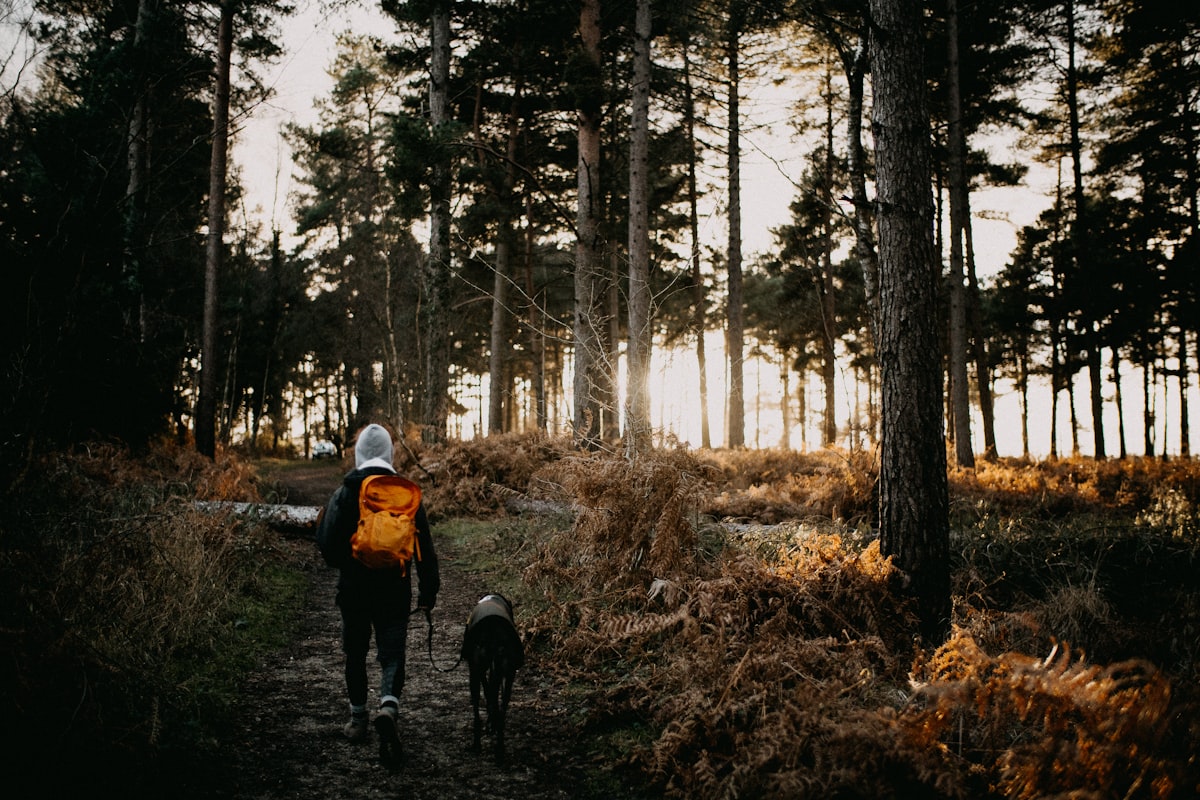
Single-track trails change everything about hiking with your dog. There's no room to walk side by side. Your dog either leads, follows, or creates chaos for every hiker coming the other direction.
Most dogs default to pulling ahead. Their nose wants to be first. But on a narrow mountain trail with blind corners and other users, having your dog surge forward causes problems. They round a corner before you can see what's there. They block oncoming hikers. They get tangled around trees.
What You'll Learn
- 1Why single-track requires different positioning than wide trails
- 2How to teach a reliable 'behind' command from scratch
- 3Building duration so your dog holds position for entire trail sections
- 4Proofing the behavior against squirrels, other dogs, and exciting smells
Teaching a dog to walk behind you isn't natural for them. It took us about three weeks of consistent practice to get a reliable response from Bodie, my Australian Shepherd. Some dogs pick it up faster. The key is building the behavior in stages rather than expecting your dog to figure it out on a narrow trail.
Why behind matters on narrow trails
Single-track trails present specific challenges that wider paths don't.
Visibility is the first issue. When your dog walks ahead on a narrow trail, they round corners before you can see what's coming. A mountain biker, a horse, another dog, a snake. You have no time to prepare before your dog reacts.
Trail courtesy matters too. When hikers pass going opposite directions on single-track, someone has to yield. If your dog is ahead of you, you can't easily pull them aside. They end up blocking the path or lunging toward the passing hiker.
Safety is the bottom line. A dog walking behind you stays under control. You see obstacles first. You spot other users first. You can manage the interaction before your dog decides how to handle it.
The goal isn't a dog that always walks behind. On wide fire roads, side-by-side or slightly ahead is fine. The goal is a dog that moves behind you on command and stays there until you release them.
The foundation: Heel position first
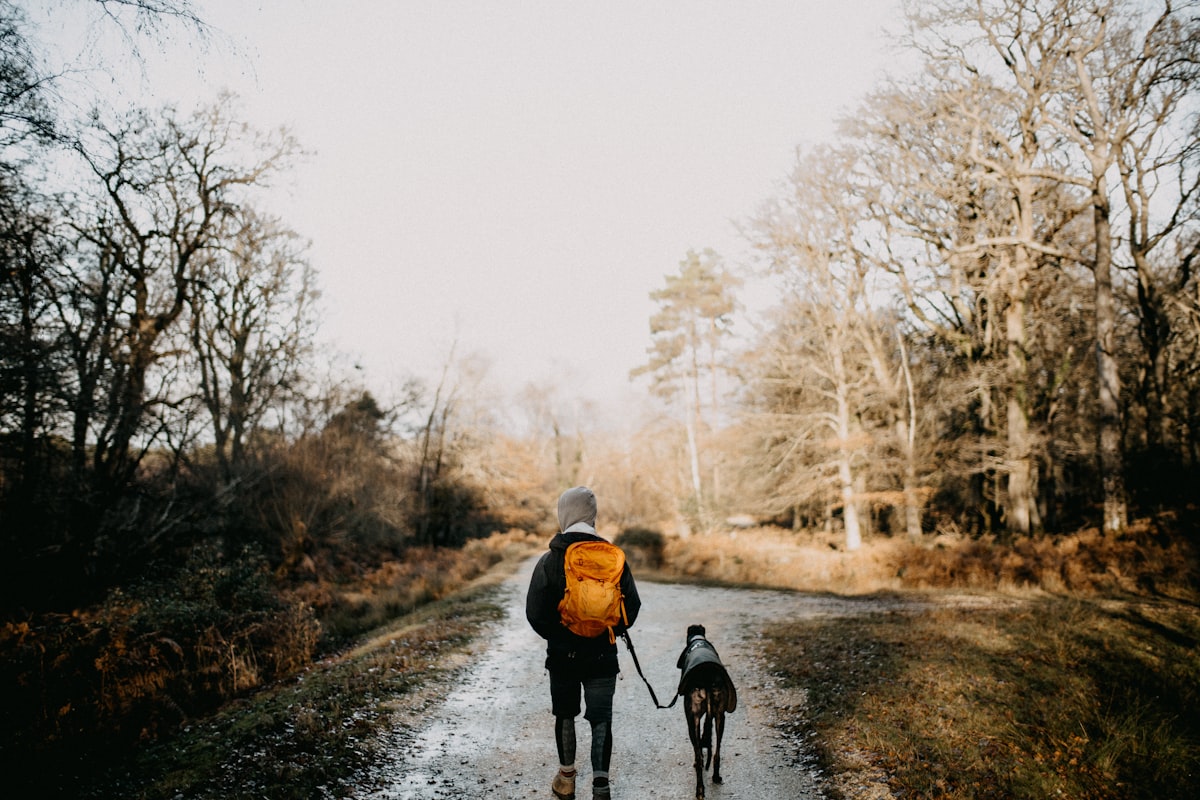
Before teaching behind, your dog needs to understand heel. This isn't about formal obedience competition positioning. It's about your dog knowing how to walk at your side on a loose leash.
If your dog currently drags you down the trail, start there. A dog that pulls in front won't suddenly understand behind. They need to know that staying near you is the default, not something they do when they run out of energy.
Work on loose leash walking in your neighborhood first. Reward your dog for staying at your side. Stop walking when they pull ahead. Resume when they return to position. This might take a week or two of daily practice before they understand that staying near you keeps the walk moving.
Once your dog reliably walks at your side, you can introduce behind.
Introducing the behind command
Start in a hallway or narrow space at home. This mimics the constraints of single-track without the distractions of a real trail.
Walk forward with your dog at heel. Stop. Take a small step backward into your dog's space while saying "behind." This physically guides them to step back and shift behind you.
The moment they're behind you, even briefly, mark it. We use "yes" as our marker word, followed immediately by a treat. Then walk forward again. Repeat.
In the first few sessions, you're just teaching the word and the general idea. Your dog moves behind you, good things happen. Keep sessions to five minutes. End before they get bored.
Here's how progression looks over the first week.
- Days 1 and 2. Lure behind with a treat, mark and reward the position.
- Days 3 and 4. Add the verbal cue "behind" as you lure.
- Days 5 and 6. Say "behind" before starting the lure, then lure if needed.
- Day 7. Say "behind" and wait a beat to see if they move before luring.
By the end of the week, your dog should start moving behind you on the verbal cue alone, at least in your hallway.
Pick Your Word
"Behind" is common but use whatever works for you. "Back," "follow," or "trail" all work. The word matters less than using it consistently. Once you pick a cue, stick with it.
Building duration and distance
Your dog moving behind you for a second isn't useful on the trail. You need them to stay there while you navigate an entire section of single-track.
Start adding duration in small increments. Ask for behind. When they comply, take one step forward before marking and rewarding. Then two steps. Then five.
If they surge ahead before you mark, stop walking. Calmly ask for behind again. Don't correct or punish. Just reset and try with fewer steps. You want success rates around 80%. If your dog is failing more than that, you're progressing too fast.
By week two, you want to see certain milestones.
- Your dog holds behind position for 20 to 30 steps in low-distraction environments.
- They return to behind after you stop and resume walking.
- They understand that behind means stay there until released.
Add movement challenges gradually. Walk faster. Walk slower. Stop suddenly. Change direction. Your dog needs to adjust to your pace while maintaining position.
Proofing on real trails
The backyard or hallway isn't a trail. Your dog will regress when you hit actual single-track. The smells, the wildlife, the other dogs. Expect to rebuild some.
Start on easy trails during quiet hours. Early morning midweek works well. You want minimal encounters so you can practice without constant interruptions.
Ask for behind at the trailhead before you start walking. Reward heavily for compliance. Take short sections of single-track, ask for behind, and reward after 10-20 steps. Release with your free word when the trail widens.
Build up the distractions in stages.
- Empty trail, no wildlife visible.
- Trail with distant wildlife like birds or squirrels.
- Trail with other hikers passing.
- Trail with dogs visible but not close.
- Trail with dogs passing in close proximity.
Each level requires its own practice. A dog that holds behind on an empty trail may forget everything when a squirrel runs across the path. That's normal. Go back to heavy rewards for easier scenarios, then build back up.
Don't Rush This
Skipping steps creates a dog that breaks behind whenever something interesting happens. That's worse than having no behind command at all. Take the time to proof each distraction level before moving on.
Common mistakes
Expecting too much too fast is the biggest error. A dog that learned behind in your hallway last week won't hold position while passing another dog on a mountain trail. That takes months of progression.
Inconsistent release words confuse dogs. If you sometimes say "okay" and sometimes just start walking normally, your dog doesn't know when behind officially ends. Pick a release word and use it every time.
Letting your dog self-release teaches them that behind is optional. If they surge ahead and you just keep walking, they learn that breaking position works fine. Always stop when they break. Reset. Ask for behind again.
Not rewarding enough early on slows progress. In the learning phase, reward generously. Every few steps, then every ten steps, then every thirty. You can fade rewards later. Right now you're building the behavior.
Using behind as punishment creates avoidance. If you only ask for behind when your dog misbehaves, they'll associate the position with correction. Use it frequently in neutral and positive situations so it stays a normal part of hiking.
For other essential trail commands, see our guide on emergency commands every hiking dog needs.
Frequently asked questions
Frequently Asked Questions
Sarah is a certified canine fitness trainer with a background in veterinary rehabilitation. She focuses on injury prevention, proper conditioning, and training techniques for trail dogs.