 Paths & Paws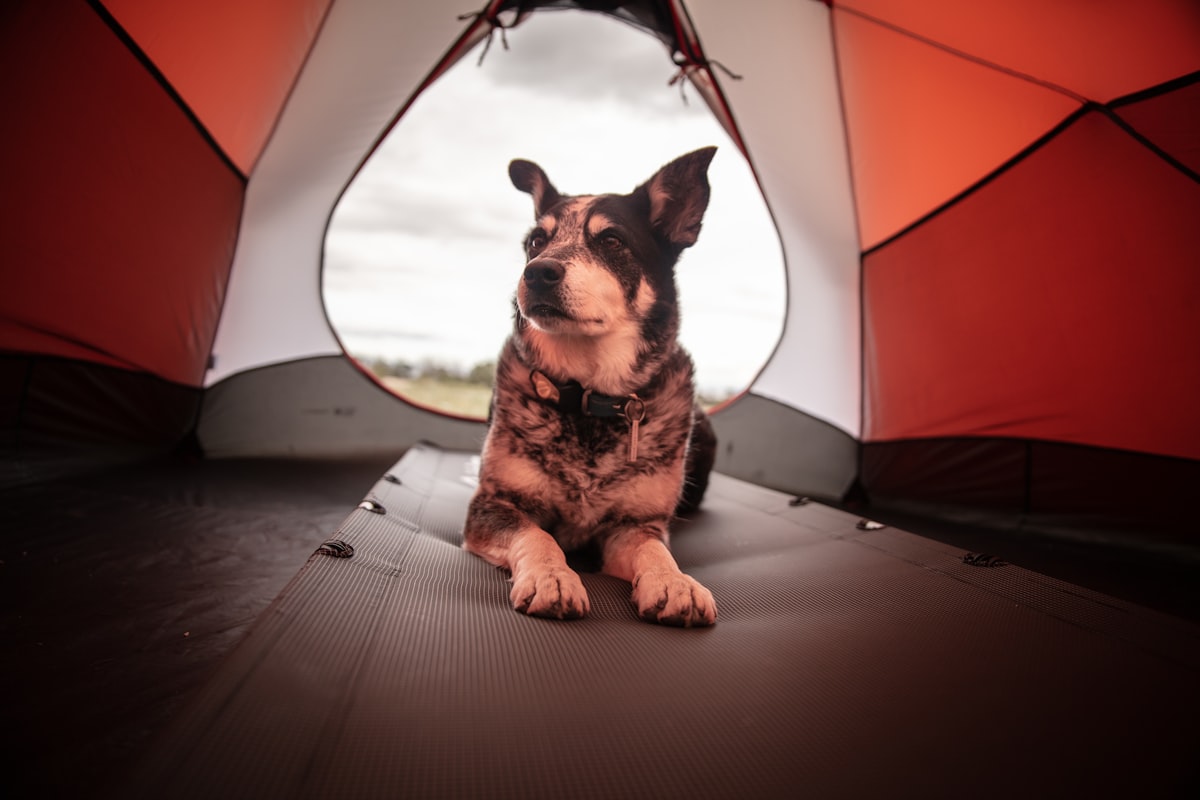
Jasper's first tent night happened in my backyard, not the backcountry. I set up the tent on a Saturday afternoon, and by Sunday night he was sleeping peacefully inside it. That two-day investment saved us from a miserable first wilderness trip. Dogs unfamiliar with tents often panic, scratch at walls, bark at every sound, or refuse to settle. Training at home eliminates these problems before they matter.
Key Takeaways
- 1Introduce the tent gradually over multiple sessions before any camping trip
- 2Practice in the backyard where your dog feels secure and you can bail easily
- 3Build positive associations with treats, meals, and favorite items inside the tent
- 4Gradually increase duration from brief visits to full overnight sleeps
- 5Address nighttime sounds and confined space anxiety before wilderness trips
Why backyard training matters
Your backyard is the perfect training ground. The stakes are low, so if things go wrong, your bed is 50 feet away. Your dog already feels safe in your yard, which reduces baseline anxiety from the start. You can try night after night without travel, giving you multiple attempts to get it right.
The conditions are controlled too. No wildlife, no other campers, no unfamiliar sounds to spook your dog. And if your dog panics, you simply go inside. Testing in the wilderness sets everyone up for failure.
Note
Start tent training at least two weeks before any planned camping trip. Rushing creates negative associations that are hard to undo.
Phase 1: Introduction (Days 1-3)
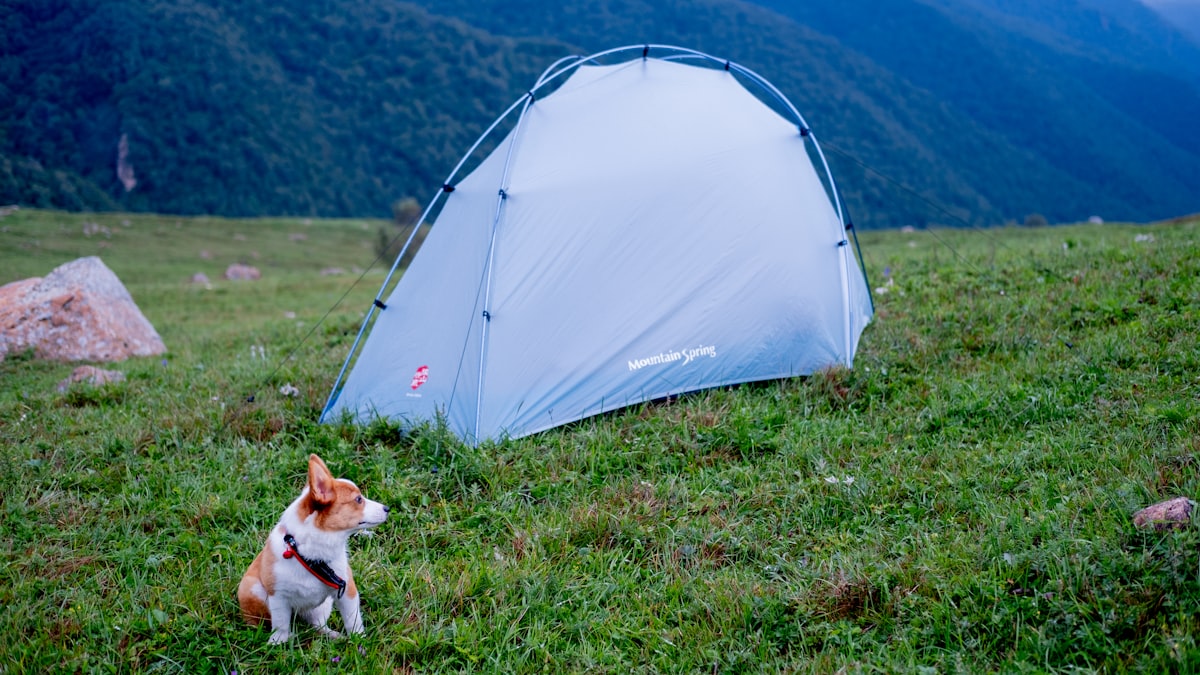
Make the tent interesting without pressure. Set up during the day when your dog is relaxed, and leave all doors and vestibules open for easy escape. Toss treats inside and let your dog go in and out freely to retrieve them. You can move their food bowl into the tent for regular meals, and place their bed, blanket, or favorite toy inside.
Don't close any doors during this phase. This is purely about creating positive associations. Your goal is making the tent a place where good things happen.
Phase 2: Duration building (Days 4-7)
Now extend the time spent inside. Hang out together in the tent, reading or relaxing. Practice settling by asking for a down-stay on their bed inside. Close vestibules briefly, zipping the outer doors while inner mesh stays open. Then gradually close inner doors for short periods with you inside.
Reward calm behavior heavily. Treat settling and relaxation at every opportunity. Step outside briefly for 30 seconds, then a minute, then longer. Build duration slowly. Don't rush to overnight before your dog is comfortable with shorter stays.
Phase 3: Nighttime practice (Days 8-14)
Transition to sleeping. Spend time in the tent as it gets dark, and establish a consistent bedtime routine: last bathroom break, water, treats, settle. Practice afternoon naps before attempting full nights.
Choose your first full night when you can recover if sleep is poor. Even if your dog fusses, staying teaches that morning comes eventually. Make it rewarding with breakfast and morning playtime to reinforce good tent behavior.
Pro Tip
Bring your dog's regular bed or a blanket that smells like home. Familiar scents provide comfort in the unfamiliar tent environment.
Common problems and solutions
Address issues before they become habits.
If your dog scratches at tent walls, redirect to a chew toy or Kong. Place their bed in the center, away from walls. Tired dogs scratch less, so exercise before bed helps.
Whining or barking often seeks attention. Ignore attention-seeking noise initially and reward quiet moments heavily. But check for legitimate needs first: do they need to potty, are they too hot, or are they thirsty?
Restlessness usually means insufficient exercise. Increase physical activity during the day and add mental enrichment before bed. Also ensure adequate ventilation for temperature comfort.
If your dog attempts to escape, don't force containment. Retreat to shorter sessions and leave doors open until they settle. Build confidence with positive associations rather than pushing through resistance.
For dogs reacting to sounds, practice during slightly noisy conditions. Pair sounds with treats to create positive associations, and consider using white noise apps during training.
Gear setup for success
Set up your tent for dog comfort. Use a durable groundsheet under a sleeping pad for ground protection, and trim nails to reduce damage risk. Pack-specific dog pads or their regular bed provide a comfortable sleeping surface.
Temperature control matters: ensure ventilation for hot dogs, and have blankets or jackets ready for cold. Include a way to secure your dog inside with a leash tether if needed, and bring long-lasting chew items for settling.
Simulate wilderness conditions
Gradually add challenge to your training. Play nature sounds like owls, coyotes, and wind at low volume. Practice on cooler or warmer nights to prepare for temperature variation. Get comfortable with headlamp-only illumination and make sure your dog can settle in tight quarters.
Practice getting up at night without stepping on your dog. Establish how potty breaks work when you're zipped in. These simulations prepare both of you for real trail conditions.
The dress rehearsal
Run one final test before wilderness trips. Use exactly the gear you'll take camping for a full setup, and practice the complete routine from arrival to breakdown. Stay the whole night without bailing into the house.
Evaluate honestly. Note what worked and what needs more practice. Make adjustments before adding wilderness variables. If your backyard night goes well, you're ready for real camping.
Warning
If your dog shows severe anxiety, panic, or distress in backyard tent sessions, consult a trainer before wilderness trips. Some dogs need more foundation work.
Transitioning to wilderness
Apply your training in new settings. Choose easy first trips with short distances, low stakes, and familiar areas. Maintain the same bedtime sequence you practiced, and bring the same bed, blanket, and toys from training.
Expect some regression. New environments may require patience, and your dog may need extra reassurance at first. Be prepared to leave if things go badly. Have a bail-out plan ready. Your backyard work builds the foundation. Wilderness camping reinforces it.
Frequently Asked Questions
Kelly has logged over 5,000 trail miles with his dogs across the American West. He specializes in backcountry expeditions and gear testing for large breeds.