 Paths & Paws
Your puppy will encounter water on trails. Some puppies wade in immediately. Others plant their feet and refuse. Either extreme needs guidance. The goal is a dog who approaches water thoughtfully, crosses safely, and doesn't panic when things get wet.
Starting early with positive water experiences builds lifetime confidence.
Key Takeaways
- 1Start with shallow, calm water before streams
- 2Never force a hesitant puppy into water
- 3Build confidence gradually over multiple sessions
- 4Safety fundamentals matter before speed or depth
The Two Puppy Types
Puppies typically fall into two categories around water.
The hesitant puppy stops at water's edge, may back away, won't willingly wet their feet. Water seems scary or strange. These puppies need encouragement and positive experiences to build confidence.
The reckless puppy launches into anything wet without assessment. Water is exciting. These puppies need to learn caution and controlled entry before current or depth becomes dangerous.
Both types need training, just different approaches.
Foundation: Still Water First
Before streams, work with still water where variables are controlled.
Kiddie Pool at Home
Start in a shallow kiddie pool in your yard.
- Fill with just an inch or two of water
- Let your puppy investigate on their own
- Toss treats into the water
- Don't force entry
- Celebrate any voluntary approach
Over several sessions, gradually increase water depth. The goal is wet feet, then wet legs, then whole-body wading.
Calm Ponds or Lake Edges
Graduate to natural still water with gradual entry points.
Choose spots where:
- Water is calm with no current
- Entry is gradual (beach-like)
- Bottom is visible and firm
- You can wade in with your puppy
Walk in yourself first. Your presence reassures hesitant puppies. Let them follow at their own pace.
Temperature Matters
Cold water is harder for puppies to accept. Warm summer days make early water training easier. Save cold water for later when confidence is established.
Introducing Moving Water
Once your puppy is comfortable in still water, introduce gentle current.
Start with Trickles
Find the smallest, shallowest moving water you can.
- Water barely over the rocks
- Almost no current
- Easy to see the bottom
- Comfortable crossing width
Let your puppy observe the water first. Point out the movement. Walk across yourself while they watch.
Shallow Stream Crossings
Progress to slightly deeper streams with these characteristics:
- Slow current
- Depth below your puppy's belly
- Firm, stable bottom
- Short crossing distance
Keep your puppy on leash for safety. Walk across together, going at their pace.
Building Current Exposure
Gradually introduce:
- Faster flow (still manageable)
- Deeper water (still below chest level)
- Longer crossing distances
- More challenging footing
Each increase happens only after confidence is solid at the previous level.
The Hesitant Puppy Approach
For puppies who resist water, patience is everything.
Never Force Entry
Dragging or carrying a hesitant puppy into water creates fear that takes months to overcome. Any pressure backfires.
Create Positive Associations
- Toss high-value treats onto wet rocks at water's edge
- Play their favorite game near water
- Let them watch confident dogs cross
- Praise any voluntary approach, however small
Use Your Presence
If you wade in first, some puppies follow to be near you. Stand in shallow water, call them, but don't insist. Let them make the choice.
Cross Without Them First
Sometimes walking away across water motivates a puppy more than trying to lure them. They don't want to be left behind. Cross to the other side and wait, calling encouragingly.
Accept the Long Game
Some puppies take weeks to voluntarily enter moving water. That's okay. Forced progress creates setbacks. Natural progress sticks.
Watch for Fear Escalation
Signs your puppy is too stressed: shaking, whale eye, pulling away, hiding behind you. If you see these, you've pushed too hard. Back up to a comfort level and rebuild from there.
The Reckless Puppy Approach
Puppies who charge into water need impulse control training.
Wait Command at Water's Edge
Train a solid "wait" before any water entry.
- Approach water on leash
- Stop at edge and ask for wait
- Puppy must hold position despite wanting to go
- Release with "okay" only when calm
- Repeat until waiting is automatic
Controlled Entry
After the wait, practice controlled entry:
- Walk into water together, not puppy charging ahead
- Keep leash short enough to prevent launching
- Reward staying at your pace
- If puppy pulls, stop and wait for slack before proceeding
Assessment Training
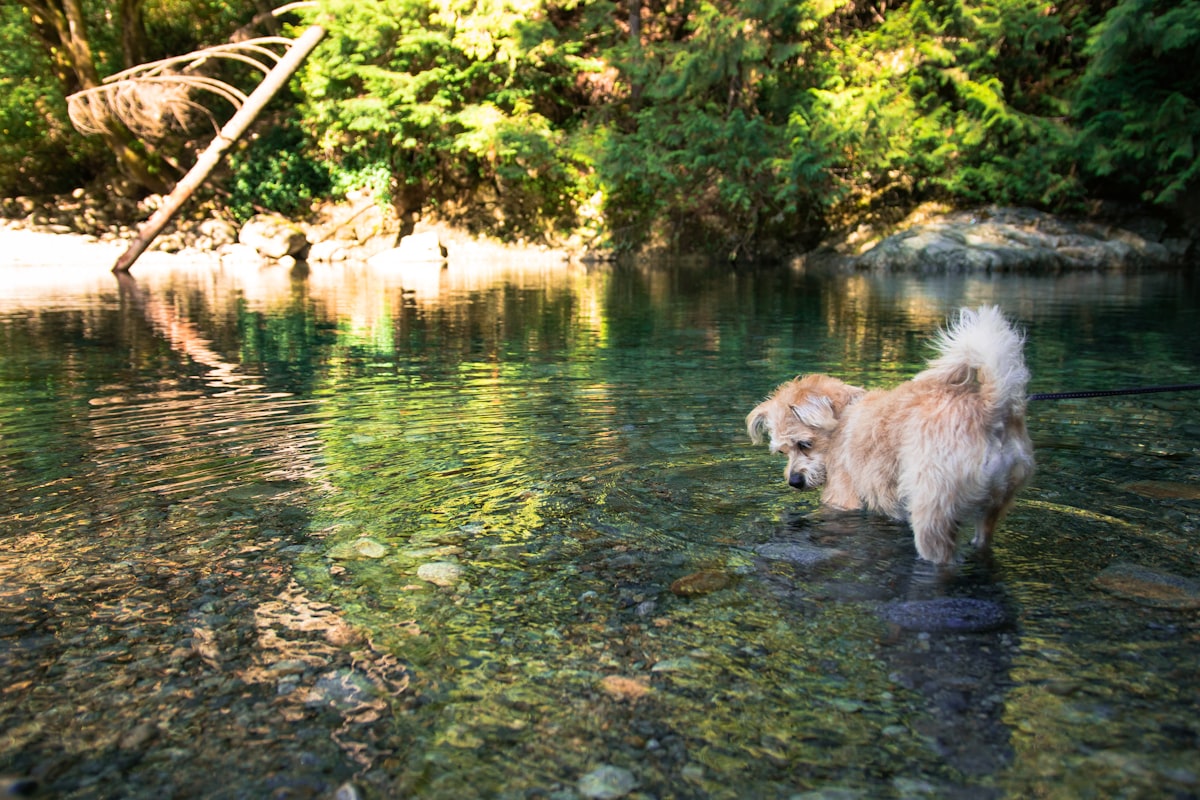
Teach your puppy to evaluate water before entering:
- Stop at each new water source
- Let them look at it
- Point out depth or current
- Only proceed when you give the okay
This prevents blindly leaping into unknown conditions.
Consequences of Rushing
When reckless behavior has natural consequences (slipping on wet rocks, unexpected depth), don't rescue immediately. A mild surprise teaches caution. Obviously intervene for actual danger, but minor discomfort from rushing is a useful teacher.
Stream Navigation Skills
Once basic water comfort exists, teach actual navigation skills.
Reading the Crossing
Show your puppy how to find the best crossing point:
- Wider spots are often shallower
- Smooth water surface suggests even bottom
- Riffles indicate rocks but also shallower water
- Dark areas may mean depth
You'll read these as the human; eventually dogs develop their own sense.
Rock Hopping
Some crossings involve stepping on rocks rather than wading.
- Start with large, stable rocks close together
- Encourage confident foot placement
- Let them figure out their own path
- Don't rush; one rock at a time is fine
When to Wade vs. Jump
Teach appropriate responses:
- Most crossings: wade through
- Narrow gaps: jump is okay
- Deep water: find another route
- Fast current: find another route
Puppies shouldn't attempt anything that requires swimming until they're larger and stronger.
Safety Fundamentals
Always Leashed Near Fast Water
Until your puppy is fully grown with proven water judgment, leash near moving water. Puppies misjudge current and their own abilities.
Exit Strategy
Only cross water where exits are available on both sides. Getting into water is easier than getting out; steep banks can trap a puppy.
Check Water Temperature
Cold water saps puppy energy quickly. Brief crossings are fine in cool water; extended time requires warmer conditions.
Know Your Puppy's Limits
Puppies tire faster than adult dogs. A crossing that's no big deal for a large dog can exhaust a small puppy. Keep challenges appropriate to size and development.
First Aid Note
Puppies who swallow water may cough and gag afterward. Usually this resolves quickly. Persistent coughing or lethargy after water exposure needs vet attention.
Building Toward Independence
The goal is a dog who handles water crossings confidently without you managing every step.
Trust Their Judgment
As experience builds, let your puppy choose their own path across. They may find better routes than you would.
Off-Leash Water Skills
When recall is reliable and your dog has demonstrated good water judgment, supervised off-leash crossings develop independence further.
Challenging Crossings
Adult dogs can handle:
- Faster current
- Deeper water
- Less obvious entry/exit
- Multiple crossing methods
Build to these over months and years, not weeks.
Frequently Asked Questions

Sarah is a certified canine fitness trainer with a background in veterinary rehabilitation. She focuses on injury prevention, proper conditioning, and training techniques for trail dogs.