 Paths & Paws
Your new puppy bounces with energy. Every walk feels like an adventure, and you're dreaming about future mountain summits together. But puppies aren't small adult dogs. Their bodies are still developing, and pushing too hard too soon can cause lasting damage.
Most puppies shouldn't attempt serious hikes until 12-18 months old, depending on breed size. Large and giant breeds need the longest wait.
Key Takeaways
- 1Growth plates don't fully close until 12-18 months (longer for large breeds)
- 2Over-exercising puppies can cause permanent joint and bone damage
- 3Start with the '5 minutes per month of age' rule for walks
- 4Focus on training and exposure, not distance or difficulty
What Are Growth Plates and Why Do They Matter?
Growth plates are soft areas of developing cartilage at the ends of your puppy's long bones. They're responsible for bone lengthening as your dog grows. Once your dog reaches maturity, these plates harden into solid bone.
The problem is that soft growth plates are vulnerable to injury. Repetitive stress, hard impacts, and excessive exercise can damage them before they close. This damage can cause bones to grow crooked or uneven, trigger early-onset arthritis, create chronic joint pain, and lead to mobility problems later in life.
You can't see growth plate injuries happening. The damage often doesn't show up until months or years later when your dog develops a limp or struggles with stairs.
Growth Plate Injuries Are Permanent
Unlike muscles that heal and strengthen with use, damaged growth plates can't be repaired. Prevention is the only protection.
When Do Growth Plates Close?
Growth plate closure depends primarily on breed size.
Small breeds under 25 pounds, like Chihuahuas, Yorkies, and Pomeranians, typically see closure between 8 and 12 months. These dogs are generally ready for moderate hikes around 10 to 12 months of age.
Medium breeds between 25 and 50 pounds follow a slightly longer timeline. Beagles, Border Collies, and Australian Shepherds usually reach closure between 12 and 14 months, making them ready for longer hikes around 14 to 16 months.
Large breeds weighing 50 to 90 pounds need more patience. Labrador Retrievers, German Shepherds, and Golden Retrievers don't finish growing until 14 to 18 months. Wait until 16 to 18 months for serious trail work with these dogs.
Giant breeds over 90 pounds require the longest wait. Great Danes, Bernese Mountain Dogs, and Saint Bernards may not reach full skeletal maturity until 18 to 24 months. Heavy exercise should wait until 20 to 24 months for these dogs.
These timelines are estimates. Individual dogs mature at different rates. Your vet can take X-rays to confirm growth plate closure if you want certainty before starting a hiking program.
The 5-Minute Rule for Puppy Exercise
A commonly used guideline limits exercise to 5 minutes per month of age, twice daily. A 3-month-old puppy gets 15 minutes of structured exercise, twice daily. A 4-month-old gets 20 minutes twice daily. By 5 months, that increases to 25 minutes. A 6-month-old puppy can handle 30 minutes, twice daily.
This doesn't mean your puppy can only move for these periods. Free play in the yard, sniffing around the house, and short training sessions don't count toward the limit. The rule applies to forced exercise where your puppy has to keep up with your pace.
Let Your Puppy Set the Pace
Puppies will often push past their limits to keep up with you. They don't know when to stop. You have to be the one who ends the walk before they get overtired.
Signs You're Over-Exercising Your Puppy
Watch for these warning signs during and after walks.
During exercise, a puppy who's had too much will start lagging behind or refuse to walk entirely. Excessive panting that goes beyond normal exertion is another red flag. Some puppies simply lie down and refuse to get up, while others develop a limp or start favoring one leg.
After exercise, an overtired puppy may sleep much longer than usual. You might notice stiffness when they get up, or a reluctance to go on the next walk. Sometimes limping doesn't appear until hours later, after inflammation sets in.
If you notice any of these signs, you've probably done too much. Scale back quite a bit and consult your vet if symptoms persist.
What Puppies CAN Do Before Growth Plates Close
Your puppy's early months aren't wasted time. Use this period to build the foundation for a great hiking dog.
Trail Exposure (Without the Miles)
Drive to trailheads and let your puppy experience new smells and sounds, different terrain textures, other hikers and dogs passing by, and wildlife sightings from a distance.
Keep actual walking minimal. The goal is mental exposure, not physical conditioning.
Basic Obedience Training
A well-trained puppy becomes a safer hiking partner. Teach reliable recall first, since coming when called can save your dog's life on the trail. Add "leave it" for wildlife and trail hazards, then work on loose leash walking and settling calmly during breaks.
Socialization
Expose your puppy to situations they'll encounter on trails. Practice meeting other dogs politely and staying calm around horses, bikes, and trail runners. Let friendly strangers handle and pet your puppy. Work on reactions to loud noises, sudden movements, and unexpected trail encounters.
Building Confidence
Introduce challenges at a puppy-appropriate scale. Walk over small logs and cross gentle inclines together. Let your puppy wade through shallow streams on warm days. Practice walking on different surfaces like gravel, sand, and wooden bridges so nothing feels foreign later.
Creating a Puppy Hiking Progression
Here's a general timeline for building up to real hikes.
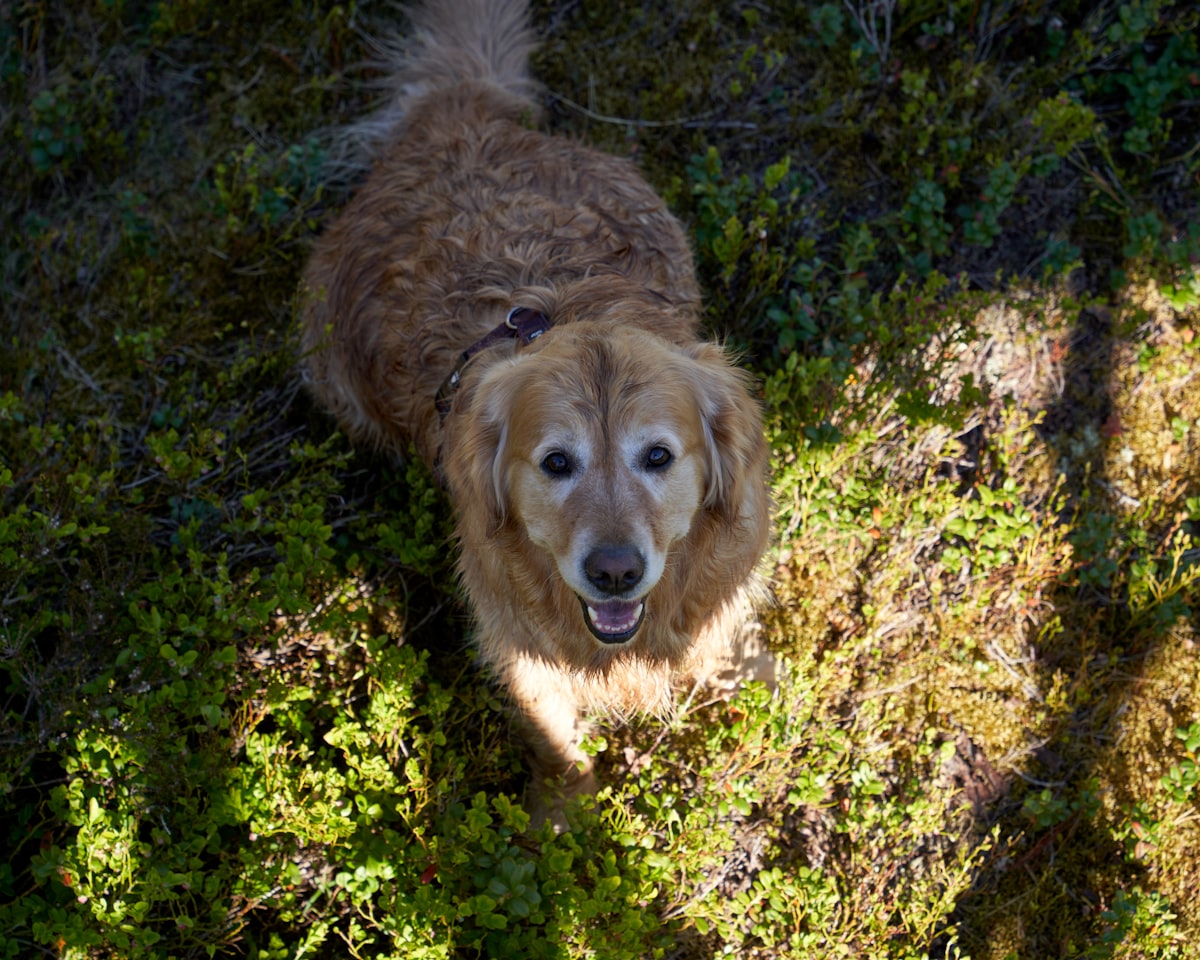
From birth to four months, focus entirely on socialization. Carry your puppy to trailheads so they can experience the sights, sounds, and smells without walking. Keep actual walks very short and on soft surfaces. Let them sniff and explore at their own pace while you work on training basics at home.
Between four and eight months, you're building foundation skills. Follow the 5-minute rule strictly. Introduce varied terrain in small doses so your puppy learns to handle different surfaces. Practice trail manners on quiet paths and put serious effort into recall reliability.
From eight to twelve months, you can gradually increase demands. Slowly extend walk duration week by week. Add gentle elevation changes and practice stream crossings. Test recall around increasingly interesting distractions to proof the behavior.
The twelve to eighteen month window marks the transition to real hiking. Consult your vet about growth plate status before ramping up. Start with easy, short hikes of one to two miles and pay close attention to recovery between outings. Build distance and difficulty gradually over months, not weeks.
Breed-Specific Considerations
Some breeds face higher risks than others.
Breeds prone to hip dysplasia, including German Shepherds, Golden Retrievers, and Labrador Retrievers, should be extra cautious during development. Over-exercise can worsen genetic predispositions that might otherwise remain mild.
Long-backed breeds like Dachshunds, Corgis, and Basset Hounds shouldn't jump on and off obstacles or tackle steep terrain until fully mature. Their spine structure makes them vulnerable to disc injuries and other back problems.
Brachycephalic breeds such as Bulldogs, Pugs, and Boston Terriers overheat easily and may never be suited for strenuous hiking regardless of growth plate status. Know your breed's limitations.
High-energy breeds like Border Collies, Australian Shepherds, and Vizslas often want to do more than their bodies can safely handle. Their enthusiasm masks fatigue and pain in ways that calmer dogs don't experience. Be especially vigilant about enforcing rest with these puppies.
The Hardest Part Is Patience
Waiting 12-18 months feels like forever when you're eager to share adventures with your dog. But this patience pays off in years of healthy hiking together.
Dogs who start hiking too young often develop problems by age 5 or 6 that limit their activity for the rest of their lives. Dogs whose owners waited often stay active well into their senior years.
Your puppy has a decade or more of hiking ahead. Protecting their developing body now gives you the longest possible adventure partnership.
Frequently Asked Questions
Dr. Jennifer Coates, DVM, brings 25+ years of clinical experience to Paths & Paws. Based in Fort Collins, Colorado, she specializes in preventive medicine and evidence-based nutrition for active dogs.