 Paths & Paws
Key Takeaways
- 1Most trail barking stems from fear or frustration, not aggression
- 2Leash tension signals your stress, amplifying your dog's reaction
- 3Distance is your best tool - more space means less reactivity
- 4Treats paired with seeing hikers change emotional responses over time
- 5Some dogs need quieter trails while they build better responses
Your dog spots another hiker and explodes into barking. You apologize while wrestling them to the trail edge, face burning as the stranger hurries past looking concerned. Bodie and I lived this scenario for months. Every hiker who appeared around a bend triggered a barking fit that left me mortified and him more reactive than before. The turning point came when I stopped trying to suppress the behavior and started understanding what drove it. Understanding why dogs bark at hikers reveals the path to better trail behavior.
What the Barking Actually Means
Most trail barking isn't aggression in the way people fear. It's communication that the dog is experiencing big emotions about the approaching person. Those emotions typically fall into a few recognizable patterns.
Fear-based barking shows in dogs who retreat or lean back while vocalizing. Their ears pin back, body weight shifts away from the approaching hiker, and the whole display screams "go away." This type often intensifies with unusual-looking hikers wearing backpacks, carrying trekking poles, or sporting large hats.
Frustration-based barking looks different. These dogs pull toward the other hiker, ears forward, body straining at the leash. They want to meet the person and cannot. Social dogs trapped on leash often develop this response.
Territorial barking puts the dog between you and the approaching stranger. The posture goes stiff, and everything communicates "this is my person, my space, my trail." This type frequently develops after negative experiences on previous hikes.
Once you identify your dog's pattern, you can choose the right intervention strategy.
Note
Aggressive barking exists but is less common than people assume. True aggression shows in deliberate attempts to reach and harm. Most trail barking, even when it sounds alarming, is distance-increasing behavior. The dog wants the scary thing to go away.
The Leash Connection
Something strange happens when dogs go on leash. They become more reactive. Dogs who play nicely off-leash at dog parks may bark and lunge on-leash on trails. The leash itself contributes to the problem.
Leash tension communicates to your dog that something is wrong. When you tighten up as another hiker approaches (because you expect trouble), your dog reads your tension as confirmation of danger. This creates a feedback loop where your anticipatory stress triggers their reactive behavior.
The leash also removes options. Off-leash dogs can choose their distance and body angle. Leashed dogs must face whatever their handler chooses. Trapped in direct approach with no escape option, barking becomes their only tool.
Distance Threshold
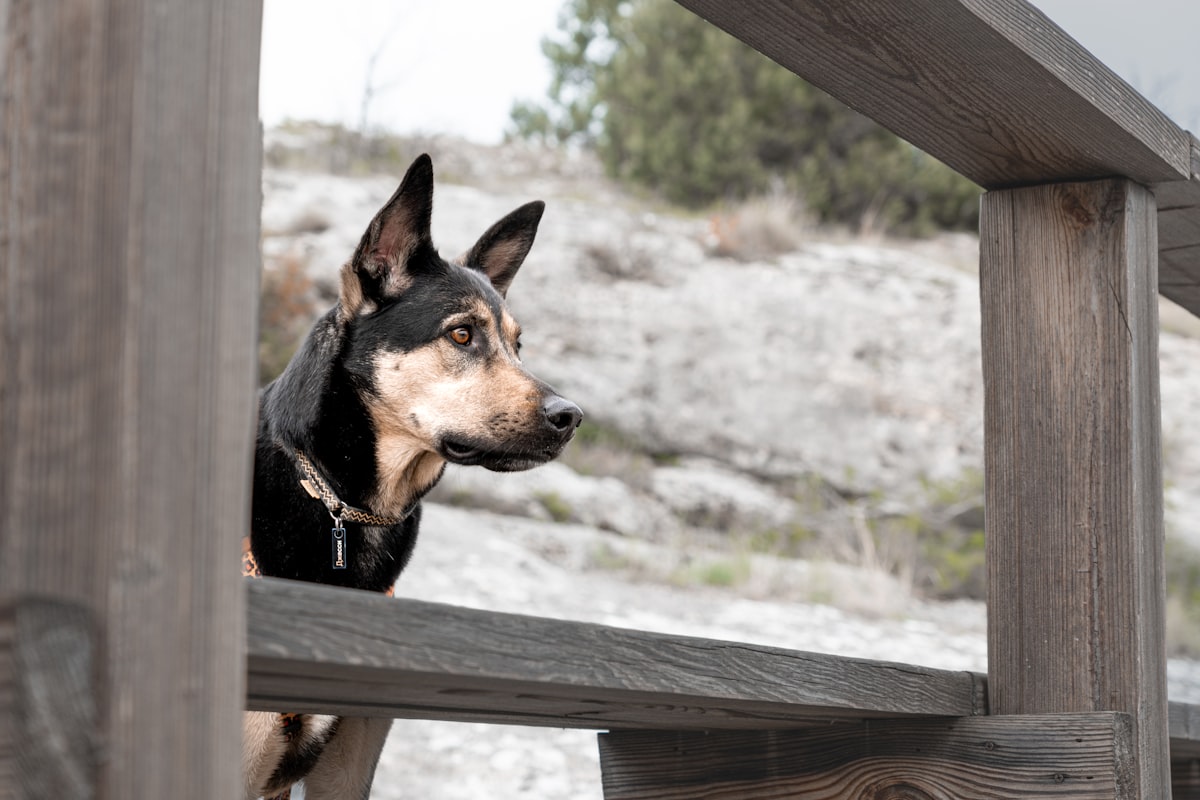
Every reactive dog has a threshold distance. Beyond that distance, they notice other hikers but don't react. Inside that distance, they go over threshold and react.
Your job is finding and working at the edge of that threshold. Too close triggers reactions. Too far provides no training opportunity. Right at threshold, you can teach new responses.
Finding your dog's threshold takes observation. Notice when they first spot an approaching hiker. Watch for subtle changes. Ears rotating forward, body stiffening, weight shifting. Mark the distance where visible tension appears. That distance is your working range for training. With Bodie, I discovered his threshold was about 75 feet. Beyond that, he'd notice hikers but stay calm. Inside that distance, he'd escalate. Once I knew that number, I could position us correctly.
For some dogs, threshold sits at 50 feet. For others, 200 feet. There's no standard because it depends on the individual dog and the specific trigger.
The Look-At-That Game
This counter-conditioning technique changes your dog's emotional response to seeing hikers. Instead of "hiker = scary/frustrating," it builds "hiker = treats from my person."
The game works like this. Spot a hiker at threshold distance. The moment your dog notices them, say "yes!" and deliver a treat. Repeat for every glance at the hiker. Over time, your dog will see a hiker and automatically look to you for their reward.
You're not rewarding the looking. You're changing the emotional association. The hiker becomes a predictor of good things rather than a trigger for fear or frustration.
Pro Tip
Use high-value treats. Kibble won't cut it when competing with the excitement of approaching hikers. Real meat, cheese, or whatever your dog finds irresistible keeps their attention on you.
Creating Distance on Trail
Practical trail management requires giving your dog space to stay below threshold. This means actively creating distance when you spot other hikers.
You have several options for creating distance. Stepping well off trail and waiting works when space allows. A U-turn and walking the other direction creates the most distance quickly. Natural barriers like trees or boulders add a visual buffer that calms some dogs. Having your dog sit behind you blocks their view of the approaching person.
Don't wait until hikers are close. Create distance as soon as you spot them. Early intervention keeps your dog below threshold where learning can happen.
What NOT to Do
Common reactions to trail barking often make the problem worse.
Yanking the leash confirms something is wrong and increases anxiety. Yelling adds to the chaos without teaching any alternative behavior. Flooding, which means forcing close contact with triggers, overwhelms and traumatizes. Punishment after barking creates negative associations with hikers themselves. Alpha rolls and scruffing damage trust while doing nothing to address the underlying emotion.
These methods might suppress barking momentarily through intimidation, but they don't change the underlying emotional response. The fear or frustration remains, often emerging worse later.
Building Alternative Behaviors
While changing emotional responses takes time, you can also teach alternative behaviors that are incompatible with barking.
A focus command that asks for eye contact with you works well. Touch, where your dog targets their nose to your hand, gives them something to do. "Find it" scatters treats on the ground and redirects attention downward. An emergency U-turn gets you both moving away from the trigger.
Practice these heavily in non-reactive situations first. A behavior your dog can't perform at home under calm conditions won't work on trail during trigger exposure.
Warning
Don't ask for obedience cues like "sit" or "down" during reactive moments. Static positions increase frustration. Movement-based cues (follow, touch, find it) work better because they redirect energy.
Trail Selection for Reactive Dogs
While you work on behavior modification, choose trails strategically. Setting your dog up for success means avoiding overwhelming situations.
Less popular trails mean fewer encounters and more space for your dog. Weekday mornings work better than weekend afternoons. Wide trails with good sightlines let you spot approaching hikers early and create distance before your dog notices them.
Avoid narrow trails, blind corners, and peak-hour popular destinations until your dog's skills improve. There's no training value in constant over-threshold exposure.
When Progress Stalls
Some reactive dogs need more help than general techniques provide. Professional assistance accelerates progress and catches issues you might miss.
Professional help makes sense when reactivity is severe, involving lunging, snapping, or intense fear. If behavior isn't improving after weeks of consistent work, outside perspective helps identify what you're missing. When you're unsure whether you're dealing with fear, frustration, or true aggression, a professional can assess accurately. Dogs who have bitten or attempted to bite need expert guidance. And if your own anxiety about encounters runs high, that tension transmits down the leash and makes training harder.
Look for certified trainers using positive reinforcement methods. Avoid anyone promising quick fixes through dominance, correction, or intimidation.
Medications as Support
For severe anxiety-based reactivity, medication can help. This isn't giving up on training. It's giving your dog's brain the support it needs to learn.
Anxiety medications reduce baseline stress, making it easier for dogs to stay below threshold. They don't drug your dog into compliance. Instead, they enable learning that anxiety previously blocked.
Talk to your vet if training progress has plateaued or if your dog's reactivity seems disproportionate to circumstances.
Frequently Asked Questions
Sarah is a certified canine fitness trainer with a background in veterinary rehabilitation. She focuses on injury prevention, proper conditioning, and training techniques for trail dogs.