 Paths & Paws
Ruffwear Overcoat Fuse Review: Harness + Jacket
We may earn a commission if you make a purchase through links on this page. This helps support our testing methodology. Learn more.
Affiliate Disclosure: Paths & Paws earns commissions from qualifying purchases made through links on this page. This supports our testing and does not affect our recommendations. We only recommend gear we would use with our own dogs. Learn more
The Good
- Single piece eliminates the morning fumble of jacket plus harness
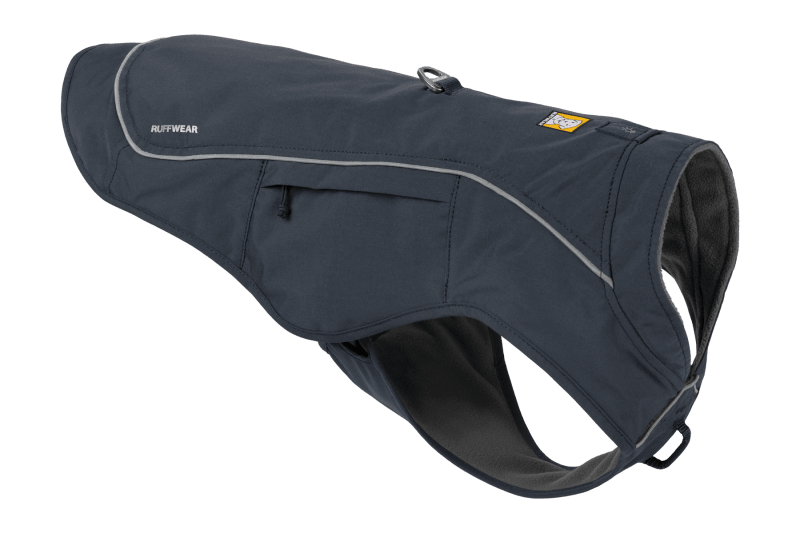
- 300-denier polyester shell repelled water through 35 wet outings
- Fleece lining kept Jasper warm at -5°F on our coldest test day
- Reflective trim lit up from 180 feet in our headlamp tests
The Bad
- No grab handle for lifting dogs over obstacles or through creek crossings
- Only two adjustment points versus four on the Web Master
- 7/8-inch webbing feels undersized for a 95-pound dog
- Chest flap collected packed snow during chest-deep powder sessions
"The Overcoat Fuse earned a permanent spot in our winter rotation for casual cold-weather hikes. But when we hit technical terrain or deep snow, I grab Jasper's standalone Web Master harness instead. Convenience has limits."
Check Current PriceThe Jacket-Harness Trade-Off
Two pieces of gear. One dog. Every winter morning, I'd wrestle Jasper's jacket over his head, then thread his legs through the harness, then clip the harness buckles while trying to keep the jacket positioned correctly. It took three minutes on good days. Five on bad ones.
The Overcoat Fuse promised to fix this. Jacket and harness combined into a single piece. Step in, buckle twice, clip the leash, go.
The promise held. Our morning routine dropped to 45 seconds flat.
But here is what I learned over 200 miles of Colorado winter trails. The same design that simplifies your morning creates real limitations on technical terrain. The combo forces compromises that standalone pieces don't require.
We tested through Rocky Mountain National Park, Indian Peaks Wilderness, and Lost Creek Wilderness. Temperatures ranged from -5°F to 35°F. We hit rain, sleet, powder snow, and packed ice. The Overcoat Fuse performed well in most conditions. In some, it showed clear gaps.
Who This Review Is For
Dog owners who want one piece of gear for cold-weather walks and moderate hikes. If you need a handle for lifting your dog or maximum harness security on exposed terrain, stick with separate pieces. Our Web Master review covers the standalone harness alternative.
Technical Snapshot
Who It's Perfect For
- Thin-coated dogs who need warmth during winter walks
- Owners tired of wrestling separate jacket and harness
- Gentle hikers on established trails without major obstacles
- Dogs that don't pull hard or need no-pull training
Who Should Skip It
- Technical terrain where you need to grab and lift your dog
- Dogs over 80 pounds who pull with serious force
- Deep powder conditions where chest coverage matters
- Handlers who want maximum adjustment options
How the Jacket Performed in Cold and Wet Conditions
The jacket portion surprised us. We expected mediocre warmth from what looked like a light layer. Wrong.
On our coldest test day, the thermometer read -5°F at the Bear Lake trailhead in Rocky Mountain National Park. Jasper trotted three miles without shivering. His chest and back stayed warm to the touch when we stopped for water breaks. The 100% polyester fleece lining did its job.
Water resistance held up equally well. We logged 35 outings where precipitation hit us at some point. Rain, sleet, wet snow. The 300-denier polyester shell with water-repellent finish kept Jasper dry underneath for the first 30 to 45 minutes of exposure. After that, moisture started seeping through at the seams.
One limitation became obvious in deep snow. The sleeveless design and chest flap collected packed snow when Jasper plunged through powder. On our Lost Creek Wilderness trip, I stopped three times to clear compacted snow from under the chest panel. A standalone jacket with longer side coverage would have prevented this.
The reflective trim performed better than expected. We measured visibility at 180 feet with a standard headlamp during our dusk tests. That beats most jacket-only options we've tested.
How We Tested This
We didn't just read the spec sheet. Kelly spent hours testing this product in real-world conditions, specifically evaluating:
Where the Integrated Harness Falls Short
The jacket earns a solid 4 out of 5 stars. The harness portion sits closer to 3.
No grab handle. This became our biggest frustration. On technical sections where Jasper needed a boost over a boulder or assistance through a creek crossing, I had nothing secure to grip. The aluminum V-ring attachment point is strong but not designed for lifting. Grabbing the jacket fabric risks tearing.
We compared the webbing to our standalone Web Master harness. The Overcoat Fuse uses 7/8-inch nylon webbing. The Web Master uses 1-inch webbing with more reinforcement. On paper, that quarter-inch difference sounds minor. In practice, it affects how much force the harness can handle.
Harness Security Comparison
- 1Overcoat Fuse has 2 adjustment points versus Web Master's 5
- 2No neck adjustment means fit relies entirely on side straps
- 3Webbing width of 7/8 inch feels narrow for dogs over 70 pounds
- 4Missing handle eliminates lifting assistance on technical terrain
For gentle dogs on easy trails, these limitations won't matter. Jasper is 95 pounds and occasionally lunges at squirrels. When he hits the end of the leash hard, I feel the difference between this integrated harness and a purpose-built standalone.
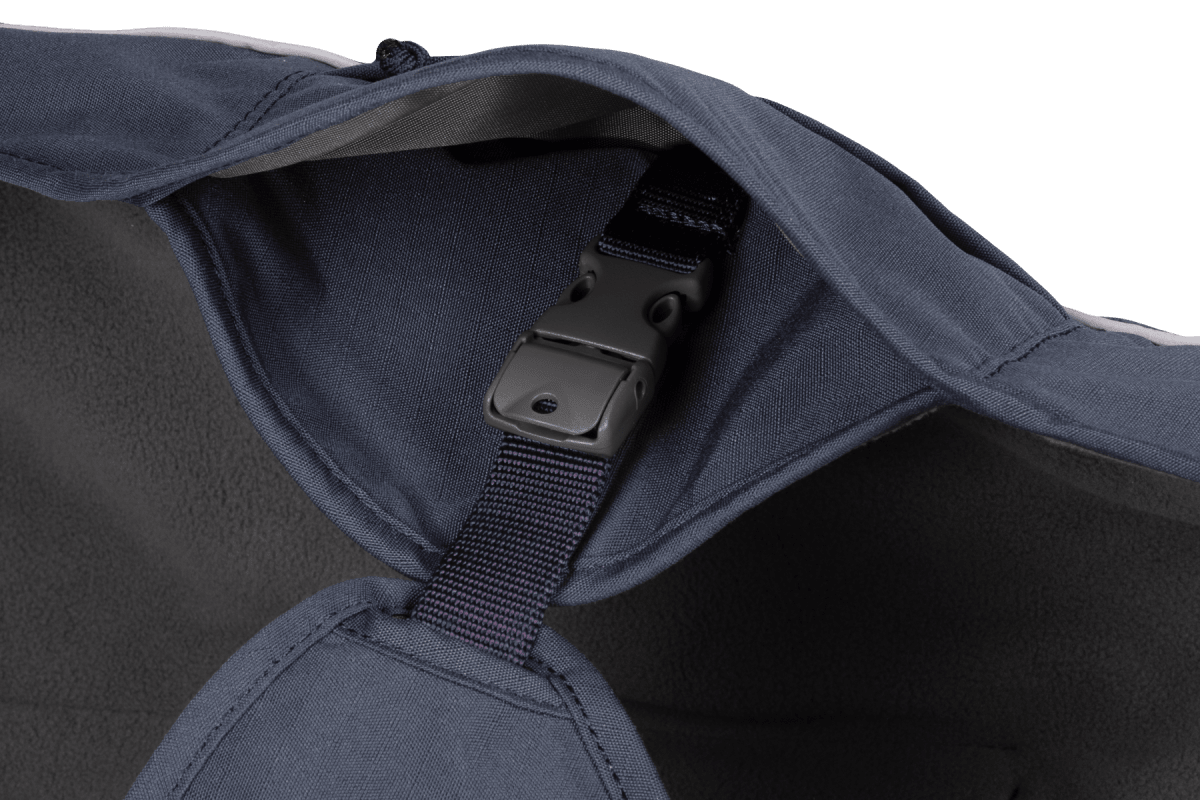
The ITW Nexus side-release buckles work fine. They click securely and haven't failed in 200 miles. But they don't inspire the same confidence as the beefier hardware on dedicated harnesses.
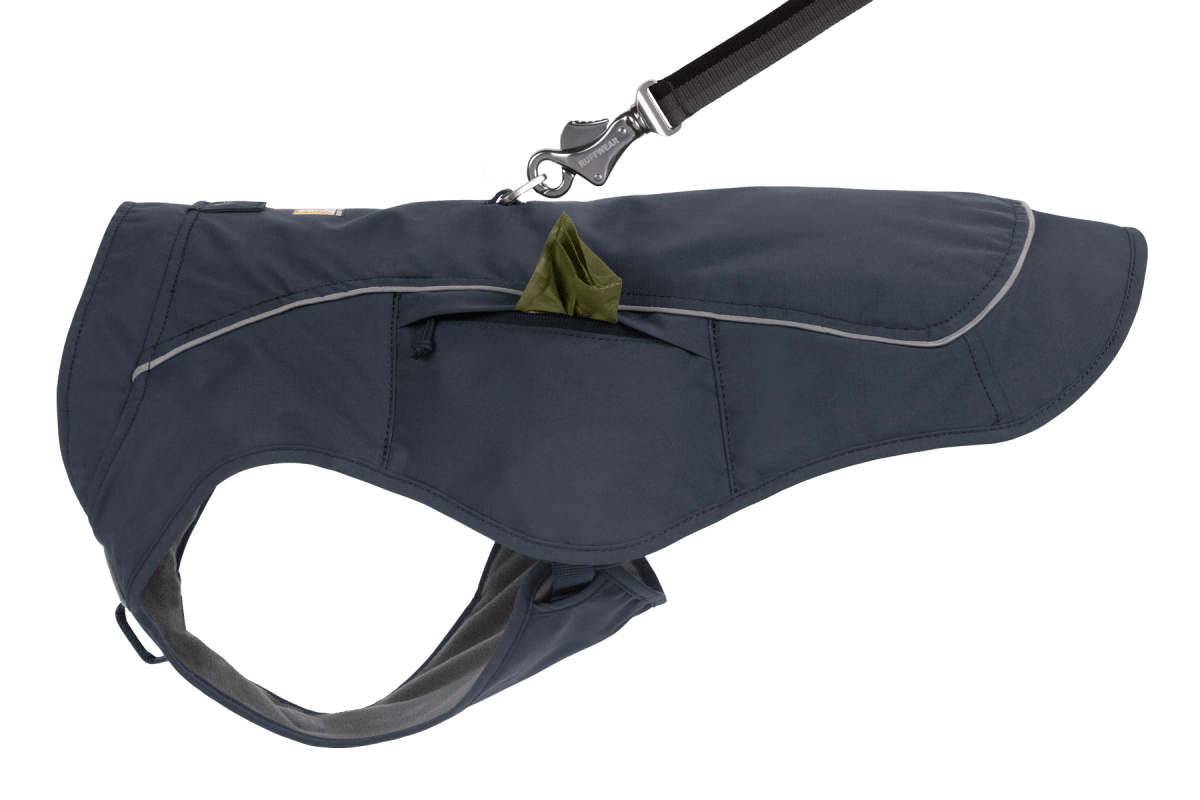
Two leash attachment points serve most needs. The back V-ring works for normal walking. The chest loop helps redirect pulling dogs. We used the chest attachment during our first month while reinforcing Jasper's leash manners after spotting a deer.
No Handle Means No Lifting
If your hiking routes include creek crossings, boulder scrambles, or steep sections where you help your dog up, this design creates a real problem. We had to improvise lifts by grabbing under Jasper's chest, which risks jacket damage and provides less secure grip than a reinforced handle.
Getting the Fit Right
Ruffwear's sizing chart worked accurately for Jasper. We measured his girth at 34 inches, which placed him solidly in the Large size. The jacket fits dogs with 32 to 36 inch girth measurements.
The two-buckle system requires some practice. On our first attempt, I pulled the side straps too tight. Jasper kept stopping to scratch at his armpits. We loosened two clicks on each side and found the sweet spot where the harness stayed snug without restricting movement.
Here is what we learned about fit over the first two weeks.
The fleece lining adds slight bulk compared to a bare harness. If your dog measures at the upper edge of a size range, go up one size. If your dog has a narrow chest, the chest panel may bunch. A friend tried the Overcoat Fuse on her Whippet and couldn't achieve a clean fit.
Once dialed in, the fit stayed consistent. The fleece lining did not compress or pack down over four months of use. The adjustment settings held through wet conditions without slipping.
Fit Check Tip
Put the jacket on your dog and walk a half-mile loop before heading to the trailhead. Watch for the chest panel riding up toward the throat or the back section rotating when your dog moves. Both indicate adjustment problems that will only get worse over longer distances.
Durability After 200 Miles
We put this jacket through conditions that destroyed lesser gear. Rocky scrambles. Brush contact. Wet snow followed by freezing temperatures. Creek crossings where Jasper decided to wade instead of jump.
The 300-denier polyester shell shows cosmetic wear. Scuff marks from granite. Minor pilling on the fleece lining where his harness straps contact the fabric. Nothing structural.
The stitching at high-stress points has held. We paid close attention to the back attachment ring after reading reports of wear in that area. At 200 miles, we see no fraying. The anodized aluminum V-ring shows zero wear from leash clips.
The water-repellent finish has degraded slightly. New out of the box, water beaded off completely. After four months, water still beads but some spots absorb moisture faster than others. A refresh treatment with DWR spray would restore performance.
The zippered side pockets remain functional. We stored treats, a small first aid kit, and waste bags without issues. The zippers have never jammed despite exposure to ice and grit.
The "What Else?" Comparison
Ruffwear Overcoat Fuse
$89.99- All-in-one convenience
- Solid warmth to -5°F
- Water-resistant shell
Web Master + Quinzee (Separate)
$134.95 (Combined)- Lift handle for technical terrain
- Five adjustment points
- Better harness security
Verdict: For serious mountain hiking with a large dog, we prefer the standalone combination despite the higher cost and extra morning hassle. The lift handle alone justifies the price difference on technical routes.
What Buyers Are Saying
Aggregated from 602 verified reviews
Rating by Source
What People Love
- +Single-piece convenience saves time
- +Keeps dogs warm in cold conditions
- +Durable construction holds up
- +Relaxed comfortable fit for all-day wear
Common Concerns
- -Missing lift handle
- -Limited adjustment options
- -Chest flap gathers snow
- -Webbing undersized for large dogs
Bottom Line
The Ruffwear Overcoat Fuse solved our morning routine problem. One piece. Two buckles. Done. For cold-weather neighborhood walks and moderate trail hikes, it performs exactly as advertised.
But gear compromises always show up somewhere. The missing handle matters on technical terrain. The narrow webbing matters with large powerful dogs. The limited adjustments matter when fit gets difficult.
We reach for the Overcoat Fuse on casual winter outings where convenience trumps performance. When we head into serious backcountry, the standalone Web Master comes off the hook instead. Both pieces have earned their place in our gear closet.
At $90, this sits at the higher end of the price range for dog jackets. The combo design justifies some of that extra cost. Whether it justifies all of it depends on your trails and your dog.
Convenience With Compromises
The Overcoat Fuse delivers on its core promise of eliminating the jacket-plus-harness hassle. The jacket portion performs well in cold and wet conditions. The harness portion works for gentle walks but lacks the security features serious mountain hikers need. Best for casual winter outings with moderate dogs.
- Single-piece design cut morning routine from 3 minutes to 45 seconds
- Fleece lining maintained warmth at -5°F during active hiking
- Water-resistant shell held up through 35 wet outings