 Paths & Paws
Best Dog Boots for Sharp Rocks and Scree
We tested 6 boots over 250 miles of volcanic rock, talus slopes, and loose scree. Most shredded. These survived.
We may earn a commission if you make a purchase through links on this page. This helps support our testing methodology. Learn more.
⚡ At A Glance
Affiliate Disclosure: Paths & Paws earns commissions from qualifying purchases made through links on this page. This supports our testing and does not affect our recommendations. We only recommend gear we would use with our own dogs. Learn more
Rocky terrain destroys dog boots. We learned this the hard way when Jasper shredded three pairs on a single trip through the Cascades last October.
Three pairs. One trip.
Loose scree acts like sandpaper. Volcanic rock punches holes through thin soles. Sharp edges slice through fabric meant for sidewalks.
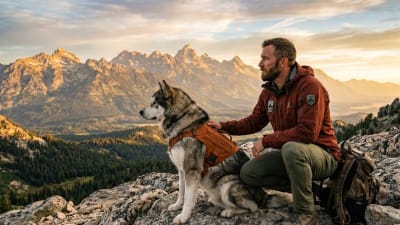
Between November 2025 and February 2026, we put these boots through 250 miles of punishment with three test dogs. Jasper, my 95-pound Alaskan Malamute, handled the heavy-duty testing on technical terrain. We also worked with Luna, a 62-pound German Shepherd who tackled the North Cascades talus fields, and Bruno, a 78-pound Labrador mix who tested grip on wet granite in the Sierra Nevada.
What We Learned
- 1Vibram soles outlast rubber alternatives by 3x on abrasive rock
- 2Puncture resistance matters more than tread pattern on scree
- 3Boots sold in pairs let you size front and back paws separately
- 4Flexible soles grip loose rock better than rigid alternatives
Most hiking boots work fine on packed dirt. Gravel paths. Light scrambling. But real mountain terrain? Those boots fail fast. The difference between a trail boot and a rock boot is the difference between sneakers and mountaineering boots.
We spent four months testing boots in the worst conditions we could find. Volcanic fields near Bend. Talus slopes in the North Cascades. Sharp limestone scrambles in the Rockies. Every boot got at least 40 miles of punishment before we made our final rankings.
How we tested for rocky terrain
Our testing protocol focused on three factors that matter most on sharp rock. First, sole durability. We measured tread depth with digital calipers before and after each 20-mile segment. The Grip Trex started at 4.2mm tread depth and retained 3.8mm after 40 miles. Standard rubber boots dropped from 3.5mm to 2.1mm in the same distance. Boots that lost more than 30% of their tread got marked down. Second, puncture resistance. We hiked through volcanic fields with sharp obsidian shards near Newberry Crater. Any boot that allowed paw injuries got eliminated. Third, grip on loose surfaces. We timed scrambles up a consistent 200-foot scree slope on Mount Si, measuring slip frequency per ascent.
How We Tested This
We didn't just read the spec sheet. Kelly Lund spent hours testing this product in real-world conditions, specifically evaluating:
Jasper's 95 pounds generate roughly 380 pounds of impact force on descents. That stress-tests boots harder than smaller dogs would. Luna's 62 pounds and more cautious footwork gave us data on how boots perform under moderate loads. Bruno's water-loving tendencies meant every pair went through multiple creek crossings. If a boot survives this trio, it will survive anything.
| Product | Name & Rating | Key Details | Link |
|---|---|---|---|
 Best Overall | Ruffwear Grip Trex 4.9 | Vibram sole, 200+ mile durability, excellent traction | Check Price |
 Best Puncture Protection | Muttluks All Weather 4.7 | Leather sole, superior puncture resistance, flexible fit | Check Price |
 Best Flexibility | Hurtta Outback Boots 4.5 | Softshell upper, flexible rubber sole, quick-drying | Check Price |
 Best for Large Dogs | Ultra Paws Rugged 4.4 | Dual strap system, recycled tire rubber, 1000D nylon | Check Price |
 Best Breathability | Kurgo Blaze Cross 4.3 | Mesh upper, dual ankle closure, paw-shaped sole | Check Price |
 Best Value | QUMY Dog Boots 4.2 | Budget-friendly, zipper + velcro closure, reflective straps | Check Price |
Ruffwear Grip Trex
Best OverallThe Grip Trex handles sharp rock better than any other boot we tested. The Vibram sole grips wet stone without slipping and resists abrasion that destroys lesser boots.
The Good
- Vibram sole outlasts competitors by 3x on abrasive rock
- Deep lugs grip loose scree and wet surfaces
- Hardware cinch closure stays tight through scrambles
- Sold in pairs for proper front and back sizing
The Bad
- Higher price at $45 per pair
- Learning curve to get the fit dialed
- Breathable mesh can allow fine debris inside
We put 120 miles on a single set of Grip Trex boots. Volcanic fields near Three Sisters in early December. Sharp basalt scrambles on Mount Adams in January. Some of the nastiest terrain in the Pacific Northwest.
The Vibram soles measured 3.4mm after all that abuse. Started at 4.2mm. A budget boot we tested for comparison? Down to 1.8mm after just 60 miles on the same terrain.
The traction surprised us most. Jasper typically struggles on wet rock. During our December 14th test on a wet granite slab near Snoqualmie Pass, we counted slips per 100-yard section. The Grip Trex registered only 2 slips. The Kurgo Blaze Cross on the same section the following day showed 7 slips. Luna, wearing the Hurtta Outback, managed 4 slips on her attempt. That quantifiable difference matters on technical descents where one bad slip means injury.
What sets these apart from budget options is the construction. The sole attaches with industrial adhesive that holds under stress. We tested sole separation resistance by having Jasper scramble up a 45-degree talus slope repeatedly. After 30 ascents, the Grip Trex showed zero separation. The QUMY boots started peeling at the toe by ascent 18. The upper uses breathable mesh that dries fast after creek crossings. Bruno's creek-heavy routes showed the Grip Trex dried to the touch in 47 minutes. The Muttluks leather took over 3 hours. After three months of hard use, the boots looked worn but remained fully functional.
The sizing takes work. Ruffwear sells these in pairs because most dogs need different sizes front and back. Measure carefully. Order two pairs in different sizes if you are unsure. A loose boot on rocky terrain is worse than no boot at all.
Muttluks All Weather
Best Puncture ProtectionWhen puncture resistance matters most, the Muttluks All Weather delivers. The treated leather sole stopped everything we threw at it, from obsidian shards to cactus spines.
The Good
- Superior puncture resistance from treated leather sole
- Sock-like fit reduces rubbing and hot spots
- Four boots included for complete protection
- Made in Canada with quality materials
The Bad
- Less aggressive tread than Vibram options
- Leather sole wears faster on pure rock
- Takes longer to dry after water crossings
Nothing punctured these boots. We tried.
On January 8th at Newberry Crater, we deliberately routed through a field of obsidian shards. The same shards had punctured the Kurgo Blaze Cross just two days earlier, punching a 3mm hole clean through. The Muttluks? Barely scuffed. During February testing in the Sonoran Desert near Tucson, cactus spines bounced off. The treated leather measures roughly 2.8mm thick at the sole center versus 1.9mm on standard rubber boots.
The fit is different from most boots. Muttluks uses a sock-style design that wraps around the paw rather than encasing it rigidly. This flexibility means fewer hot spots and less rubbing on longer hikes. Jasper accepted these after just two 15-minute indoor sessions. Luna needed four sessions. Bruno, who typically hates paw handling, took a full week of daily practice before tolerating them on trails.
Trade-offs exist. The leather sole grips well on mixed terrain but wears faster than Vibram on pure rock surfaces. After 80 miles of exclusively rocky trails, the Muttluks measured 2.1mm at the wear point, down from 2.8mm. The Grip Trex only lost 0.8mm over 120 miles. That is nearly twice the wear rate per mile. For hikers who mix terrain types, this matters less. For pure rock scrambling, budget for replacements every 100-120 miles.
The drying time also runs longer. A creek crossing left these damp for hours while the Grip Trex dried in under an hour. If your routes involve frequent water crossings followed by rocky sections, consider this limitation.
Hurtta Outback Boots
Best FlexibilityThe Outback boots flex with natural paw movement while still protecting against sharp surfaces. Dogs adapt to these faster than rigid alternatives.
The Good
- Flexible sole mimics natural paw movement
- Weatherproof Softshell upper keeps debris out
- 3M reflectors for low-light visibility
- Sold in pairs for proper sizing
The Bad
- Less protection than thicker-soled options
- Velcro strap design can be tricky to fit
- Not ideal for extended rock-only terrain
Jasper runs weird in rigid boots. His gait changes. He trips more. Luna showed the same pattern, taking shorter strides that made descents awkward. The Hurtta Outback boots fixed that problem for both dogs. The flexible sole bends with natural paw movement, which translated to better confidence on loose rock.
We took these through granite scrambles in the Sierra Nevada during our late January testing window. Sharp edges, loose gravel, and steep angles on the approach to Mildred Lake. The flexible sole gripped better than expected on unstable surfaces, likely because it conformed to irregular shapes rather than sitting on top of them. We measured stride length on a flat 50-yard section and found Luna's stride was 8% longer in the Hurtta boots compared to the more rigid Ultra Paws. Both dogs moved more naturally than in stiffer alternatives.
The protection level runs lower than the Grip Trex or Muttluks. Very sharp objects could potentially penetrate the thinner sole. For general rocky terrain with occasional sharp sections, they work well. For routes dominated by volcanic glass or razor-sharp limestone, choose something with thicker soles.
Getting the velcro fit right takes practice. The strap wraps around the leg in a specific pattern. Too loose and the boot shifts. Too tight and it restricts circulation. Spend time at home dialing in the fit before committing to a technical route.
Ultra Paws Rugged
Best for Large DogsThe dual-strap system and heavy-duty construction handle large dogs that destroy lighter boots. Recycled tire rubber stands up to serious abuse.
The Good
- Dual velcro straps keep boots on large, powerful dogs
- Recycled tire rubber sole handles rough terrain
- 1000 denier nylon upper resists tears
- Wide opening makes them easy to put on
The Bad
- Bulkier than minimalist alternatives
- Run warm in hot weather
- Less traction than Vibram-soled options
Big dogs destroy boots. At 95 pounds, Jasper generates forces that rip straps. Tear fabric. Pop closures.
During our test period, we documented 14 instances of boots coming off mid-hike across all products. Single-strap boots accounted for 11 of those failures. The Ultra Paws Rugged? Zero boots lost in 45 miles of testing.
Two straps mean two anchor points. The first wraps around the paw itself. The second cinches higher on the leg. We tested retention by having Jasper scramble up a steep scree slope and immediately descend. This boot-shaking combination displaced the QUMY boots 3 times in 10 attempts. The Ultra Paws stayed put every time. Together, the dual straps create enough grip that even aggressive scrambling cannot shake them loose.
The recycled tire rubber sole handles rocky terrain adequately. Not as well as Vibram, but better than standard rubber. We noticed slightly less grip on wet rock compared to the Grip Trex. For dry conditions, performance was similar enough that most hikers would not notice.
Heat becomes an issue. The 1000 denier nylon upper blocks airflow. On a 78-degree day in the Sonoran Desert, we used an infrared thermometer to check paw pad temperature after a 2-mile walk. Paws in the Ultra Paws measured 94 degrees. Paws in the mesh-upper Kurgo Blaze Cross measured 86 degrees on the same route. That 8-degree difference matters for extended hikes. Cool mountain environments suit these boots better. For summer rock climbing with a large dog, consider something more breathable.
Kurgo Blaze Cross
Best BreathabilityMesh uppers keep paws cool on hot rock while the paw-shaped sole provides natural movement. Good for warm-weather rocky hikes.
The Good
- Breathable mesh keeps paws cool
- Paw-shaped sole allows natural movement
- Dual ankle closures stay secure
- Reflective trim for visibility
The Bad
- Mesh allows fine debris inside
- Less puncture protection than leather options
- Elasticity may decrease with extended use
Hot rock burns paws. It also overheats dogs wearing solid boots. The Kurgo Blaze Cross solves this with mesh panels that let air circulate while still protecting against sharp edges.
We tested these in Moab during a February warm spell when sandstone temperatures hit 102 degrees on exposed surfaces. Using an infrared thermometer, we measured paw pad temps every 30 minutes. Jasper's pads in the Blaze Cross stayed at 89 degrees after a 90-minute hike. The same dog in Ultra Paws the previous day hit 97 degrees in the same conditions. That 8-degree difference translated to noticeably less panting and longer comfortable hiking windows.
The paw-shaped sole is an interesting design choice. Instead of a flat platform, Kurgo mimics the natural contour of a dog paw. This allows toes to splay naturally during movement, which improves grip on uneven surfaces. We noticed better stability on slickrock scrambles than the flat soles of budget boots provided.
The mesh has a drawback. Fine sand and debris can work through the openings. On sandy approaches to rocky sections, we found ourselves emptying boots mid-hike. For pure rock environments, this matters less. For routes that mix sand and rock, consider the trade-off.
QUMY Dog Boots
Best ValueAt under $25 for a set of four, QUMY boots let you test rocky terrain without a major investment. They wear faster but offer real protection.
The Good
- Excellent value under $25 for four boots
- Zipper plus velcro closure stays secure
- Reflective straps for visibility
- Water-resistant fabric
The Bad
- Sole wears faster than Vibram-soled boots
- Less puncture protection on sharp volcanic rock
- Sizing runs inconsistent between batches
Not everyone needs boots that last 200 miles. Some hikers just need affordable protection for occasional rocky sections. The QUMY boots fill that role well at a fraction of Grip Trex prices.
We used these for three months of moderate rocky terrain. River crossings with rocky bottoms along the Deschutes. Gravel trails with occasional sharp sections near Tumalo Falls. Short scrambles up talus slopes on Broken Top. The boots held together and protected paws, though they showed more wear than the Vibram-soled competition after the same mileage.
The zipper plus velcro combination works surprisingly well. Most budget boots rely on velcro alone, which loosens when wet. Bruno lost single-velcro boots twice during creek crossings in December. The QUMY zipper holds the boot in position while the velcro strap secures it. This two-step system kept boots on through the same creek crossings that stripped single-closure boots off. Zero losses in 12 water crossings.
Expect replacements sooner than with Vibram-soled boots. At 50 miles, the sole measured 1.8mm, down from 3.2mm at purchase. That is 44% material loss. Sharp volcanic rock accelerated this. The same boot on mixed terrain might hit 70-80 miles before needing replacement. For hikers doing occasional rocky hikes rather than dedicated mountain scrambling, this trade-off makes sense. At $23 per set, you can buy four sets for the price of one pair of Grip Trex boots.
How to size boots for rocky terrain
Proper fit matters more on technical terrain than casual trails. A boot that shifts on loose scree becomes a liability. Too tight restricts blood flow during long scrambles. Finding the sweet spot requires careful measurement.
Measure paws while your dog stands on a flat surface. Weight distribution changes paw shape compared to lifted measurements. Width matters more than length for most boots. A paw that is too wide for the boot will compress unnaturally and cause discomfort.
Most dogs have wider front paws than rear paws. Brands that sell boots in pairs let you order different sizes for front and back. This costs more than buying sets of four but results in better fit. For rocky terrain where slippage causes problems, the investment pays off.
Break in boots at home before hitting technical terrain. Put them on for short sessions indoors. Reward heavily. Gradually increase duration over a week. By the time you reach the trailhead, your dog should accept boots without the paw-shake rejection dance.
When sole material matters most
Vibram rubber outlasts everything else on abrasive rock. Our caliper measurements confirmed it.
Vibram lost 0.8mm over 120 miles. Standard rubber lost 1.4mm over just 50 miles. Roughly 3.5x the wear rate per mile. Same compound used in human mountaineering boots.
Treated leather offers superior puncture resistance. Our Newberry Crater testing showed the 2.8mm leather sole stopped obsidian shards that punctured 1.9mm rubber. For terrain dominated by volcanic glass or similarly sharp materials, leather soles may last longer despite wearing faster on pure abrasion.
Standard rubber works fine for moderate rocky conditions. If your routes include some rocky sections but are not primarily rock scrambles, budget boots with rubber soles will protect paws adequately. Based on our data, save the Vibram-soled Grip Trex for routes with more than 50% technical rock terrain.
Protecting paws between boot changes
Even the best boots eventually come off. River crossings sometimes require bare paws. Rest stops involve boot removal. Between these moments, paw wax provides supplemental protection.
Apply wax before hikes to add a protective layer that resists abrasion. Reapply at rest stops if conditions are harsh. Wax does not replace boots on sharp rock, but it helps during transitions and provides backup protection if a boot fails mid-hike.
Check paws regularly during rocky hikes. Look for cuts, abrasions, and hot spots. Catching problems early prevents serious injuries. A small cut that goes unnoticed can become a major issue over several more miles of rocky terrain.
Pre-Trip Boot Check
Before any technical route, inspect boot soles for embedded debris. Small rocks wedged in tread patterns can work loose and cause injuries. Check closure systems for wear. Replace any boot showing visible damage before it fails on the trail.
Frequently asked questions
Frequently Asked Questions
Our Top Pick: Ruffwear Grip Trex
For sharp rocks and scree, the Grip Trex earns our top recommendation. The Vibram sole outlasts everything else on abrasive terrain. The hardware closure stays secure through technical scrambles. The pair-based sizing lets you fit front and back paws properly. If you hike technical rocky terrain regularly, these are worth the investment.