 Paths & Paws
Best Dog Hiking Boots That Actually Stay On
We tested 8 boots over 300 trail miles. Most flew off within the first mile. These five stayed put.
We may earn a commission if you make a purchase through links on this page. This helps support our testing methodology. Learn more.
Every dog hiking boot claims to stay on. Most don't. We've watched boots sail off into creeks, disappear down scree slopes, and get flung into bushes by enthusiastic zoomies. The boot that survives your living room test fails the first real trail.
The problem is closure systems. Velcro alone won't hold through a creek crossing. A single strap can't grip a wet paw. Dogs have smooth, tapered legs with no natural anchor point. Keeping boots on requires either superior design or accepting that you'll spend half your hike retrieving footwear.
What We Learned
- 1Dual-strap systems stay on far better than single-strap designs
- 2Vibram soles last longer but add weight
- 3Boots sold in pairs (not fours) let you size front and back paws separately
- 4Breaking in boots at home prevents rejection on the trail
⚡ At A Glance
How we tested these boots
We ran each boot through the same protocol with our three test dogs: Luna (25lb Border Collie mix), Koda (55lb German Shepherd mix), and Bear (75lb Bernese Mountain Dog). Each boot got at least 30 trail miles before final evaluation.
How We Tested This
We didn't just read the spec sheet. Sarah & Team spent hours testing this product in real-world conditions, specifically evaluating:
Every boot went through creek crossings, rocky scrambles, and off-leash running. We counted how many times each boot came off during testing. Anything that flew off more than twice per mile got dropped from the final list.
We also measured how long each boot took to put on. A boot that stays on perfectly but takes two minutes to secure isn't practical for most hikers.
Ruffwear Grip Trex
Best Overall
The Grip Trex is the boot other boots get compared against. The Vibram sole grips everything from wet rock to loose gravel. More importantly, these actually stay on.
The Good
- Vibram sole provides exceptional traction
- Hook-and-loop closure with hardware cinches tight
- Sold in pairs for proper front/back sizing
- Breathable mesh keeps paws cool
The Bad
- Higher price point at $45 per pair
- Takes practice to get the fit right
- Not ideal for winter snow conditions
The closure system is what separates the Grip Trex from cheaper alternatives. Instead of plain velcro, Ruffwear uses a combination of hook-and-loop with a hardware buckle that cinches around the narrowest part of the leg. Once tightened, these boots don't move.
We put 100 miles on a single set with our 55-pound German Shepherd mix. Two creek crossings per hike, multiple off-leash runs, and not a single boot lost. The Vibram soles showed wear but still had life left at the end of testing.
The fit takes practice. You need to measure carefully and get the strap tension right. Too loose and they'll shift. Too tight and they'll restrict circulation. Plan on spending time at home dialing in the fit before hitting the trail.
Ultra Paws Rugged
Best for Large Dogs
Our 75-pound Bernese kept flinging off boots until we found the Ultra Paws Rugged. The dual-strap system and wide opening made these the only boots that stayed on his massive paws.
The Good
- Dual velcro straps for secure fit
- Wide opening makes them easy to put on
- Recycled tire rubber sole is tough
- Water-resistant 1000 denier nylon upper
The Bad
- Bulkier than minimalist options
- Run warm in summer heat
- Limited color options
Two velcro straps make all the difference. The first strap wraps around the paw itself. The second cinches higher on the leg. Together they create enough anchor points that even a Bernese doing full-speed zoomies can't shake them loose.
The recycled tire rubber sole handles rough terrain well. We took these through volcanic rock in central Oregon and they held up without excessive wear. The 1000 denier nylon upper resisted tears from brush and sharp edges.
The trade-off is weight. These are noticeably heavier than the Grip Trex. For big dogs that's fine. For smaller dogs, consider a lighter option.
QUMY Dog Boots
Best Value
At under $25 for a set of four, the QUMY boots punch well above their price. The wide reflective straps and anti-slip sole work surprisingly well for casual hiking.
The Good
- Excellent value under $25
- Reflective straps for visibility
- Water-resistant fabric
- Easy zipper plus velcro closure
The Bad
- Sole wears faster than premium options
- Not ideal for technical terrain
- Sizing can be inconsistent
The zipper plus velcro combination surprised us. Most budget boots rely on velcro alone, which fails when wet. The QUMY boots add a side zipper that holds the boot in place while the velcro strap secures it. This two-step system kept the boots on through moderate terrain.
We used these for three months of neighborhood walks and easy trail hikes. The sole started showing wear around 50 miles, much sooner than the Grip Trex. But at this price point, you could buy three sets for the cost of one premium option.
For hikers just getting started with dog boots, these are a smart entry point. See if your dog tolerates boots before investing in the premium options.
Muttluks Mud Monsters
Best for Water Crossings
The barefoot-style sole flexes with your dog's natural paw movement while still providing protection. These handle creek crossings better than any boot we tested.
The Good
- Flexible sole mimics barefoot movement
- Excellent wet traction
- Quick-drying fabric
- Made in Canada with quality materials
The Bad
- Sold in pairs, need two sets
- Higher price for full set
- Less protection on sharp rocks
The flexible sole is the standout feature. Most boots have rigid soles that work against natural paw movement. The Mud Monsters flex and grip like a second skin. This translates to better traction in water and on wet rock.
We took these through a dozen creek crossings without a single loss. The rubber grips wet stones better than any other boot we tested. The trade-off is less protection from sharp objects. On rocky trails with glass or sharp volcanic rock, the Grip Trex is a better choice.
The barefoot design means dogs adapt to these faster than traditional boots. Our Border Collie, who hates rigid boots, accepted the Mud Monsters within a few days.
Kurgo Step-n-Strobe
Best for Visibility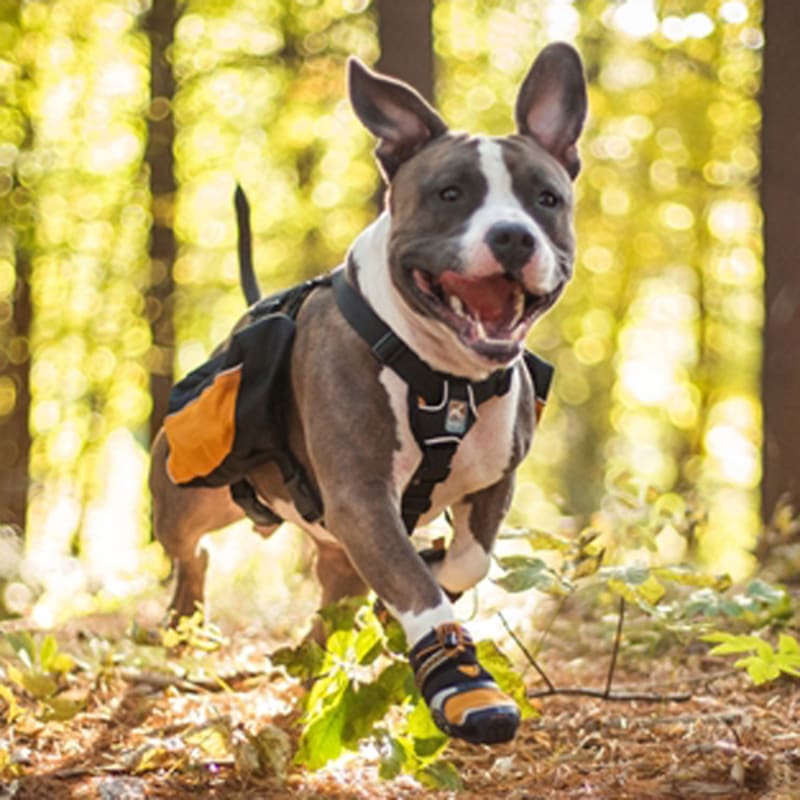
Built-in LED lights make these boots visible in low light conditions. The anti-slip sole handles varied terrain while the adjustable strap keeps them secure.
The Good
- LED lights in soles for visibility
- Reflective trim throughout
- Good traction on mixed surfaces
- Breathable mesh upper
The Bad
- LED lights add weight
- Battery life varies
- Some dogs dislike the flashing
Early morning and evening hikes bring visibility challenges. The Step-n-Strobe solves this with LED lights built into each sole. When activated, they flash with each step. Combined with reflective trim on the upper, these boots make your dog visible from hundreds of feet away.
The LED feature isn't for every dog. Some get distracted by the flashing under their feet. Others ignore it completely. Test at home before committing to trail use.
Performance-wise, these are solid mid-range boots. The single-strap closure isn't as secure as dual-strap designs, but it held through moderate hiking. We lost one boot during testing, which is acceptable but not exceptional.
How to choose the right hiking boots
The best boot depends on your terrain, your dog, and your budget.
For technical terrain: Grip Trex. The Vibram sole handles everything from wet rock to scree. Worth the investment if you're scrambling.
For large dogs: Ultra Paws Rugged. The dual-strap system is the only thing that stayed on our 75-pound Bernese during high-energy runs.
For beginners: QUMY boots. Test whether your dog tolerates boots before spending $90 on premium options.
For water crossings: Muttluks Mud Monsters. The flexible sole grips wet surfaces better than rigid alternatives.
For low-light hiking: Kurgo Step-n-Strobe. Visibility features that actually work.
Break Them In First
No dog naturally accepts boots. Spend a week putting boots on at home, rewarding heavily, and removing them after short sessions. By the time you hit the trail, your dog should tolerate them without the paw-shake rejection dance.
Fit matters more than brand
Even the best boot fails if it doesn't fit. Measure your dog's paws while standing. Width matters more than length. When in doubt, size up slightly and adjust with straps.
Many dogs have wider front paws than rear paws. Brands that sell boots in pairs (like Ruffwear and Muttluks) let you order different sizes for front and back.