 Paths & Paws
The Ultimate Dog Hiking Gear Checklist for 2026
We spent three years building out our dog hiking kit. This is everything that earned permanent space in our pack.
We may earn a commission if you make a purchase through links on this page. This helps support our testing methodology. Learn more.
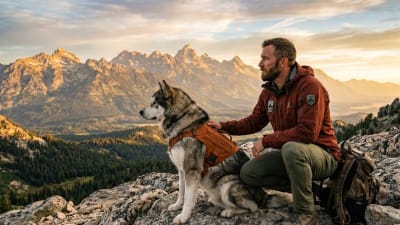
Three years ago, Jasper and I headed out for what was supposed to be a simple overnight in the Indian Peaks Wilderness. We made it four miles before I realized he had no water bowl, his paws were bleeding from sharp scree, and I had zero way to treat the cuts. We turned back. That trip taught me something I should have learned earlier. Hiking with your dog takes real preparation.
Since then, I've tested dozens of products across every gear category. Some became permanent fixtures in my pack. Others got returned after a single outing. This checklist represents what actually works after hundreds of trail miles with a 95-pound Alaskan Malamute who punishes gear harder than most.
What We Learned
- 1Quality harnesses outlast cheap ones by years and prevent injury during technical sections.
- 2Paw protection is non-negotiable on rocky terrain. One bad cut can end your trip.
- 3Hydration gear matters more than you think. Dogs drink twice as much as expected on hot days.
- 4First aid supplies specific to dogs have saved multiple trips from early endings.
⚡ At A Glance
Affiliate Disclosure: Paths & Paws earns commissions from qualifying purchases made through links on this page. This supports our testing and does not affect our recommendations. We only recommend gear we would use with our own dogs. Learn more
Most gear guides throw product specs at you without context. This one is different. Every item here has spent real time on Colorado trails with my dog. Some pieces failed. Others became indispensable. I'm sharing what survived. No fluff.
How we approach gear testing
How We Tested This
We didn't just read the spec sheet. Kelly Lund spent hours testing this product in real-world conditions, specifically evaluating:
Our testing site sits at 8,500 feet outside Boulder, Colorado. We have access to everything from flat river trails to technical alpine scrambles within a 30-minute drive. Products get tested across all these conditions before making the final list.
Testing period for this guide ran from March 2023 through February 2026. That's 36 months of continuous use. Things broke. We fixed or replaced them. The gear that made it through represents what I would actually buy again.
Harnesses and fit systems
A good harness does two things. It gives you control without restricting your dog's movement. It also distributes force away from the neck if your dog pulls or you need to grab them quickly.
Ruffwear Front Range Harness
Best Everyday Harness
The Front Range earned its spot through sheer reliability. After 18 months of near-daily use, our test sample shows normal wear but no structural failures.
The Good
- Four adjustment points dial in fit for most body types
- Foam padded chest panel prevents rubbing
- Two leash attachment points for training versatility
The Bad
- Not escape-proof for anxious dogs who back out
- Reflective trim fades after extensive UV exposure
We put the Front Range through scrambles in Rocky Mountain National Park where Jasper needed assistance over boulder fields. The grab handle held up to repeated lifting of his 95-pound frame. The chest panel showed no abrasion marks after technical sections that would have shredded thinner materials. The 420D ripstop nylon feels noticeably heavier in hand than budget harnesses using 210D fabric, and that weight translates directly to durability on rocky terrain.
I learned this lesson the hard way with a $15 Amazon harness that lasted exactly three hikes. The plastic buckle snapped during a scramble on Longs Peak when Jasper lunged at a marmot. We both tumbled. Nothing broke except my confidence in cheap gear. The Front Range uses anodized aluminum hardware that clicks with a satisfying snap and shows zero wear after 18 months.
Dogs who slip harnesses need the Web Master instead. It adds a third strap around the waist that makes escape nearly impossible. We tested both for months and the Web Master is the better choice for anxious or Houdini-type dogs. The Y-neck design on both distributes pulling force across the chest rather than concentrating it on the throat, which prevents the choking and coughing you see with collar-only setups.
Paw protection and boots
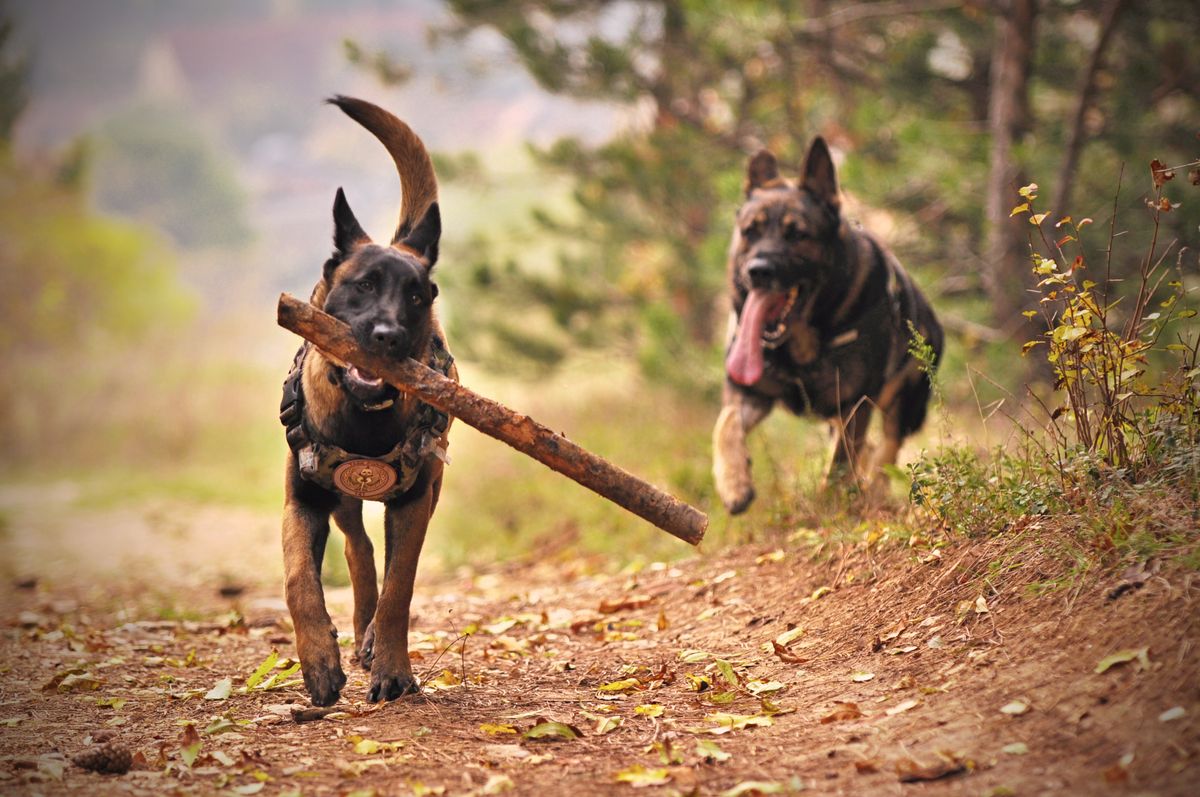
Dog boots seem silly until your dog gets a cut on sharp rock and your trip ends early. We learned this the hard way on a traverse through the Maroon Bells when Jasper sliced a pad on exposed granite. Lesson learned. Now boots are mandatory on any trail with scree or sharp volcanic rock.
Ruffwear Grip Trex Boots
Best All-Around Boots
The Grip Trex survived two full seasons of rocky terrain. The Vibram soles grip like climbing rubber and the secure closure system stayed put during stream crossings.
The Good
- Vibram outsoles provide excellent traction on wet rock
- Hook and loop closure stays secure during water crossings
- Sized in 0.25-inch increments for precise fit
The Bad
- Takes most dogs 2-3 sessions to walk normally in them
- Not ideal for deep snow. Get insulated boots instead.
Sizing matters more than anything else with boots. Measure your dog's paws when they're standing. Weight on the foot spreads the pad wider than you expect. We measured Jasper at 3.0 inches and the 3.0-inch boots fit perfectly. Going by the manufacturer's size chart alone would have put him in boots too small.
Musher's Secret paw wax handles hot pavement and easier terrain. We apply it before summer hikes where the first mile crosses asphalt parking lots. It creates a protective barrier that prevents burning. The natural feel keeps dogs comfortable.
Boot Conditioning
Start with short sessions. Five minutes at home, then ten, then a short walk around the block. Most dogs walk funny in boots at first. After three or four sessions, the weird gait disappears and they move normally.
Backpacks and load carrying
Dog backpacks let your dog carry their own water, treats, and waste bags. Your pack gets lighter. And working breeds love having a job.
Ruffwear Palisades Pack
Best Multi-Day Pack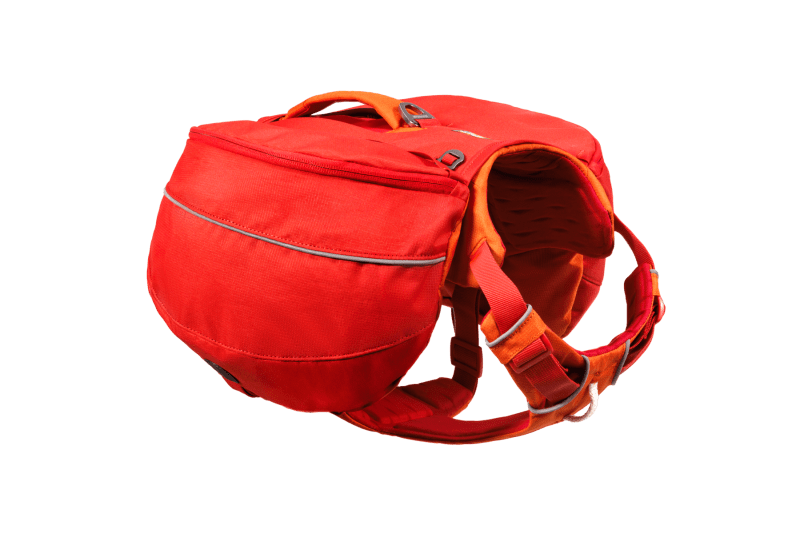
The Palisades shines on overnight trips. The removable saddlebags unclip at camp so your dog can rest in just the harness. Two included water bladders hold a liter each.
The Good
- Saddlebags detach for camp comfort
- Built on Web Master harness base
- Includes two 1-liter water bladders
The Bad
- Premium price at $150
- Overkill for day hikes under 8 miles
We tested load limits extensively. The general guideline is 10-25% of body weight. For Jasper at 95 pounds, that means 9.5 to 24 pounds. We found 15% to be the sweet spot for all-day comfort. At 20%, he started showing fatigue around mile six. His pace dropped from our usual 2.5 mph to under 2 mph, and he began lying down during water breaks instead of standing alert. Start conservative and build up over several hikes.
The 1000D Cordura fabric on the saddlebags took a beating during bushwhacking through willows near treeline. After two seasons, we count three minor abrasions and zero punctures. Budget packs we tested previously showed holes within weeks of similar use.
Day hikers should look at the Approach Pack. Lighter, cheaper, same quality construction. It lacks the removable saddlebags but most day hikers won't miss them.
Leashes for the trail
Trail leashes need to handle more than urban walks. You need length for exploring, hands-free capability for scrambles, and strength for unexpected wildlife encounters.
Ruffwear Roamer Leash
Best Hands-Free Leash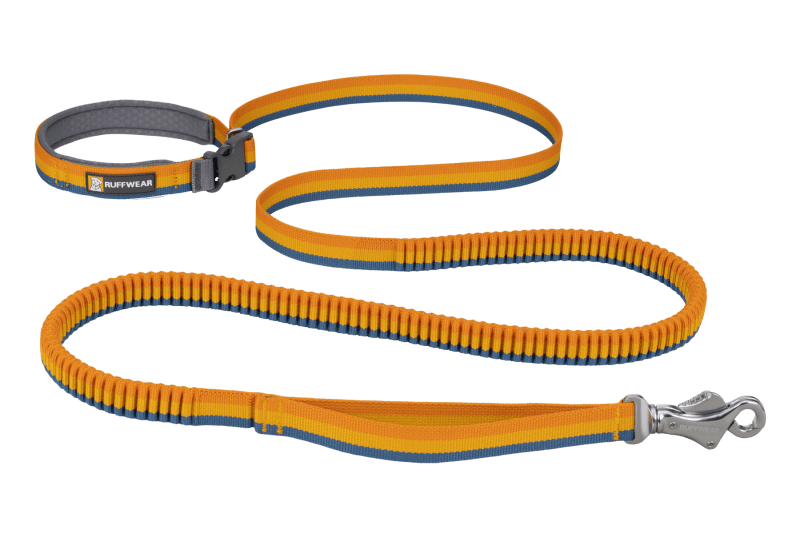
The Roamer converts from hand-held to waist-worn in seconds. The bungee section absorbs pulling without jerking you off balance.
The Good
- Extends from 5.5 to 7 feet with stretch
- Bungee absorbs sudden pulls smoothly
- Converts between hand-held and hands-free
The Bad
- Waist belt runs small on larger hikers
- Metal hardware can be cold in winter
We use the Roamer on maintained trails where Jasper can stay within a few feet. Off-leash trained dogs in leash-required areas do better on a 20-30 foot long line. More freedom, still under control. We keep a biothane long line in the pack for open meadows and alpine bowls.
Hydration and water systems
Dogs need more water on trail than you expect. A good rule is one ounce per pound of body weight per day as a baseline, then add more for heat and exertion. For Jasper, that means nearly a gallon on a hot summer day.
Ruffwear Trail Runner Bowl
Best Packable Bowl
At 3.2 ounces, the Trail Runner disappears into any pocket. The wide opening lets big dogs drink without pushing the bowl around.
The Good
- Weighs just 3.2 ounces empty
- Wide 32-oz capacity for large dogs
- Stiff rim stays open during use
The Bad
- Fabric can be tricky to clean in the field
- Not free-standing. Needs to be held or placed on flat ground.
Longer trips mean a water bladder in Jasper's pack plus a filtration system. The Sawyer Squeeze filters work for both human and dog water. Just be aware that dogs are less sensitive to waterborne pathogens than humans, but guardia can still make them sick.
Trail nutrition and treats
High-calorie treats matter more than regular training treats on long days. Your dog burns far more calories during sustained hiking than normal activity. We pack energy-dense options that won't crumble into dust at the bottom of a bag.
Zuke's Mini Naturals
Best Training Treats for Trail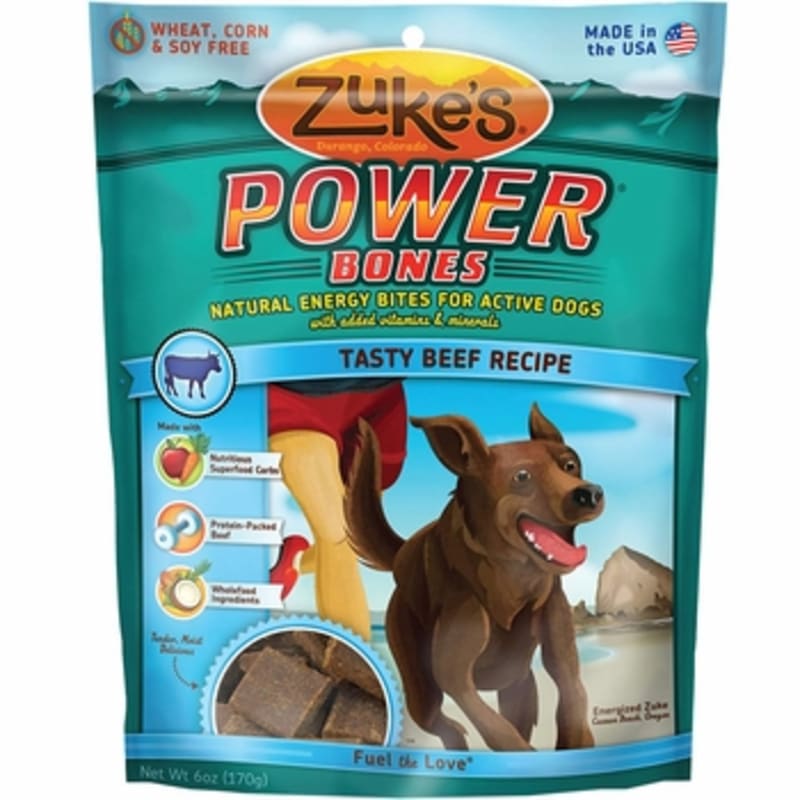
Small enough for frequent rewards, calorie-dense enough for trail fuel. The soft texture means dogs can eat them quickly without stopping.
The Good
- Under 3 calories per treat allows frequent rewarding
- Soft texture for quick consumption
- Multiple protein options for dogs with sensitivities
The Bad
- Can get mushy in heat
- Not calorie-dense enough for primary trail fuel
Multi-day trips get freeze-dried raw food added to the pack. It packs light, rehydrates with water, and covers all nutritional needs. One pound of freeze-dried food equals roughly four pounds of fresh food by calorie.
First aid gear
You need a dog-specific first aid kit in the backcountry. No exceptions. Human kits lack key items like tick removers, styptic powder for nail injuries, and appropriately-sized bandages for paws.
Adventure Medical Kits Trail Dog
Best Backcountry First Aid
The Trail Dog kit fits in a cargo pocket and covers the injuries we actually see on trail. Paw bandages, tick removal tools, and wound irrigation supplies all included.
The Good
- Compact enough for day hikes
- Includes dog-specific supplies like self-adhesive bandages
- Water-resistant case protects contents
The Bad
- Limited supplies for multi-dog groups
- No prescription medications obviously included
We supplement the kit with Musher's Secret for paw protection and a small bottle of diluted chlorhexidine for wound cleaning. Benadryl stays in the pack for allergic reactions, dosed at 1mg per pound of body weight. Check with your vet on appropriate emergency medications for your specific dog.
Vet Contact
Save your vet's phone number and the nearest emergency animal hospital to your phone before heading out. Cell service is spotty in the backcountry but you want this information ready if you get signal.
Weather protection and layers
Dogs regulate temperature differently than humans. They can't sweat except through paw pads and rely heavily on panting. Cooling gear matters in summer. Insulation matters in winter.
Ruffwear Swamp Cooler
Best Cooling Vest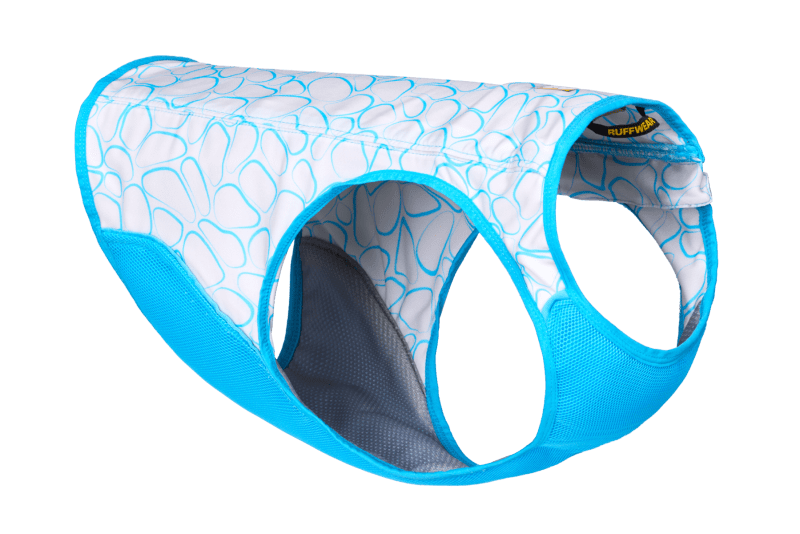
The Swamp Cooler uses evaporative cooling to drop body temperature measurably. We tracked a 4-5°F reduction in surface temperature using an infrared thermometer during 85°F afternoon hikes. Soak it in water, wring it out, and it provides 20-30 minutes of active cooling before needing a refresh.
The Good
- Measurable temperature reduction in hot conditions
- Fits over or under most harnesses
- Reflective trim for visibility
The Bad
- Requires water to reactivate
- Adds weight when wet
Cold weather calls for the Cloud Chaser jacket. Insulation without restriction. We tested it through multiple winter trips to the Continental Divide at temperatures ranging from 15°F to 35°F. The softshell fabric blocks wind. The fleece lining holds body heat. At 22°F on Loveland Pass, Jasper showed no shivering even during rest breaks. The fabric has a slightly tacky feel that grips harnesses well and a quiet drape that doesn't rustle with every step. Short-coated breeds and older dogs who chill easily benefit most from this jacket.
Ruffwear Cloud Chaser Jacket
Best Winter Jacket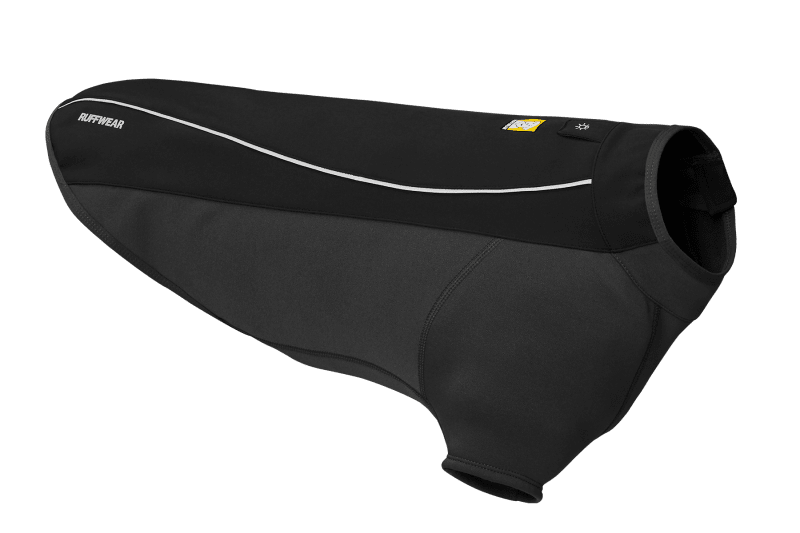
The Cloud Chaser combines windproof softshell with fleece insulation. It moves with your dog during activity rather than restricting natural gait.
The Good
- Windproof and water-resistant outer layer
- Fleece lining retains warmth
- Stretchy fabric allows full range of motion
The Bad
- Not for wet conditions. Gets heavy when soaked.
- Runs slightly small. Size up if between sizes.
Sleep systems and shelter
Overnight trips require considering where and how your dog will sleep. Most dogs do fine on a simple pad, but cold sleepers and senior dogs benefit from insulated systems.
Ruffwear Highlands Sleeping Bag
Best Dog Sleeping Bag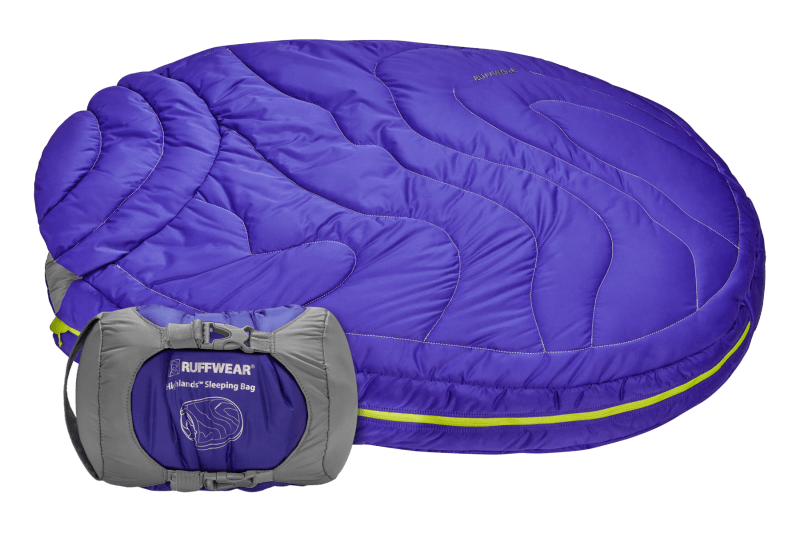
The Highlands is a proper sleeping bag for dogs. The insulated bottom prevents ground chill while the zip opening lets dogs get in and out on their own.
The Good
- Synthetic insulation rated to 20°F
- Side zip allows easy entry for most dogs
- Stuff sack included for packing
The Bad
- Bulky compared to a simple pad
- Some dogs refuse to sleep in enclosed spaces
Ultralight trips? The Highlands Pad keeps your dog off cold ground without sleeping bag bulk. We use the pad for three-season trips and switch to the sleeping bag once temperatures drop below freezing.
GPS and safety tech
Backcountry navigation with a dog adds variables. Your dog can range farther and faster than you in dense terrain. GPS tracking gives you peace of mind when visibility drops.
Garmin T5X Dog Device
Best GPS Tracker
The T5X pairs with Garmin handheld units for real-time location tracking. We tested range in dense lodgepole pine near Berthoud Pass and maintained solid signal at 3.2 miles. Open alpine terrain pushed that to nearly 6 miles before we saw dropouts.
The Good
- 9-mile range in optimal conditions
- Works without cell service
- Rugged and waterproof construction
The Bad
- Requires compatible Garmin handheld
- Requires $500+ for complete system with handheld
Night hiking changes with LED collar lights. The Nite Ize SpotLit clips to any collar and gives you 360-degree visibility. We've tested it on pre-dawn starts and dusk returns where the light made tracking Jasper much easier in low light conditions.
Nite Ize SpotLit Rechargeable
Best Collar Light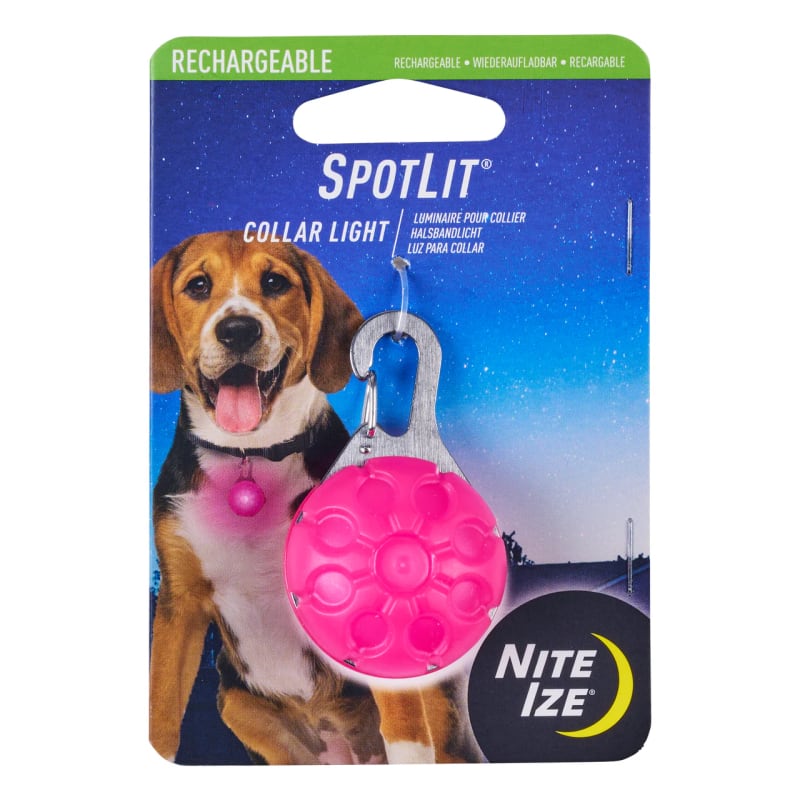
The SpotLit clips to any collar and provides steady or flashing LED visibility. USB rechargeable with 5 hours of run time per charge.
The Good
- USB rechargeable, no battery replacements
- Clips to any collar or harness
- Multiple color modes including flash
The Bad
- 5-hour run time shorter than battery versions
- Clip can work loose with vigorous activity
Paw care and maintenance
Beyond boots, paw care matters year-round. Cracked pads are uncomfortable and can become infected. Regular maintenance prevents problems before they start.
Musher's Secret Paw Wax
Best Paw Protection
Musher's Secret creates a protective barrier on paw pads. We use it before hot pavement walks, winter snow outings, and as regular maintenance between trips.
The Good
- All-natural wax formula
- Works in heat and cold
- Easy to apply and absorbs quickly
The Bad
- Needs reapplication after water exposure
- Can leave marks on floors if over-applied
Apply paw wax before trips, not during. The wax needs time to absorb into the pad for maximum protection. We apply it the night before longer hikes and again in the morning if temperatures will be extreme.
Building your kit by trip type
Your pack changes with the trip. Here's what actually goes in mine.
Day hikes under 10 miles: Harness, leash, collapsible bowl, treats, poop bags. Add paw wax if you're hitting rocky terrain. That's it. Keep it light.
Longer days over 10 miles: Everything from above. I also throw in Jasper's backpack with a light load, extra water, the first aid kit, and a cooling vest if we're hiking in July or August. If we might return after dark, the collar light comes too.
Overnights: Now it gets real. Sleeping bag, extra food, the full first aid kit, layers for whatever weather's coming, and the GPS tracker if we're somewhere unfamiliar. Weight adds up fast. I've learned to pack the night before so I can cut what I don't actually need.
Frequently Asked Questions
Frequently Asked Questions
Our Complete Recommendation
Building a complete hiking kit takes time and testing. Start with the basics (harness, water bowl, leash) and add gear as your trips get longer and more technical. Quality matters more than quantity. One good harness outlasts three cheap ones and keeps your dog safer on trail.