 Paths & Paws
A harness that fits wrong is worse than no harness at all. Too loose and your dog can back out of it on a steep scramble. Too tight and it digs into their armpits after the first mile. We've seen both happen on the trail, and neither ends well.
Getting accurate measurements takes about five minutes. You need a soft measuring tape, a few treats to keep your dog still, and ideally a helper to distract them while you work. The measurements you take at home translate directly to manufacturer sizing charts, so precision matters here.
What You'll Learn
- 1The three measurements every hiking harness requires
- 2Where exactly to place your measuring tape for accurate readings
- 3How to account for coat thickness and seasonal changes
- 4Common measuring mistakes that lead to returns
What you'll need
Before you start, gather a few items.
- Soft fabric measuring tape (not a metal one)
- High-value treats to keep your dog standing
- A second person to help hold or distract your dog
- Paper and pen to record measurements
- Your dog's current weight from a recent vet visit
If you don't have a fabric measuring tape, a piece of string works. Mark the length on the string, then measure that against a ruler. The metal tapes designed for construction are too stiff to wrap around a dog's body accurately.
The three measurements that matter
Every hiking harness sizing chart asks for at least one of these measurements. Most ask for all three. Take them in this order.
Chest girth is the most important measurement. This is the widest part of your dog's ribcage, right behind their front legs. Wrap the tape around their body so it passes over the deepest part of the chest and over their back. Keep the tape snug but not tight. You should be able to slide two fingers under it.
Neck circumference measures around the base of the neck, where a collar would naturally sit. This isn't at the top of the neck near the head. That measurement would be too small. Go lower, where the neck meets the shoulders.
Back length runs from the base of the neck to the base of the tail. Not every harness uses this measurement, but pack-style harnesses and those with belly straps need it for proper saddle bag placement.
| Measurement | Location | How to Check Fit |
|---|---|---|
| Chest girth | Widest part of ribcage, behind front legs | Two fingers should slide under tape |
| Neck circumference | Base of neck, where collar sits | One finger should slide under tape |
| Back length | Base of neck to base of tail | Tape should follow spine curve |
Measure Standing, Not Sitting
Have your dog stand naturally on all four feet. When dogs sit, their chest compresses and you'll get a measurement that's too small. If your dog won't stay still, have someone hold a treat at nose level to keep them focused and upright.
Step by step measuring guide
Start with chest girth since that's what most sizing charts prioritize.
Position yourself beside your dog, not in front of them. Reach under their belly and pass the end of the tape to your other hand on the opposite side. Pull it up and over their back until both ends meet. The tape should sit in the groove right behind the front legs, not over the shoulders and not back on the belly.
Look at where the tape crosses. Note that number, then do it again. We've measured the same dog twice and gotten readings an inch apart because the tape shifted. Take the average of two or three measurements for accuracy.
For neck circumference, wrap the tape around the thickest part of the neck. This is typically two to three inches below the ears. The tape should sit flat against the coat without twisting. One finger should fit comfortably underneath.
Back length is the easiest measurement to get wrong. Find the bony bump at the base of the neck where it meets the shoulders. That's your starting point. Run the tape along the spine, following its natural curve, until you reach the base of the tail. Don't stretch it tight or let it droop.
Accounting for coat and weight fluctuations
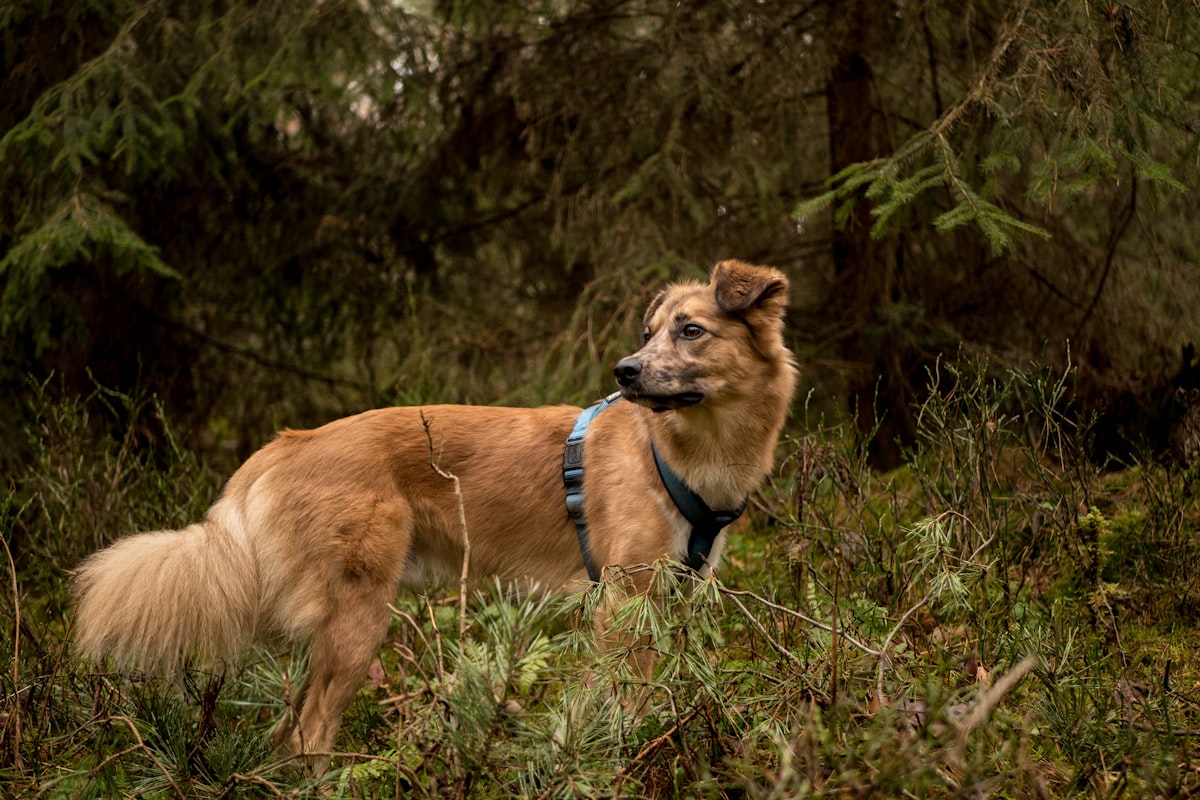
A Husky with a full winter coat measures differently than the same dog after a summer shed. We've seen variations of two inches or more on the same dog across seasons.
If you're buying a harness in winter for a dog with a thick double coat, size up or wait until spring to measure. Most hiking happens in warmer months anyway. That summer coat measurement will give you a better fit for actual trail conditions.
Weight matters too. A dog at the high end of a size range should probably go up to the next size. A dog recovering from an injury who's lost muscle mass needs remeasuring before you order. Those sizing charts assume a dog at their healthy weight.
Between Sizes?
If your dog falls between two sizes, go larger. A slightly loose harness can be adjusted tighter. A harness that's too small can't be fixed. Most quality hiking harnesses have multiple adjustment points that accommodate a range within each size category.
Common measuring mistakes to avoid
The most frequent error is measuring over thick fur without compressing it. The harness sits against the body, not floating on top of the coat. Press the tape gently into the fur to get the measurement that matches how the harness will actually fit.
Second is measuring with your dog lying down or sitting. The chest expands when a dog stands. Measurements taken while lying down can be off by two inches or more. Always measure standing.
Third is using the wrong reference points. Chest girth behind the legs and chest girth over the shoulders are not the same measurement. Read the sizing instructions for your specific harness. Some brands measure at different points than others.
Finally, don't assume. A size medium in one brand might be a size large in another. Ruffwear, Kurgo, and Julius K9 all have different size ranges. Always check the actual measurements on the chart rather than going by size name.
Tips for the best fit
Once your harness arrives, put it on your dog and check three things.
First, can your dog move freely? Walk them around. Have them sit and lie down. Watch for any restriction in their shoulder movement. The harness shouldn't shift forward onto the shoulders when they walk.
Second, can they escape? Have someone hold a treat in front of your dog while you pull gently backward on the harness. If it slips over their head or they can back out of it, the chest strap needs tightening or the harness is too large.
Third, check for pressure points. Look under the front legs and along the chest. Red marks or flattened fur indicate rubbing. After a short test walk, examine these areas again. Chafing that shows up after fifteen minutes will be much worse after a six-mile hike.
Most harnesses have multiple adjustment straps. Spend time dialing in the fit before you hit the trail. A five-minute fitting session at home prevents hours of discomfort later.
For help choosing the right harness once you have your measurements, see our guide to the best dog hiking harnesses of 2026 where we tested 14 options over 500 trail miles.
Frequently asked questions
Frequently Asked Questions
Kelly has logged over 5,000 trail miles with his dogs across the American West. He specializes in backcountry expeditions and gear testing for large breeds.