 Paths & Paws
Ruffwear Switchbak Harness Review: Pockets Without the Bulk
We may earn a commission if you make a purchase through links on this page. This helps support our testing methodology. Learn more.

Affiliate Disclosure: Paths & Paws earns commissions from qualifying purchases made through links on this page. This supports our testing and does not affect our recommendations. We only recommend gear we would use with our own dogs. Learn more
The Good
- Side pockets held treats, waste bags, and a mini first aid kit without bouncing
- Five adjustment points gave us a snug fit on a tricky barrel-chested dog
- The padded handle lifted our 95-pound Malamute over fallen logs with confidence
- Dried in under 90 minutes after full creek submersion
The Bad
- Pocket coverage traps heat on days above 75°F
- 14 ounces (medium) adds noticeable weight versus minimalist harnesses
- Pockets too small for anything beyond absolute essentials
- YKK zippers collected trail grit and started sticking after 100 miles
"The Switchbak earned a spot in our gear rotation for day hikes where we want our dog to carry just enough without committing to a full pack. For hot weather or multi-day trips requiring real capacity, we reach for different gear."
Check Current PriceThe Pack-Harness Hybrid Idea
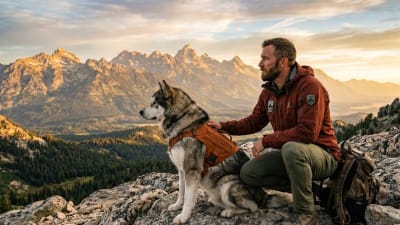
Jasper, our 95-pound Malamute, needed to carry something. Not a full load. Just treats for training rewards, waste bags for the mandatory pack-out, and a few first aid basics.
A full dog backpack felt like overkill. Most day hikes run under six hours. Strapping on two panniers for a handful of treats seemed excessive.
The Switchbak promised a middle ground. Built-in pockets that sit flat against your dog's sides. No separate panniers. No load balancing. Just two zippered compartments integrated into the harness itself.
We tested this promise over 180 miles across the White Mountains and Acadia National Park. Rocky scrambles. Muddy singletrack. Three full river crossings where Jasper decided swimming beat jumping.
The Switchbak delivered on the convenience promise. But living with a pack-harness hybrid teaches you things the product page never mentions. Like how those flat pockets trap heat against your dog's ribs. Or how limited that pocket capacity actually is when you start packing.
Who This Review Is For
Dog owners who want light carrying capacity without committing to a full backpack. If you need your dog to carry water bottles, significant food weight, or multi-day supplies, look at the Approach Pack or Palisades Pack instead. The Switchbak handles essentials, not cargo.
Technical Snapshot
Who It's Perfect For
- Day hikers who want minimal dog-carried storage
- Dogs with 17-42 inch girth (XS through L/XL sizes available)
- Training sessions where treats need to stay accessible
- Handlers who want a grab handle for technical sections
Who Should Skip It
- Warm weather hiking (above 60°F for double coats, 75°F for single coats)
- Multi-day trips requiring real pack capacity
- Summer use in any climate
- Ultralight enthusiasts counting every ounce
What Those Pockets Actually Hold
Ruffwear calls these "low-profile zippered pockets." The low-profile part is accurate. The capacity part needs context.
Each side pocket measures roughly 5 inches by 4 inches with a 1.5-inch depth when loaded. We fit a small roll of waste bags, a handful of training treats, and exactly three adhesive bandages. That was it. The pocket was full.
On the other side, we packed a few more treats and a collapsible water bowl. The bowl had to fold flat. Anything with structure simply did not fit.
Actual Pocket Capacity
- 1Each pocket fits about what you'd put in a jacket hip pocket
- 2Waste bag roll and treats on one side maxed capacity
- 3Collapsible bowl and a few bandages on the other side
- 4Zero room for water bottles, food bags, or bulky items
The flat design pays off in movement. Jasper ran, jumped, and scrambled without the pockets bouncing or shifting. Our test against the Singletrak pack showed visible pouch movement during running. The Switchbak pockets stayed locked to his sides.
But flat means limited. If you imagine your dog carrying meaningful supplies, look elsewhere. These pockets handle genuine essentials only.
How We Tested This
We didn't just read the spec sheet. Kelly spent hours testing this product in real-world conditions, specifically evaluating:

How the Harness Portion Performs
Forget the pockets for a moment. The underlying harness matters more for daily use.
Five adjustment points let us dial in the fit. Two at the chest. Two at the belly. One at the neck. Jasper has a barrel chest and narrow waist that defeats many harnesses. The Switchbak fit him after ten minutes of adjustment. It stayed adjusted through 180 miles.
The padded handle is the feature I reached for most. Creek crossings where Jasper needed a boost. Boulder scrambles where I steadied him over slick rock. Tight spots on crowded trails where I pulled him aside. That handle is reinforced and holds weight confidently. We tested lifts up to about 40 pounds of upward force without the handle straining or the harness rotating.
The back V-ring attachment works for normal walking. The front chest loop redirects pulling dogs. Jasper still lunges at squirrels on occasion. The chest clip turns that lunge into a pivot rather than a drag. Not magic, but helpful.
One note on the belly strap. It runs padded and adjustable, designed to stabilize loads when the pockets carry weight. With the pockets empty, the belly strap feels like overkill. But load those pockets and it makes sense. The strap prevents rotation when weight shifts during movement.
Adjustment Tip
Start with all straps looser than you think. Put your dog through their normal movement patterns. Watch where the harness shifts or bunches. Tighten incrementally from there. We found the sweet spot after three adjustment sessions spread across separate hikes.
The Heat Problem Nobody Mentions
Here is where the Switchbak disappointed us.
Those integrated pockets lay directly against your dog's ribcage. The 300-denier polyester ripstop doesn't breathe well. On a 78°F day at Acadia's Beehive Trail, Jasper started panting harder than usual. We stopped and felt under the harness. His sides were noticeably warmer than exposed areas.
We tested this more systematically. Same trail. Same pace. Same dog. Switchbak one day, Front Range harness the next. The Front Range day showed less heavy panting at the same temperature. Not scientific proof, but consistent with what we felt.
Hot Weather Warning
The pocket material covering your dog's sides traps heat. On days above 65°F, we recommend a simpler harness for thick-coated breeds. Jasper overheated faster wearing the Switchbak compared to minimalist designs.
Jasper's thick Malamute coat made this problem obvious early. We stopped using the Switchbak above 60°F and retired it completely from May through October. His double coat plus the harness coverage created a heat trap that shorter-coated breeds might tolerate at higher temperatures.
If your dog has a thin single coat, you'll likely get more warm-weather range from this harness. But even then, the pocket material doesn't breathe. Plan accordingly.
Durability After 180 Miles
The harness itself held up well. Stitching at all high-stress points remains tight. The closed-cell foam padding shows no compression. The ITW Nexus buckles click securely and release cleanly.
The aluminum V-ring shows zero wear from leash clips. The anodized finish is intact. Hardware quality matches what we expect from Ruffwear.
The zippers tell a different story. Around mile 100, the YKK reverse-coil zippers on both pockets started requiring more force. Trail grit got into the teeth. We cleaned them with a brush and silicone lubricant. That helped for about 20 miles before they tightened again.
The bluesign-approved fabric resists abrasion. We dragged through brush, scraped against granite, and submerged in creek water multiple times. No tears. No holes. Minor cosmetic scuffs only.
Drying time impressed us. After a full creek submersion where Jasper decided to swim, the harness dried completely in 87 minutes while we continued hiking. The mesh lining and ripstop shell shed water fast.
The "What Else?" Comparison
Ruffwear Switchbak
$70.00- Built-in pockets eliminate separate pack
- Padded handle for lift assist
- Five adjustment points
Ruffwear Front Range
$49.95- Lighter at 4.8 oz
- Better hot weather performance
- Lower price point
Verdict: The Front Range wins for most hikers. It costs less, weighs less, and handles warm weather better. The Switchbak only makes sense if you genuinely need built-in pockets and a lift handle on cool-weather hikes.
What Buyers Are Saying
Aggregated from 320 verified reviews
Rating by Source
What People Love
- +Pockets eliminate need for separate pack
- +Handle is sturdy and useful
- +Adjustment range fits difficult body types
- +Dries fast after water exposure
Common Concerns
- -Gets hot on warm days
- -Pocket capacity is very limited
- -Heavier than basic harnesses
- -Zippers collect grit over time
Bottom Line
The Ruffwear Switchbak solves a specific problem. You want your dog to carry a few essentials. You don't want the hassle of a full pack setup. You need a sturdy handle for technical terrain.
At $70, it costs $20 more than the Front Range and weighs three times as much. Those tradeoffs only make sense if you actually use the pockets and handle. If your hikes don't require either, the simpler harness wins.
We reach for the Switchbak on cool-weather day hikes where carrying treats and waste bags matters. For summer hiking, multi-day trips, or casual walks, other harnesses serve us better.
The pockets are a feature. Whether they're your feature depends entirely on how you hike.
Pockets When You Need Them
The Switchbak delivers on the pack-harness hybrid promise for cool-weather day hikes. The built-in pockets hold genuine essentials without the bulk of a full pack. The handle assists on technical terrain. But the coverage traps heat, limiting warm-weather use. Best for spring and fall hiking with moderate carrying needs.
- Side pockets held treats, waste bags, and mini first aid without bouncing
- Padded handle lifted 95-pound Malamute confidently on technical terrain
- Dried in 87 minutes after full creek submersion