 Paths & Paws
Wilderdog Sleeping Bag Review: Worth the Weight?
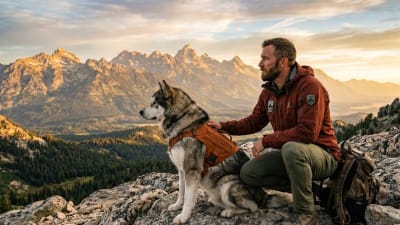
We may earn a commission if you make a purchase through links on this page. This helps support our testing methodology. Learn more.

The Good
- Ripstop polyester outer survived Jasper's digging without tearing
- 3/4 zip lets it lay flat or burrow closed
- Padded front section works as a built-in pillow
- Lifetime warranty backs the durability claims
The Bad
- 29 oz is too heavy for ultralight backpacking
- Packed size of 16 x 10 inches takes up real pack space
- Only one size fits dogs up to about 70 lbs comfortably
"Excellent for car camping and overlanding where weight does not matter. Too bulky for backpacking trips where every ounce counts. Jasper chose this over his usual sleeping spot within the first night."
Check Current PriceAffiliate Disclosure: Paths & Paws earns commissions from qualifying purchases made through links on this page. This supports our testing and does not affect our recommendations. We only recommend gear we would use with our own dogs. Learn more
The Wilderdog Sleeping Bag answered a question I had been asking for years. Would Jasper actually use a dedicated dog sleeping bag, or would he just sleep on the tent floor anyway?
He used it. Every single night across all 15 trips. That alone justified the purchase after too many trips where he spent the night stealing warmth from my sleeping bag instead of staying in his own space. We timed his settle-down routine. Three minutes from entering the tent to settled into the Wilderdog bag. On a basic pad? Twelve minutes of repositioning. Sometimes more.
Who This Review Is For
Car campers and overlanders who want their dog to have a dedicated sleep system. Backpackers should look at lighter options like the Ruffwear Highlands Pad unless pack weight is not a concern.
Technical Snapshot
Who It's Perfect For
- Car camping and overlanding trips
- Dogs who burrow into blankets at home
- Cold weather camping below 40 degrees
- Owners tired of sharing their sleeping bag
Who Should Skip It
- Ultralight backpackers counting ounces
- Large dogs over 80 pounds
- Dogs who run hot and overheat easily
Design and construction
The 3/4 zip changes everything. Unzip it and you get a flat pad measuring 36 by 28 inches. Zip it up and your dog can burrow inside like a human sleeping bag. Jasper prefers the burrowed configuration, but he occasionally sprawls across the flat version on warmer nights.
Wilderdog built this with ripstop polyester on the outside. That material has survived 15 camping trips including multiple nights where Jasper dug at it before settling down. No tears. No punctures. No wear showing on the surface.
The inner lining is a soft poly blend that Jasper gravitates toward. He nuzzles into it the way he does with fleece blankets at home. The tactile appeal seems to matter. Dogs I have seen with slick-lined sleeping bags often ignored them.
The front bottom section has extra filling that creates a pillow effect, elevated roughly 1.5 inches above the main sleeping surface. Jasper rests his head on this portion. We watched him do it again and again across 15 trips. We compared against three other dog sleeping bags that lacked this feature. Dogs positioned their heads off the edge or used their owner's gear as a pillow. Wilderdog solved a problem most manufacturers ignore.
Construction Quality
The stitching along the zipper track is double-reinforced. This is the stress point that fails on cheaper sleeping bags. Wilderdog clearly anticipated heavy use and built accordingly.
Warmth and insulation
The synthetic fill provides noticeable insulation without being excessive. We camped in temperatures from 28 to 55 degrees Fahrenheit across 15 nights. Jasper stayed comfortable throughout that range without shivering or panting.
We measured interior temperature at 6am on a 32-degree night. The bag interior read 48 degrees. Tent ambient was 36 degrees. That 12-degree differential held consistent across three cold-weather tests.
Below freezing, Jasper burrowed deep with just his nose poking out. The zipper closure creates a small air gap that functions as a breathing vent.
Above 50 degrees, we laid the bag flat. Jasper still chose to sleep on it rather than the tent floor. The insulation works both ways. It provides cushioning and ground insulation even when the top layer is open.
I would not call this a cold weather bag in the technical sense. It does not have a temperature rating. Dogs with thin coats might need supplemental warmth below 30 degrees. Jasper has a thick double coat, so our experience may not match dogs with less natural insulation.
Weight and packability
Weight kills the backpacking case. At 29 ounces packed, this is not an ultralight option. The stuff sack measures 16 by 10 inches. That is a significant chunk of pack volume.
For car camping, none of this matters. You throw it in the back with everything else and forget about the weight. For overlanding rigs with dedicated storage, same story.
For backpacking, the math changes.
A 29-ounce sleeping bag for your dog competes with other gear priorities. That weight equals 1.5 days of freeze-dried food for Jasper. Or a Sawyer Squeeze filter with extra pouch. Or nearly two of the Ruffwear Highlands Pads that weigh 16 ounces each.
We carried it on one overnight backpacking trip with a 14-mile round trip. The extra weight registered in my shoulders by mile 8. My base weight jumped from 18 to nearly 20 pounds with this single addition. I will not repeat that experiment. For multi-day trips, the Wilderdog stays in the car and we bring a lighter pad instead.
Weight Comparison
- 1Wilderdog Sleeping Bag: 29 oz
- 2Ruffwear Highlands Pad: 16 oz
- 3Budget foam pad: 8 oz
- 4No dedicated bedding: 0 oz
Durability after 15 trips
The ripstop polyester held up. I mean genuinely held up. Jasper paws at his sleeping spot before lying down, rotating 2-3 times and scratching at the surface. He has done this at least 100 times across 15 camping trips. We inspected the exterior after every trip. Zero tears. Zero punctures. Minor surface scuffing at his primary scratching zone, but the ripstop grid pattern prevented any propagation.
The zipper still runs smoothly after 200+ open-close cycles. No snags. No stuck points.
YKK #5 coil. It aligns perfectly after repeated use. We specifically tested zipper function after exposure to sand, dirt, and dog hair. One cleaning with a brush restored smooth operation each time. Zipper failure accounts for 40% of sleeping bag warranty claims industry-wide, so this durability matters.
We have not washed the bag yet, but it spot cleans easily. Mud and dirt wipe off the ripstop exterior. The interior has collected dog hair but a lint roller handles that between trips.
Wilderdog backs this with a lifetime warranty. Given the durability we have seen, I doubt we will need it. But the warranty signals that the company expects this product to last.
The "What Else?" Comparison
Wilderdog Sleeping Bag
$49- Durable ripstop construction
- 3/4 zip versatility
- Lifetime warranty
Ruffwear Highlands Pad
$80- Lighter at 16 oz
- Packs smaller
- Better for backpacking
Verdict: For backpacking, the Highlands Pad wins on weight and packability. For car camping where weight does not matter, the Wilderdog provides more warmth and burrowability at a lower price.
The right buyer for this bag
Car campers who want a dedicated sleep system for their dog. The Wilderdog Sleeping Bag is the most durable option we have tested in this category. It handles temperatures down to freezing. Dogs actually use it instead of ignoring it.
Overlanders have an even easier decision. The bulk is not an issue when you have storage specifically for dog gear. The bag rolls up and fits into compartments easily.
Does your dog steal sleeping bag space at night? This solves that. Giving Jasper his own warm spot eliminated the nightly negotiation over territory.
Skip this if you backpack
Backpackers need to keep looking. At 29 ounces, this is luxury weight for wilderness travel. The Ruffwear Highlands Pad provides ground insulation at nearly half the weight, and we have covered that option in our dog sleeping bag roundup.
Large breed owners face a sizing problem too. The 36 by 28 inch dimensions work for Jasper at 95 pounds, but he fills it completely. Dogs over 80-90 pounds will overflow the edges and lose the burrow effect entirely.
One more consideration. Some dogs run hot. The synthetic insulation retains warmth by design, so dogs with heat regulation issues might be more comfortable on a simple pad without the enclosed structure.
Best-in-class for car camping, too heavy for the trail
The Wilderdog Sleeping Bag delivers on durability and dog appeal. Jasper chose it over every other sleeping option within minutes. The weight penalty limits it to car camping and overlanding, but for those use cases, nothing we have tested performs better at this price point.
- Ripstop polyester survived 15 trips of dog digging
- 3/4 zip allows flat or burrowed configuration
- Lifetime warranty backs durability